

10 Soda Controversies That Rocked The Beverage Industry
Hands up if you're a soda drinker. Okay, you can't see them, but many other people are holding their hands up right now, too. According to the CDC, around 63% of American adults over the age of 18 drink at least one sugar-sweetened beverage a day. Soda is part and parcel of daily life for most people, so it feels pretty uncontroversial. It's just a drink, after all. Right? Well, actually, the soda industry has been involved in some pretty big controversies over the years. Big. Huge.
Here, we're taking a look at some of the most memorable stories that have rocked the beverage industry in recent history, and we have to admit, things get seriously interesting. An undercover sting? Mass hysteria? A mouse that won't dissolve? Yep, the soda industry has truly seen it all. Crack open your favorite can of fizzy pop (or maybe don't — some of this is quite unappetizing), and let's dive in.
Coca-Cola caused an environmental crisis in India
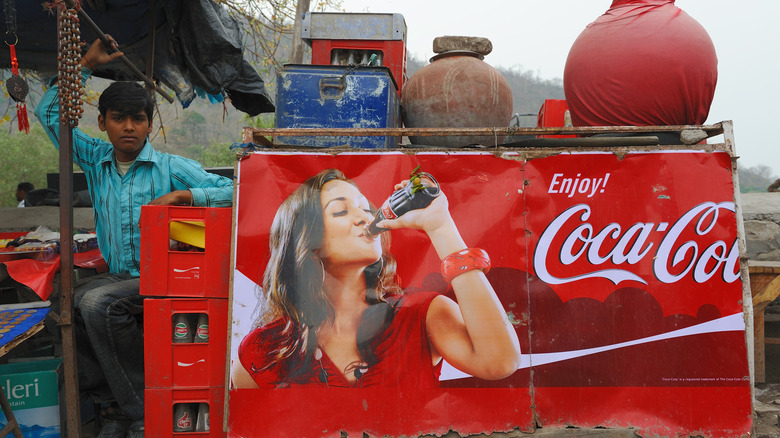
The Eravallan people have lived off the land in the southern Indian state of Kerala for generations. For a long time, the tribe relied on hunting and gathering to survive, but in more recent history, its members moved into villages, like Plachimada in the Palakkad District, to farm. But over the decades, many things have threatened the Eravallan community and their way of life: things like language loss, poverty, a lack of educational resources, and Coca-Cola.
In the late 1990s, Coca-Cola was taking off in India, and the company needed to grow production in the country. So, it set its sights on Plachimada as the perfect location for its new bottling plant. Coca-Cola has long denied any wrongdoing in the village, but many Indigenous people tell a different story. Led by Eravallan activist Mayilamma, they claimed that the Coca-Cola factory started draining the village of its water, leaving many local farmers without anything left for their crops, and dumping hazardous waste on the land around the factory.
After a long fight, in 2005, Kerala's Pollution Control Board ordered Coca-Cola to close the plant. In 2011, the state attempted to set up a tribunal to process compensation claims against the soda giant.
The Mountain Dew mouse lawsuit
What would you do if you found a mouse in your can of Mountain Dew? We'll take a guess: You'd probably scream, recoil in horror, and then get on the phone with a lawyer. In 2009, Illinois resident Ronald Ball did exactly that. Well, we can only assume he recoiled in horror at the dead mouse he allegedly found in his beverage, but we know for sure he tried to sue.
In fact, Ball sought $75,000 in damages from PepsiCo over the traumatizing incident. PepsiCo's response? There couldn't have been an intact mouse in the drink, because if there had been, it would have dissolved into a jelly-like substance due to Mountain Dew's high acid content. Yes, that was its real-life defense — its drink is potent enough to dissolve the body of a small animal. Many experts refuted the claim, noting that while, of course, the body of the mouse would start to decay, it probably wouldn't completely dissolve.
Still, despite denying liability, in 2012, PepsiCo put the whole case to rest, settling outside of court for an undisclosed amount. But it didn't stop the online chatter. In 2024, people were still discussing the case on Reddit. "I remember this, and I think there were some YouTube videos about it," recalled one user in the r/todayilearned subreddit. "Mountain Dew would definitely dissolve the mouse, but it was still a bad look on the brand for the fact the drink would actually dissolve a mouse."
The SodaStream boycott
Back in 2011, SodaStream came under serious pressure from Palestinian activists, who alleged the company was complicit in the violation of Palestinian human rights due to its factory in the West Bank. According to the Palestinian-led campaign Boycott, Divestment, and Sanctions Movement (BDS), SodaStream's factory was not only directly contributing to the economy of an illegal settlement, but also exploiting the cheap labor of Palestinian workers.
Former CEO Daniel Birnbaum, who has since been convicted of insider trading, denied that SodaStream was mistreating workers and accused activists of antisemitism. However, in 2015, SodaStream did indeed move its factory from the West Bank to the Negev Desert in Israel. But, at the time of writing, the boycott campaign is still going on. According to BDS, this is due to its new location in an area where Palestinians are being forcibly expelled.
The boycott has had major consequences for SodaStream, which is now owned by PepsiCo. In 2014, U.K. retailer John Lewis stopped stocking the brand, and SodaStream was also forced to close its flagship U.K. store in Brighton.
Pepsi bottle caps caused riots in the Philippines
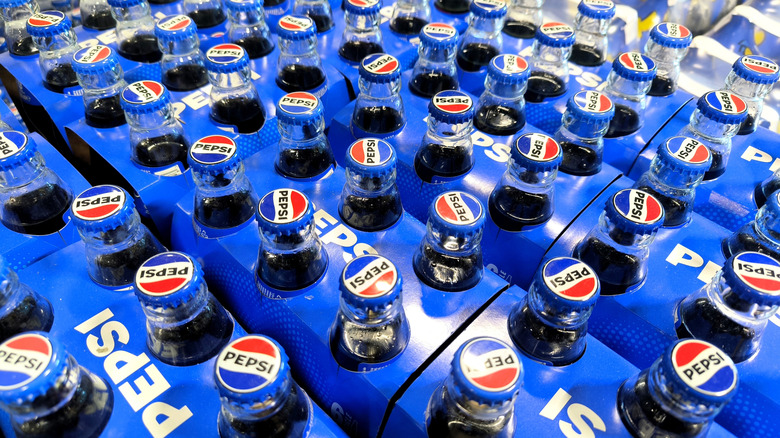
In the early 1990s, Pepsi came up with a fun, seemingly harmless way to engage its Filipino customers: a bottle cap contest. The idea was simple; Pepsi would print numbers on the inside of its bottle caps, and then every night, on the Channel 2 news, it would announce a prize-winning number. At first, it was all going swimmingly. People would enjoy the Pepsi, keep the bottle cap, collect their small cash prizes, and go on with their lives. What could possibly go wrong? Well, it turns out it could accidentally spark a nationwide riot. That's what could go wrong.
On May 25, 1992, Pepsi announced its last prize-winning number: 349. This time, things were serious; the prize fund was up to a life-changing 1 million pesos (around $40,000 USD at the time). But there was a glitch. Around 800,000 bottle caps carried the number 349, but most lacked the matching security codes needed to claim a prize. Hundreds of thousands of customers thought they had won, only to learn that Pepsi would not honor their caps. Yes. You read that correctly.
Of course, the company wasn't going to pay out billions of dollars in prize money. So that's when the riots started. Pepsi employees received death threats. People threw grenades. Five people died. Hundreds of lawsuits were filed. It was chaos. Pepsi did pay out around $10 million in goodwill payments in the end ($20 USD per bottle cap), but in 2006, the Supreme Court of the Philippines ruled that Pepsi was off the hook for any further compensation.
The Kendall Jenner Pepsi commercial
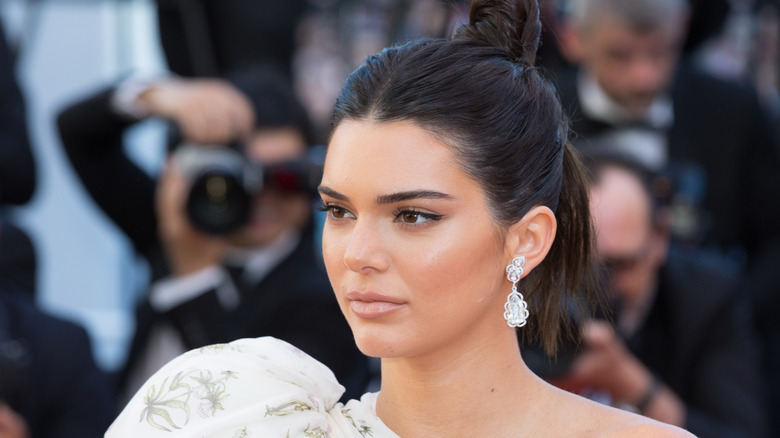
It's 2017. Donald Trump has taken up residence in the White House for the first time. Salt Bae is everywhere. The "La La Land" team has received an Oscar that doesn't belong to them. And Kendall Jenner? She's fixing an increasingly divided world by handing out cans of Pepsi, of course.
In case you need a reminder, in the now-infamous Pepsi commercial, Kendall Jenner is in the middle of a photoshoot, wearing a blonde wig, when a protest marches by. Feeling inspired, she rips off the wig, marches to the front, and hands a can of Pepsi to a police officer. Everyone laughs and smiles, and there are lots of high-fives. But the reaction to the commercial was less than jovial. Critics accused the ad of undermining major civil rights movements and centering white privilege. The backlash was so strong that Pepsi pulled the commercial after just one day.
Years later, it's still remembered as one of the biggest fails in soda brand history. In fact, it's continuously referenced amid times of unrest. For example, in 2025, when protests against deportation broke out in Los Angeles, one Reddit post with nearly 20,000 upvotes read: "Why hasn't anyone just given the LA cops a Pepsi? I feel like this would solve everything?"
Belgium banned Coca-Cola over a mass hysteria event
From the 1300s to the 1500s, there were multiple cases of Medieval Europeans, quite literally, dancing themselves to death. It turns out, the root cause probably wasn't a physical disease that caused people to spin and tap to the point of exhaustion, but a case of mass psychogenic illness, also known as mass hysteria. This phenomenon is complex, but in short, it suggests that a person can believe something so strongly that real physical symptoms spread through a group through psychological and social influences, such as shared stress or fear, rather than an identifiable physical cause. In the late 1990s, mass psychogenic illness appeared to come back to Europe. Only this time, it was to do with cans of Coke.
It started in the town of Bornem in Belgium, where more than 40 schoolchildren became ill after drinking Coca-Cola. Soon, dozens more were reporting symptoms like nausea and dizziness across the country. The Belgian government became so concerned that it actually banned the sale of Coca-Cola for a time. Even Coca-Cola started questioning itself and pulled 30 million cans and bottles from the market.
It turns out, there actually was an issue with the Coca-Cola, but it was, apparently, nothing more than a bad smell. The drinks sold in Belgium contained higher levels of sulfur compounds left over from the CO2 process. It wasn't enough sulfur to cause serious harm, but it was enough, experts theorized, to make the cans smell off and seemingly convince stressed schoolchildren across Belgium that they were seriously ill.
The diet soda lawsuits
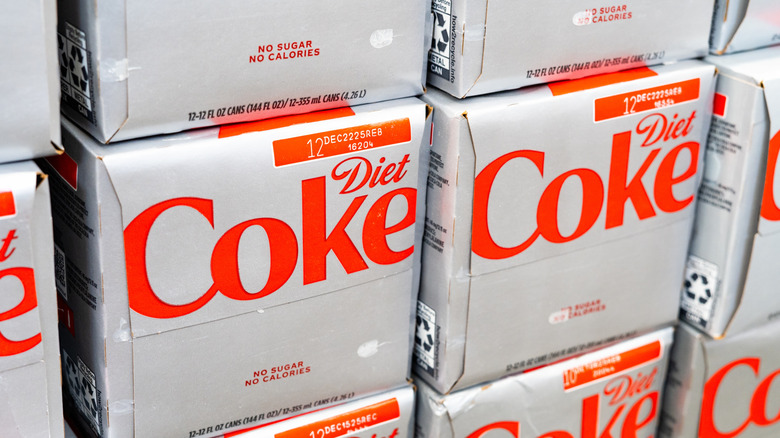
In 2017, the soda industry was hit with not one, but three huge lawsuits, and they all alleged the same thing: the use of the word "diet" to promote zero-sugar beverages was misleading. Yep, according to the legal action, Coca-Cola, PepsiCo, and Dr Pepper Snapple were deliberately deceiving their customers into thinking that these beverages might help with weight loss.
And maybe the claimants had a point. Some studies do suggest that consuming artificial sweeteners regularly might lead to weight gain. In 2022, the World Health Organization even released a statement warning against a reliance on artificial sweeteners for weight management.
But back in the 2010s, this argument wasn't enough to pin down any of the companies in the lawsuits, as none had ever actually promised their diet sodas could help with weight loss. In the spring of 2018, all three lawsuits were dismissed in court. In the Dr Pepper Snapple dismissal, the judge even stated that they felt it was pretty unlikely that the average consumer would use diet soda as a weight-loss tool.
The New Coke marketing disaster
Pepsi really knows how to get up Coca-Cola's nose. In the 1980s, for example, it filmed members of the public blind taste-testing Coke and Pepsi, revealing that, for many customers, the latter actually came out on top. It was a major win for Pepsi, and Coca-Cola was, ahem, seriously shaken up. It was just another sign that Pepsi was becoming a popular, bona fide alternative to classic all-American Coca-Cola. So, in a bid to gain back the attention of soda drinkers, it decided to change the recipe for Coke. A bold move indeed.
Reader, as you probably already know, New Coke was not a hit. It was the very opposite of one, in fact. Despite the millions of dollars Coca-Cola spent on market research, New Coke was so hated that some people actually poured it into sewers, while others took to the streets to protest the new recipe.
The message was loud and clear, and Coca-Cola listened. Just 79 days after the launch of New Coke, the company started selling its original recipe once again, and calm was restored. It was, categorically, a major failure for Coca-Cola, but it had a silver lining: People were reminded of how much they loved the original drink. For two days after the return of old Coke, more than 31,000 calls came through on its consumer hotline, with people eager to tell the company how pleased they were about the backpedal.
The $1.5 million Coca-Cola betrayal
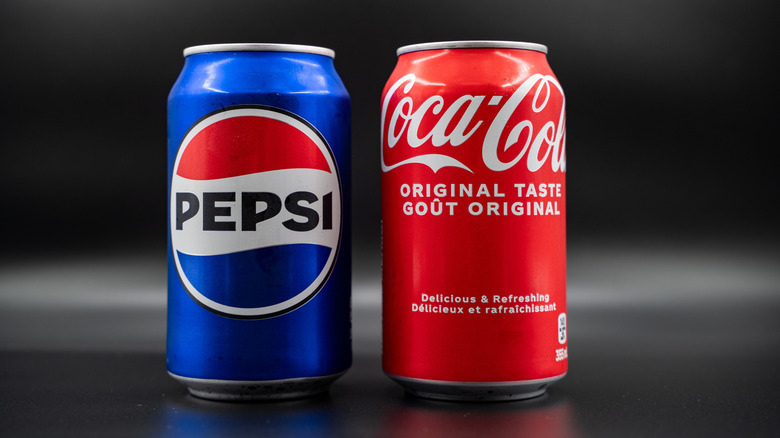
Thanksgiving is usually a time to put work aside, enjoy some good food, and talk about everything we're grateful for. But in 2005, it seems that Joya Williams wasn't in a very thankful mood. At the time, she was working as an executive assistant at Coca-Cola, and she wasn't enjoying it because she felt the company wasn't treating her as well as it should be. Williams got chatting to another Thanksgiving guest, Edmund Duhaney, and it appears he started hatching a plan to really get one over on her employer.
In what sounds like the plot of a movie, Williams and Duhaney then conspired with another contact, Ibrahim Dimson, over the next few months to attempt to sell insider secrets about Coca-Cola to Pepsi. Dramatic, right? Even the FBI got involved. Ultimately, the trio was foiled. Pepsi, it turns out, was more loyal than they expected. After receiving an email from Dimson trying to sell them Coca-Cola's trade secrets, including ingredient information, for $1.5 million, the company's representatives went straight to the police. In 2007, Williams was sentenced to eight years in prison over the failed scheme.
The case had a huge impact, and decades later, it was still being discussed online. "Those employees really thought Pepsi [was] like Plankton tryna get Mr Krabs formula," said one Redditor in r/Damnthatsinteresting. Another added: "Dunno what Pepsi would even do with said secrets. They could make Coke if they want. They make Pepsi instead."
The $9 million Poppi lawsuit over gut health
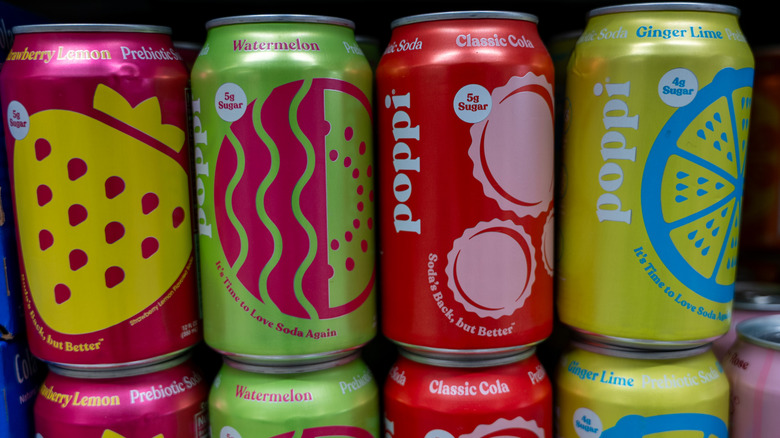
In the 2010s, a brand new category of fizz started to emerge: functional. The idea was that these sodas taste like the classic, beloved sugary beverages, but with more gut health benefits. Poppi, founded in Texas in 2016, for example, attempts to attract customers with its low-sugar recipe containing prebiotic fiber. But it has gotten into trouble in the past for potentially taking its claims too far. Like, $9 million worth of trouble.
It's well established that dietary fiber, such as the inulin in Poppi's drinks, is beneficial for gut health. However, according to a 2024 lawsuit, the problem with Poppi's sodas is that they don't actually contain enough inulin, which is a prebiotic, to make a meaningful difference to the gut. As a result, the lawsuit maintained that Poppi was misleading its customers.
The soda brand denied wrongdoing but agreed to an $8.9 million settlement in 2025. The court granted final approval in April 2026.