

Fried Pork Chops Stay Crispy When You Take This Easy Extra Step
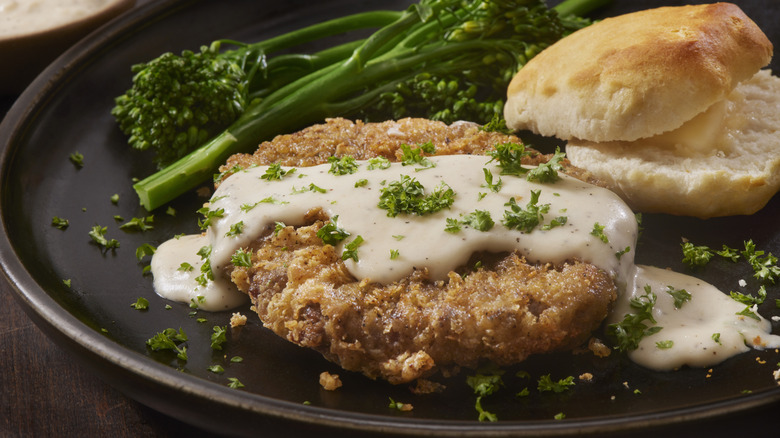
Pork chops are one of those cuts of meat that take a little extra know-how to make. Cook them too long and they come out tough; don't season them enough and they'll taste bland. However, fried pork chops coated lightly in breading is a surefire recipe to bring the correct balance of juicy tender pork, paired with a light and crisp, flavorful exterior. And according to Charlie Torgerson, executive chef and owner of Charlie T's Foods, a recipe and menu development consultancy, to make fried pork chops that stay nice and crispy, there's one simple key: let the pork chops rest 10 to 15 minutes after breading.
Torgerson, chef partner to the National Pork Board, says letting raw, breaded pork chops rest before frying helps with the cohesion of the breading to the meat, as well as cooking temperature regulation. Specifically, he notes that resting breaded pork chops "transforms the flour layer into a cohesive 'glue' that locks the breading directly onto the meat, preventing it from flaking or sloughing off in the fryer." He also explains that having a breading that sticks to the meat prevents "steam pockets" from forming between the meat and outer coating (an occurrence which can create soggy pork cutlets).
Resting pork prior to frying also lets the meat come to room temperature, so it's not too cold when it enters a pan or pot of hot oil. "Dropping ice-cold pork into hot oil plummets the oil temperature, leading to greasy, unevenly cooked chops," says Torgerson.
More tips for crispy fried pork chops
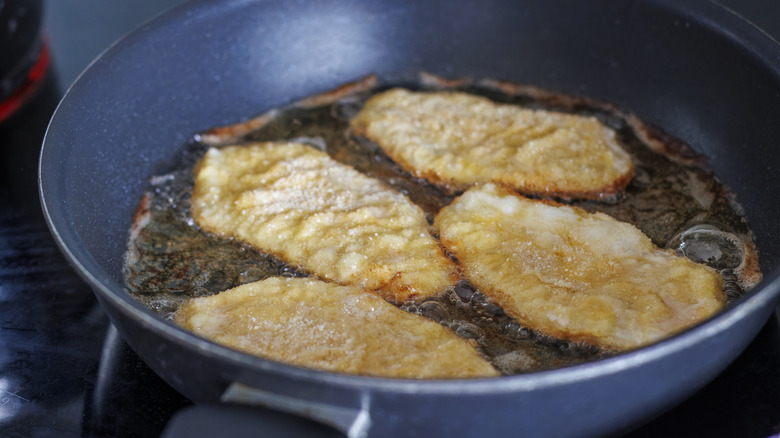
Additionally, patting pork chops dry before applying the coating also helps ensure the coating sticks and becomes crisp. Then, as the expert chef notes, pork chops should rest for about 10 minutes so the coating sticks and doesn't separate from the meat or become soggy. This generally applies for pretty much whatever coating you dredge the meat in, whether you apply a coating of flour, cornstarch, or breadcrumbs and eggs (though you can also give pork chops the fried chicken treatment in a buttermilk brine or add a touch of Buffalo sauce to the mix prior to coating). Either way, Torgerson recommends elevating pork chops after coating them, specifically on a wire cooling rack set over a baking sheet, to let the coating pork chops breathe and prevent condensation from making the crust damp.
Finally, to ensure a crisp outer fried layer, Torgerson also says incorporating more starch into the coating — substituting 25% to 50% of the all-purpose flour in a recipe for cornstarch or potato starch — makes a crisp difference. "Starch prevents gluten development and holds onto less moisture, resulting in a shatteringly crisp, glass-like crunch," the expert chef explains. All these tips are meant to keep fried pork chops nice and crispy; for instance, when fried traditionally in a pan with a pro flipping technique. However, Torgerson notes that an air fryer also works well to make crisp pork chops, without as much oil.