

10 Unspoken Rules When Dining In Mexico
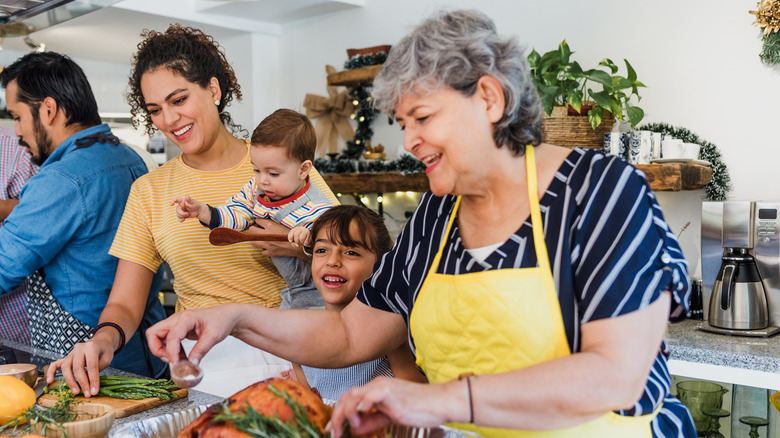
There are several reasons why Mexican food tastes different in Mexico. Firstly, traditional food uses prime local ingredients. Secondly, techniques and recipes are passed down and perfected through generations. And thirdly, nobody knows how to execute a dish more than folks from the culture that created it. The aromas, language, music, and scenery just enhance the experience, and of course, the people you meet along the way are what make it whole. In order to immerse yourself completely and soak up the full experience, follow these 10 unspoken rules when dining in Mexico.
To create this list, we've interviewed Daniel Marquez, Executive Chef at Cañonita inside Grand Canal Shoppes at The Venetian Resort Las Vegas. Marquez was born and raised in Mexico City and lived there until moving to the United States at 21. Because of the diversity found in Mexico City, Chef Marquez was able to experience everything from street food and neighborhood markets to traditional family cooking, along with food from varying regions. He returns frequently and especially enjoys discovering regional dishes and reconnecting with the flavors he grew up with, now with a newfound appreciation as a professional chef of 34 years. Next, we spoke with Chef Nacxi Gaxiola, who was raised in Mexico and has been working in kitchens since he was 15. He continued his pursuit of the culinary world and is the founding chef of XILLI, which sells artisanal Mexican preparations "that represent our country's true culinary heritage, while honoring its traditions."
Be aware: It's not just about what's on your plate
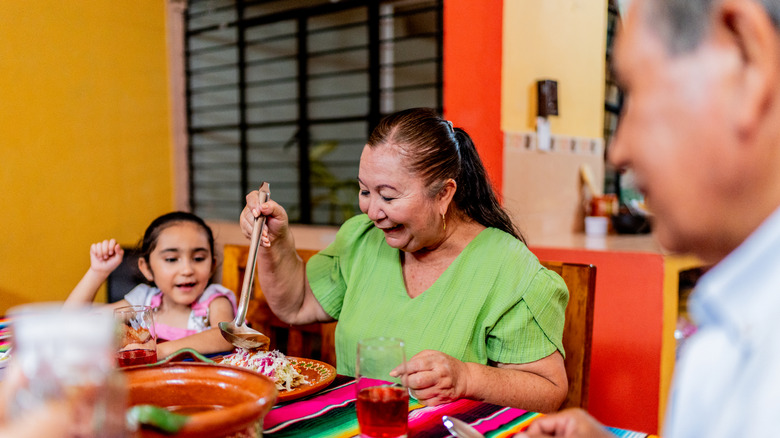
As a chef with cultural anthropology degree and a focus on food culture, I've always enjoyed learning about the history of traditional dishes, the context in which these dishes are served, and how the experience of eating has developed over generations. Chef Daniel Marquez explains: "Growing up in Mexico taught me that food isn't only about what's on the plate. It's about family, hospitality, tradition, and taking the time to share a meal with other people." The unspoken rules of a dining experience are contextual: Are you out to eat or have you been invited into someone's home? Are you with strangers or friends? The answers will help you adapt and follow the rules of dining in Mexico, and the first rule is to understand that it's not just about the food; you must be aware of the context of the dish.
Chef Marquez notes, "What impressed me most was seeing the connection between the traditional food in the markets and on the streets and what chefs were doing in more refined restaurants. The ingredients might be humble, but there was so much history, knowledge and technique behind them." You may notice similarities and differences in the dishes, and you will certainly notice this within the dining context. Look around and note what the locals are doing. Are they engaging with each other? Are they using certain techniques to enjoy their food? This will vary greatly depending on the venue and individuals, but it's a great place to start if you're feeling lost.
Recognize the diversity of dining cultures across Mexico

Both Chef Daniel Marquez and Chef Nacxi Gaxiola noted the immense regional culinary variations in Mexico. This diversity affects more than just the ingredients and flavors — it trickles into the cultural norms surrounding dining. Like any country, the landscape, flora, fauna, history, and bordering countries have influence over each region in a different way.
Chef Marquez notes, "I was also fortunate to travel through most parts of Mexico, which taught me very early that there really isn't just one 'Mexican cuisine.' Every region has its own ingredients, traditions, techniques and way of eating." Growing up in Mexico City and having traveled through most of the country, Chef Marquez was able to experience these differences. Similarly, Chef Gaxiola states that something as common as a tortilla might look or taste incredibly different depending on where you are in Mexico.
Chef Gaxiola's advice on learning dining rules is to ask locals. "A tradition in Mexico City might differ from one in Mérida or Oaxaca," he added. Chef Marquez echoes, "My advice is to respect those regional differences. Don't arrive with a preconceived idea of what Mexican food is supposed to taste or look like. Ask questions and let the locals show you how they eat. That's one of the things I still enjoy when I return to Mexico for culinary trips." And don't forget, culture is ever-changing.
Stay curious and ask questions
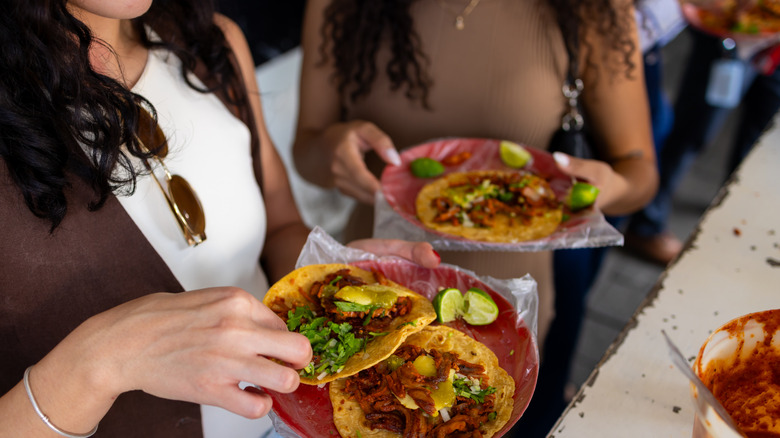
The most important thing to do when you enter another culture is to recognize that you are a guest who doesn't know everything. You will likely be met with grace if you carry this perspective and are open and willing to learn. Actively asking questions is a wonderful way to show that you are trying to follow the unspoken rules. It will only enhance your experience, dining or otherwise. Chef Nacxi Gaxiola states that "if you're willing to let locals show you how things are done locally, and you're willing, or brave enough to ask questions when in doubt, you should be fine."
Although you may think you know Mexican food, understand that local dining is often very different. The only way to learn is to actively seek knowledge. Chef Daniel Marquez adds that visitors who come to Mexico shouldn't come with the preconception they know Mexican cuisine. "Be curious, observe how local people eat, ask questions, and respect the traditions of the region you're visiting. Mexico's cuisine changes tremendously from one region to another, and there is always something new to learn," he clarifies.
Folks from every corner of the world are often excited to share their knowledge and culture. Don't make assumptions, and if you notice that you're going against the grain, it's better to address it with someone who knows what they're doing rather than continue your behavior on the off chance that it's outside the scope of the local dining etiquette.
Take your time
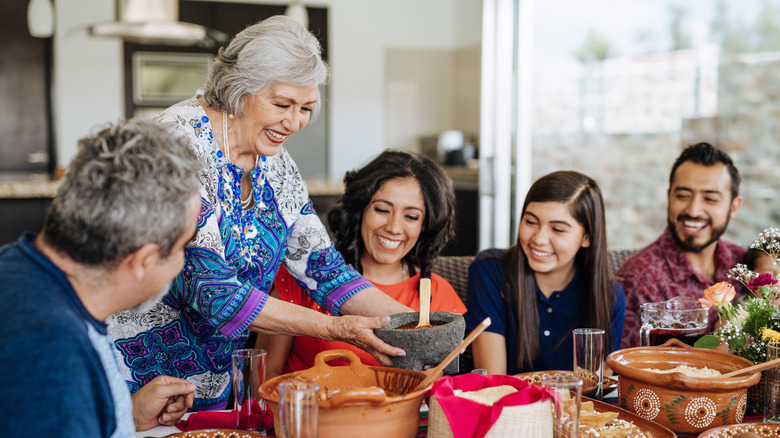
In today's world, it's easy to get wrapped up in the hustle and bustle of life, but some cultures have preserved a more manageable-paced lifestyle, at least in some regions. Along the Swahili coast, "pole-pole" refers to the unhurried lifestyle that many local folks live by. In Greece, they call it siga-siga, and in much of the Latin diaspora, including Mexico, they call it "sobremesa" — translated as "over the table". It refers to the mealtime and post-meal conversations that encourage intentional, meaningful human interaction and significantly slower mealtime.
The tradition of sobremesa echoes another unspoken rule of Mexican dining: Understanding that it's not just about the food on your plate; it's about the experience of genuine connection. Lingering after dinner, and even just enjoying time between courses, can make space for these types of conversations, opening the door for visitors to ask questions and get acquainted with the culture. If you're planning to meet locals for dinner, or you're going to their house for a meal, don't plan any rush-out-the-door time-sensitive activities post-meal. The allotted time for sobremesa will vary significantly depending on the folks you're with, the region, and what style of meal you're enjoying together. Just be aware that a quick, New York-style meal is likely not the game plan, and you should avoid leaving in a hurry after the last bite has been swallowed. Embrace the linger!
Embrace ¡Buen provecho!
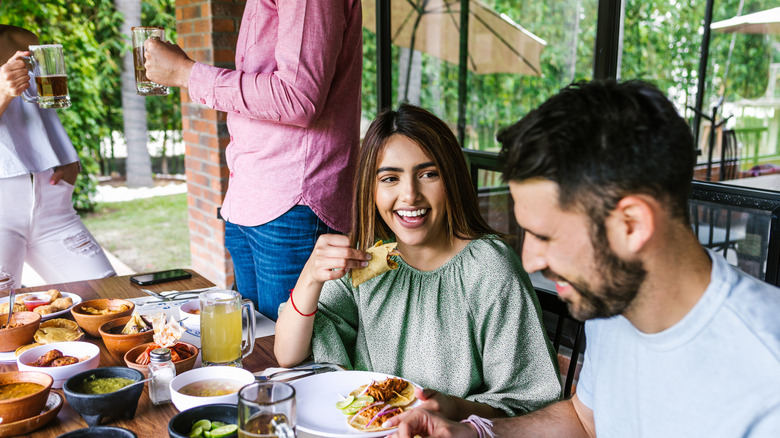
Ever been hit with "bon appetite" or "mangiamo" before eating with a group? These linguistic boundary markers signal it's time to get your grub on. It's a helpful signpost even for non-locals to alert them that all pre-eating traditions have been attended to. In many areas of Mexico, they use the phrase "¡Buen provecho!" which essentially means, "enjoy your meal" or "may you benefit from this meal." You might hear it from hosts, restaurant staff, or even friendly nearby diners.
The unspoken rule here is to embrace and engage in this linguistic ritual. If you want to engage with Mexican dining culture, it's essential to participate in the linguistic traditions around food as well. Reply with "Gracias, igualmente" (thanks, likewise) or simply "gracias" if you're speaking with someone who won't be joining you to eat. Once you're comfortable with the context in which it's used, feel free to use it yourself. It may feel intimidating to engage in a culture you're new to, but more often than not, locals appreciate the effort and words of goodwill.
Respect the tipping culture
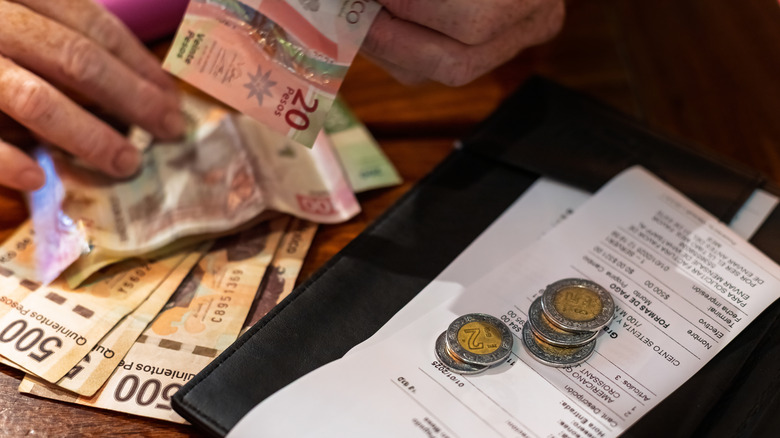
Tipping cultures vary drastically from country to country, and even region to region. As you may have noticed, the landscape of tipping culture is ever-changing — think takeout tipping culture pre- and post-COVID-19. While a massive, over-the-top tip is often well received in the United States, there are a few unspoken rules to follow when it comes to the tipping culture in Mexico. Firstly, don't overtip. Although we are used to 20% or more in the United States, in Mexico, 10% is typical and 15% is reserved for outstanding service. Tips typically apply to sit-down service rather than street food or vendors, although it never hurts to throw a few pesos in a tip jar if you see one or just tell your vendor to keep the change.
When in doubt, ask the locals what the tipping protocol is. Some tourist-focused resorts are more accustomed to overtipping by patrons from the United States. Carry small bills or some coins with you for tipping outside of traditional dining establishments and refrain from asking your server to split the bill. Go with the flow, learn the rhythm, and if the worst thing you did on vacation in Mexico was overtip, then try to not sweat it.
Ask for the check
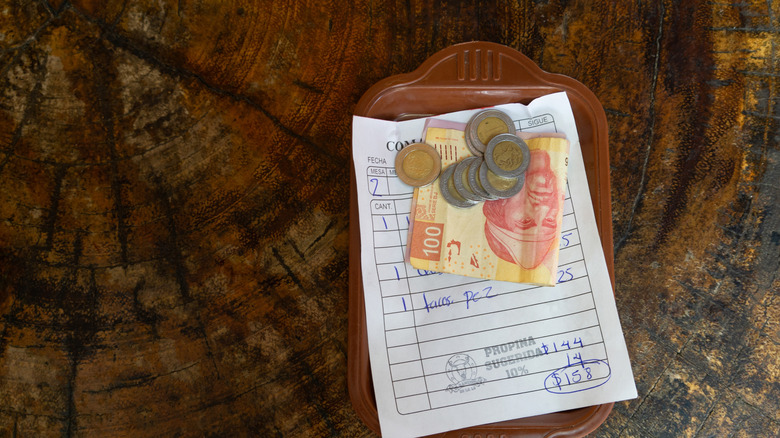
One of the many wonderful aspects of sobremesa is that your wait staff is unlikely to rush you through your meal if you're dining out. Sometimes in U.S. restaurants, you may find servers taking away your plate as you begin to chew your last bite, asking if you'd like dessert shortly after the meal has arrived, or even dropping the check off when you're just part-way through dinner. You will likely not find that in most of Mexico. In fact, you will probably have to request the bill. To do so, you can simply ask, "La cuenta, por favor," which means "the check, please."
Like in any country, act politely as you flag down a staff member. Make direct eye contact, wave with a smile, speak Spanish if you're able, and thank them when the check arrives. This unspoken rule sums up why pre-travel cultural education is so important: If you didn't know about this, you may find yourself irritated that your waiters continue to ignore you, when in reality, they are giving you space to breathe. So, if you're waiting around wondering why the staff isn't bringing the check, it's time to take action.
Feel free to step outside of the box
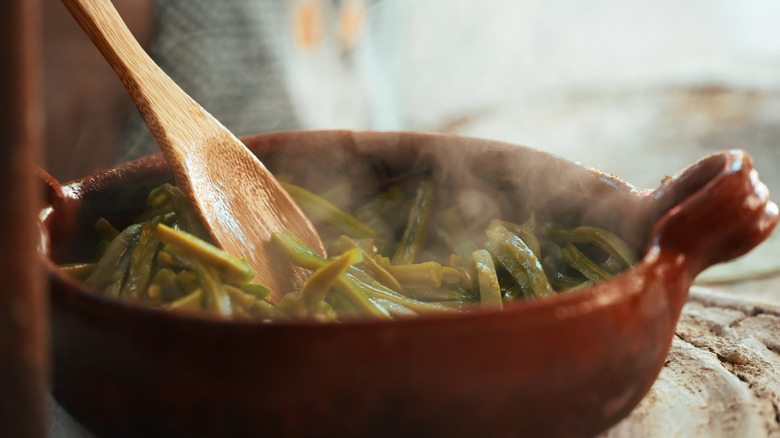
Firstly, it's important to note that the food you will enjoy on Mexican soil differs quite a bit from most Mexican food outside of its native country. So, even if you order something you might otherwise deem basic, you may be pleasantly surprised by the difference in the local version. Enjoy these differences and recognize that while a black bean taco might have many faces, it's also important to try new things for a richer culinary experience — avoid the mistake of not exploring the menu.
Chef Nacxi Gaxiola suggested that "... foreigners should be open to discovering and learning and allow themselves to be introduced to local customs and traditions." One way to do that is by ordering foods you've never heard of before and asking questions about their origin, or why the chef would recommend it to someone new to the area.
Chef Daniel Marquez recalls his experience when he spent a week in Oaxaca, mainly focused on culinary adventures. "I visited the local markets, ate street food, and also experienced fine-dining restaurants. Even though I grew up in Mexico City, had traveled throughout Mexico, and had already spent many years working as a chef, I encountered ingredients and cooking techniques in Oaxaca that I had never seen before." This is how you maximize your experience. Step outside of your comfort zone, embrace the new, and dare to adventure.
Always taste your salsa first
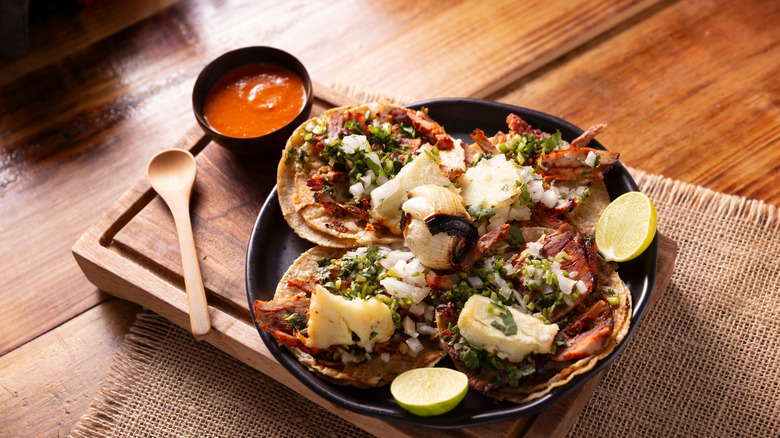
This unspoken rule while dining in Mexico may just save your taste buds from catching fire. While you may spoon salsa from the jar right onto your tacos at home, there is a different protocol that you should consider when visiting Mexico. Take your spoon and add a little salsa to your plate. Give it a taste test and then determine how much you want to add. You may even add little bits as you go or switch up the sauce partway through. There are several reasons why this is important.
Authentic, fresh Mexican salsa might pack a stronger punch than you're used to. You certainly don't want your salsa to overpower your food, as it's meant to accompany and enhance the main dish. In addition, salsa can be very hot, and that level of spice might not be within the spectrum you are used to. The salsa rule that locals know but most tourists miss is simple: Taste first, then salsa. Taste means taste your food and then sample the salsa before combining them to create the harmonious flavor of your dreams. There are many international dining etiquette rules that are fairly obvious, but this is not always one of them. Enjoy your Mexican cuisine like a local by dipping your toes in before the cannonball. In addition, Chef Nacxi Gaxiola suggests avoiding asking for ketchup or mayonnaise and sticking with the local flavors and options.
As long as you're polite, don't let fear hold you back
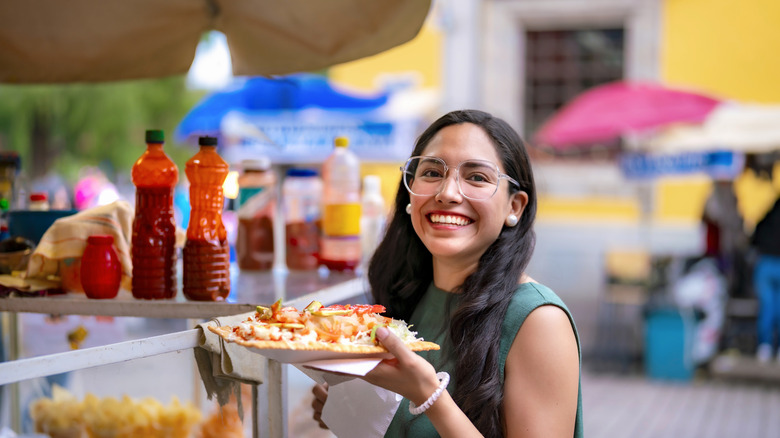
The word rules can feel strict and hard-and-fast. In reality, these unspoken rules are more like accepted cultural customs that have been passed down and adapted through generations. You didn't learn to ride a bike on your first try, so be open to stumbling as you learn the ropes. Chef Nacxi Gaxiola reassures us by saying, "I think that, besides being literally disrespectful, just as foreigners should understand that local customs might differ from those back home; locals generally also understand that foreigners might have a different set of traditions themselves." So, stay polite, and keep trying.
What's the worst thing that could happen? Chef Gaxiola states, "At most, a local might just think the foreigner has absolutely no idea what they're doing. And then it's up to the foreigner whether they want to confirm that assumption." If you do misstep, just apologize. He suggests saying, "I'm sorry, and I don't mean to disrespect anyone, but I honestly have no idea how this is supposed to be done or eaten. Could you tell me or show me? I'm willing to learn (even if I die trying)."
It's that openness and willingness to mess up that allows us to learn and grow. Most parts of Mexico are very accustomed to foreign visitors, just as you might be in your hometown. Just do your best, stay humble, and enjoy the ride.