

The Average Lifespan Of Marble Countertops

If you're in the market for a new countertop in a brand new home or as part of a kitchen renovation, you have well over a dozen materials you can choose from. From old standbys like laminate, granite, and quartz to less common choices like copper, zinc, and soapstone, each has its advantages and disadvantages. Marble has remained popular for ages, not only for its appearance, but also because of its remarkable longevity. When properly cared for, marble can last for decades or even a century.
Tasting Table asked Cara Woodhouse, founder and creative director of Cara Woodhouse Interiors, about the average lifespan of a marble countertop. "Marble is a natural stone, so with proper care it can easily last a lifetime, often 50 years or more," she told us. Some sources suggest a range of 20 years all the way up to 100. Woodhouse's bigger concern was not how long marble lasts, but whether you'll love how it changes as it ages. "Over time it etches and develops a soft patina, which is part of its beauty," she explained. "If you appreciate a lived-in look, marble is hard to beat."
Marble countertops have some disadvantages, especially if they see a lot of use. That aged patina Woodhouse mentioned as part of marble's charm may not appeal to everyone. Also, marble exposed to a lot of acidic foods like lemon, red wine, and tomato is susceptible to etching and staining. It's also prone to chipping and scratching. When you factor in the high price tag, some people feel the stone is more hassle than it's worth.
Extending the lifespan of marble countertops
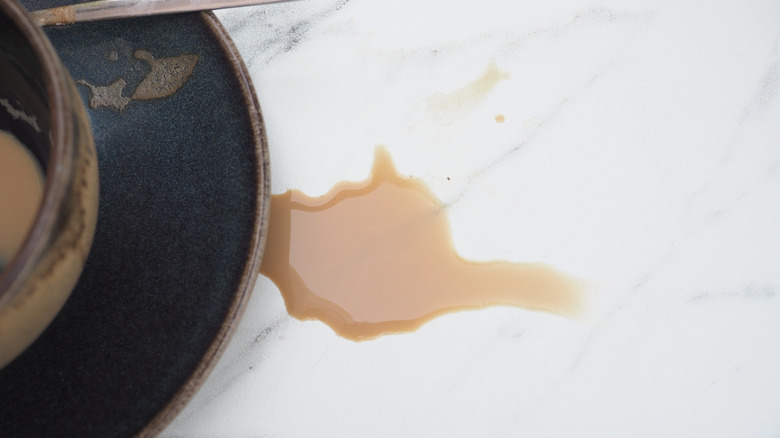
Keeping marble looking and functioning well for 50 to 100 years takes some effort, which doesn't appeal to everyone. For example, Mike Holmes said that marble countertops weren't worth the trouble, and other experts warn there are plenty of mistakes everyone makes with marble. So, we asked Cara Woodhouse if she had any tips for making sure marble lasts as long as possible.
"Consider a professional protective treatment," Woodhouse said. Marble needs to be sealed regularly, even though there's little consensus on just how often. Some suggest once per year while others say you could do it once every 10 years. "A quality impregnating sealer, reapplied every six to 12 months depending on use, helps prevent staining from oils, coffee, and wine," said Woodhouse.
In terms of preventing damage, Woodhouse recommends using TuffSkin and AntiEtch, two protective treatments designed to guard marble against staining and etching. "Wipe up spills quickly and clean gently," she also told us, noting that a pH-neutral stone cleaner works best. "Protect the surface," Woodhouse added. "Use cutting boards, trivets, and coasters, and choose a honed finish if you want everyday wear to blend in rather than stand out."
These suggestions don't take much effort, but the key is to follow them consistently. In a busy household, that can be a challenge. If everyone learns to wipe spills and use cutting boards, then your marble countertops could easily outlast almost everything else in your kitchen.