

5 Disadvantages Of Marble Countertops
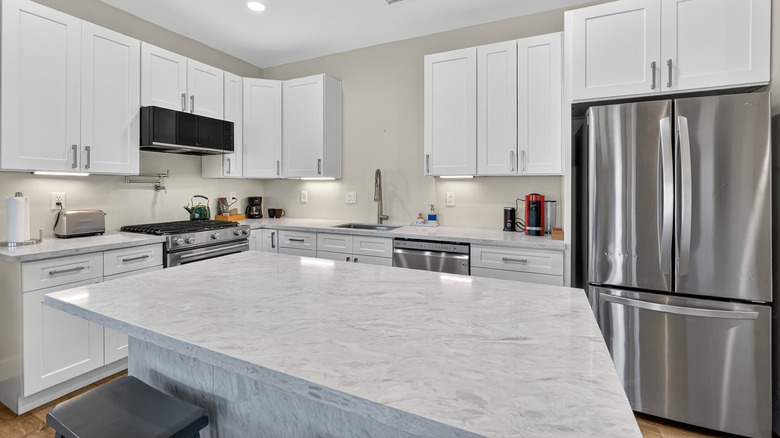
Marble countertops creating an unmistakably luxurious presence in any kitchen they inhabit. The totally natural stone has been embedded in architectural and interior design for centuries, with every slab harboring unique veining patterns and intriguing variations. That said, the beauty of marble comes with a few practical tradeoffs that aren't necessarily obvious when admiring those polished works of art on showroom floors.
Unlike countertop materials designed for low maintenance, marble requires some awareness of which cleaners to use, how the surface gets treated, and which spilled liquids can cause long-term harm. For example, certain cooking and cleaning products can leave dull etch marks. Liquids and oils may create stains, and scratches or chips can send you in search of professional help. The stone itself can be on the pricey side, while the weight and fabrication of a typical marble slab can make installation more complicated than you might imagine.
None of these things mean that marble is automatically a poor choice for your kitchen countertops — in fact, they're quite the opposite. Plenty of homeowners are happy to accept some extra maintenance, plus marble's warm, worn patina over time, in exchange for a natural material that feels like part of the family. But if you're considering marble for a kitchen upgrade, it does help to understand some of the less-glamorous qualities. To avoid some pop-up surprises later, here are five disadvantages of marble countertops to consider.
Marble countertops are vulnerable to etching from acidic foods
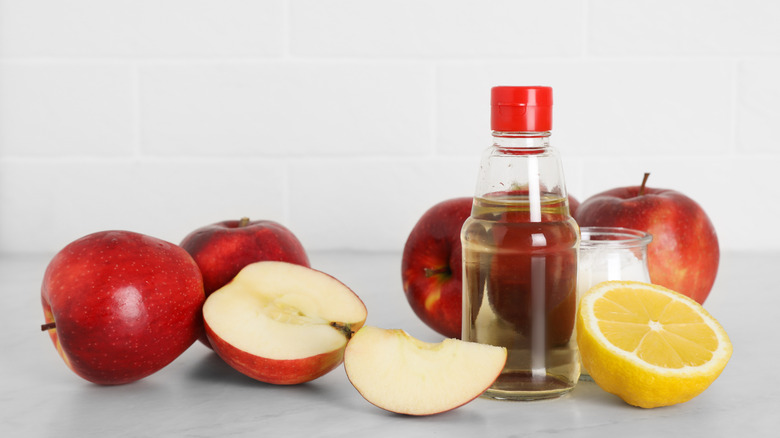
Etching is one of the most significant drawbacks of marble countertops but can also be one of the easiest to misunderstand. This phenomenon isn't the same thing as staining: Instead of a substance soaking into the marble and staining it, an etch happens when something acidic reacts with calcium carbonate in the marble and actually changes its surface. That usually involves dulling the polish and wearing down the texture. Ordinary kitchen cleaning agents and certain food ingredients such as lemon juice, tomatoes, wine, vinegar, and even coffee can permanently etch that gorgeous marble countertop you lovingly installed.
Because of these issues, you'll need to find products designed for natural stone, or alternatively use soaps made with vegetable oils or mild pH-neutral cleaners. It's worth noting that varying types of marble are available for kitchen counters; if you choose honed marble with no added shine, there is less likelihood of damage from scrubbing or etching.
Sealing potentially helps with etching but isn't a guaranteed protection. If an etch does develop, mild damage could potentially be polished out. However, more substantial blemishes can mean hours spent sanding, refinishing, resealing, or calling in the stone-care cavalry for assistance. When the proverbial rubber meets the road, home chefs who work with citrus, vinegar, or any acidic ingredient on a regular basis may well decide that marble is more high-maintenance than it's worth.
Marble can stain and may need sealing
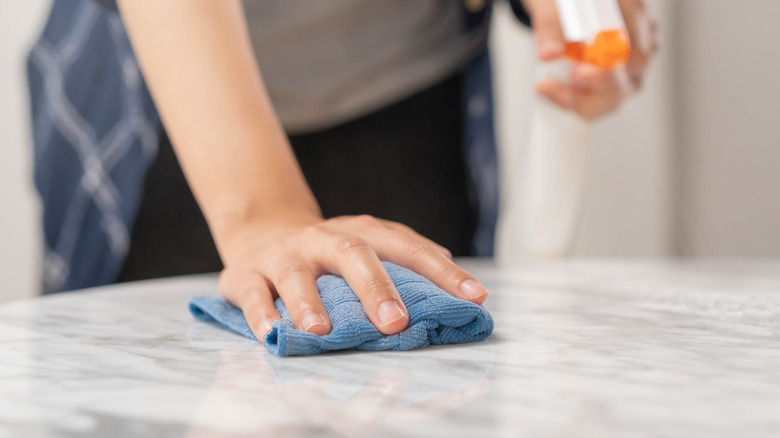
Marble is relatively soft compared to other stones and porous enough to absorb liquids. As a result, your countertop could easily end up with stains from everyday kitchen items such as cooking oil, coffee, and certain foods with deep coloration. You'll also need to use coasters for drinks to avoid water stains.
Sealing can help keep liquids from penetrating, though it's not a fail-safe prevention tool. You'll still need to clean up spills before they eventually make their way through the sealant. And sealing isn't typically a one-and-done process, instead requiring routine resealing over time. For a deeper look at the need for sealing, check out this article on the major downside of marble countertops that nobody mentions. It points out that failing to keep marble surfaces sealed can cause major staining that costs hundreds of dollars to fix. You'll also find advice for determining when it's time to reseal, plus a quick guide to sealing marble counterparts yourself.
These things are not insurmountable. But if your ideal countertop is one where spilled coffee or wine isn't a major ordeal, especially if unnoticed or disregarded on a busy day — then marble may seem like a commitment best left for another point in life.
Marble is prone to scratches, chips, and other damage
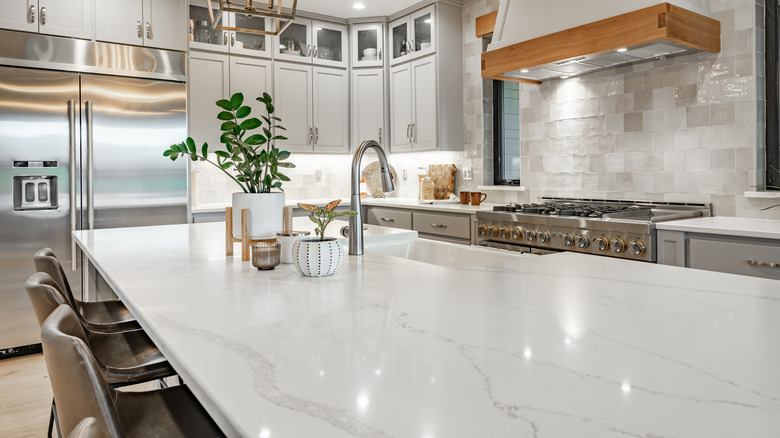
Marble is vulnerable to scratches, dings, and other signs of everyday living. That means cutting food directly on the countertop is a no-no, as is using abrasive cleaners and scrubbers, which can damage a polished finish. Then there's the separate issue of heavy objects.
Natural stone is known for durability, but marble countertops can still chip or crack under sudden pressure from heavy cookware or other objects making their way into the kitchen. Even pans or dishware sliding across the marble surface may leave a mark, and edges in particular can be easily scratched or dinged during the course of everyday living. Your time, attention, or money will be required when these inevitabilities happen.
Marble can still give you decades of beauty and dependable service when treated well, and some homeowners even embrace scratches and dings as a sign of lives well-lived and meals well-loved. Others, however, want a countertop with showroom status from day one to eternity. If you fall into that second group, be prepared to work a bit harder when marble graces your kitchen.
Marble countertops can be expensive
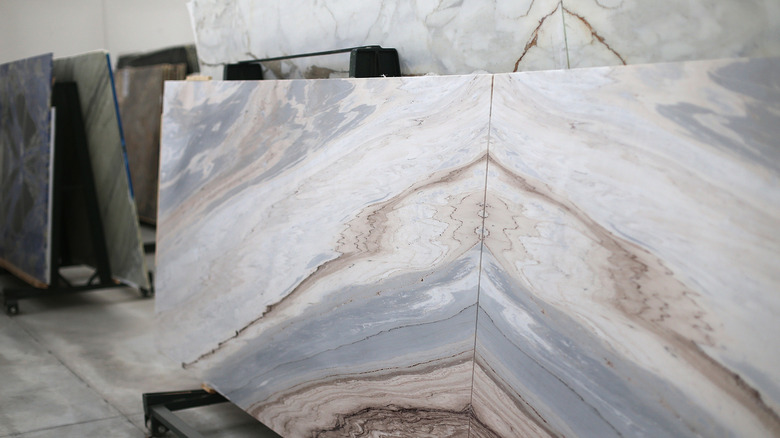
The luxury reputation of marble doesn't just come from appearance. Choosing it for your kitchen can also mean an upper-end budget, especially when including the price of required fabrication and installation. While the total cost can vary considerably by region and specific style of stone, Angi 2026 pricing data places marble countertop projects at an average of around $3,000. However, depending on the total slab size, that can drop as low as $600 or go as high as $15,000.
This Old House breaks down the cost for installed marble countertops based specifically on square feet, providing a general range of $15 to $190 per square foot. Installing them yourself can save money — but consider your time, ability, and expertise level before making that commitment. And because of the bulkiness of solid stone slabs, you'll need some willing and able helping hands. Keep in mind other associated costs as well, including removal of existing countertops, which can easily run several hundred dollars. Then there's sealing treatments for flat surfaces and edging, plus installing matching backsplashes or kitchen islands.
Over time, marble can also hit your pocketbook for the periodic resealing, maintenance, and potential repairs from the accumulated scratches and dings. The hardness of natural stone is typically measured on the industry's Mohs Hardness Scale, which places marble around level 3 to 4. That's softer than granite, quartz and quartzite countertops, thereby leaving marble more susceptible to damage.
The weight of marble can make installation more complicated
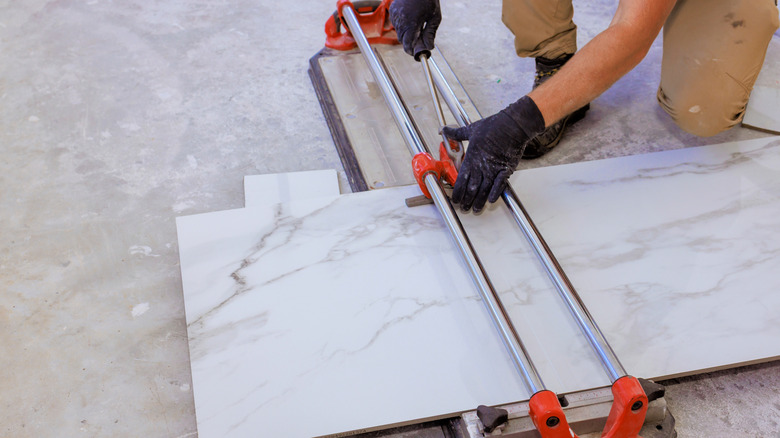
Similar to the disadvantages of granite countertops, marble is quite heavy, which can make installation more complicated and time-consuming — most likely pushing it out of the weekend-warrior DIY category. After meticulous measurement and fabrication (typically performed offsite), marble slabs must be transported, lifted, and positioned very carefully. The weight of the stone sometimes needs extra support for underneath cabinets, bases, or flooring, which adds to the project's complexity and expense.
Once the fabricated pieces arrive, installers not only position the extraordinarily heavy slab in place, but join separate sections where needed, and align with the cutouts for sinks, faucets, cooktops, edges, and more. All these must be balanced with weight to prevent damage to the stone and to surrounding appliances, doorways, backsplashes, and floors. So it's not just the physical challenge of moving the slab, but also the precision required for perfect placement. The last thing you want is to go the DIY route and suddenly realize that you've cut the heavy stone incorrectly or installed it a half-inch off center.
Professional installation of a marble countertop isn't necessarily a drawback, especially if you've budgeted for it from the offset. Chances are, when splurging on the cost and beauty of genuine marble, most homeowners aren't actually planning on carrying the giant slab home from the warehouse. But compared to lighter countertop materials that are easier to cut, transport, and install, the weight of marble does mean a more specialized project.