

Cowboys Enjoyed This Deep-Fried Sourdough Snack While Gathered Around The Campfire
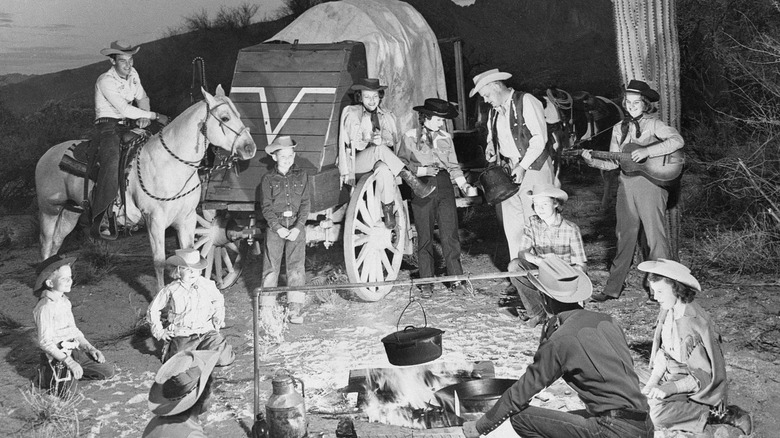
When most think about what cowboys ate on the trail, they picture beans, bacon, and coffee strong enough to float a horseshoe. That's not far off. But the crews who drove cattle across the West in the late 1800s had a sweet tooth too. When the cook had a little extra time (and a little sugar to spare), one of the treats he might turn out was a plate of hound's ears.
No actual dogs were involved, of course. Hound's ears were made by thinning out a bit of sourdough batter and dropping it into some hot bacon grease. While cooking, it took on a floppy, uneven shape reminiscent of a dog's ear — then came the "whirlup" sauce. This has been described as a sweet sauce made from a water and sugar base and flavored with whatever spices the cook had on hand, occasionally chopped or smashed dried fruit. The sauce thickened a bit as it cooled before pouring over the fried dough. According to late Western author Stephen Bly in a 2009 blog post, the combination was "a big hit with hungry cowboys."
Sourdough was a cowboy-life essential back in the day, as it went into nearly every meal on a cattle drive. Once Charles Goodnight built what's credited as the first chuck wagon in 1866, crews traveled with their own cook — and his starter was behind both hound's ears and the daily biscuits that cowboys relied on each morning. Bly noted that these starters lived in a 5-gallon wooden keg, and that some cooks even slept beside them on cold nights — so you imagine just how treasured this dessert was.
Hound's ears sound tastier than most cowboy food
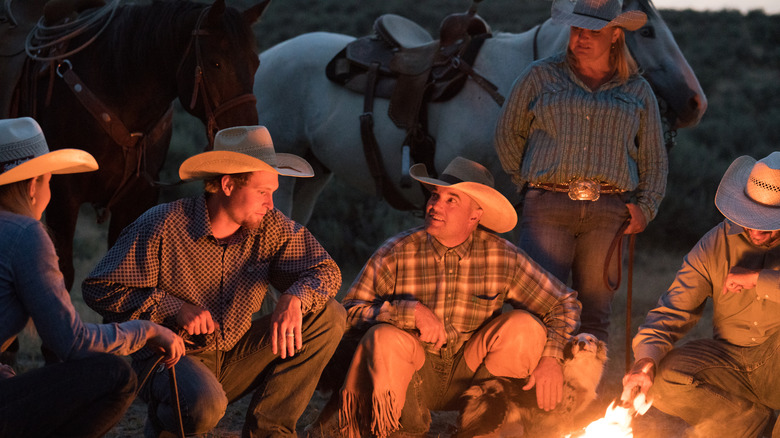
Plenty of what cowboys ate has not aged well. Sowbelly, the salt pork that showed up at nearly every meal, had to soak for hours before anyone could eat it, and hardtack was so prone to bugs that it picked up the nickname "worm castles." Those are just a couple of the classic cowboy staples many would consider inedible today. Next to them, fried dough soaked in warm, fruity syrup sounds like something you'd happily order at a county fair.
It also stood out among cowboy desserts, which were few and far between. The U.S. National Park Service reports that a chuck wagon cook might bake a cobbler or pie on occasion, though other staples like syrup and stewed prunes were more common. Fried treats did turn up now and then, such as bear signs, lumpy, doughnut-like cowboy sweets with a name we'll let you look up the origin of for yourself.
Treats like hound's ears mostly went to crews fortunate enough to have a well-stocked cook. Today, their closest relatives are probably funnel cake or fritters with a spoonful of fruit compote on top. And since plenty of home bakers keep a jar of sourdough starter going these days, anyone with a little discard and a cast-iron skillet could fry up a batch of their own, "whirlup" and all.