

Bye, Granite: The 2 Stylish Countertop Alternatives Shea McGee Relies On

Choosing the right countertop for your kitchen is a big decision. Yes, it is expensive, but it also impacts both the design and the functionality of the space. Just ask Shea McGee, interior designer and chief creative officer of Studio McGee. She has seen it all over the years, and marble and soapstone are two countertop materials she turns to again and again.
"Marble is timeless and a statement with its rich curves, as is soapstone with its unique texture," McGee explained to Home & Gardens. Soapstone and marble are both natural countertop materials (versus a composite countertop material like quartz). McGee wants a kitchen to be both functional and beautiful, and these two countertop materials definitely deliver. Soapstone is great for people who cook a lot due to its high heat resistance, while marble is slightly harder and generally more resistant to scratching.
McGee has marble countertops in her own kitchen, and loves them for the same reason many chefs do — as a durable prep space that stays cool to the touch, making them ideal for working with dough. "They also make the most beautiful backdrop to everything I cook," she concludes. If you're a fan of making puff pastry from scratch and are remodeling your kitchen, marble may be the right countertop material for you.
How do marble and soapstone compare to granite?
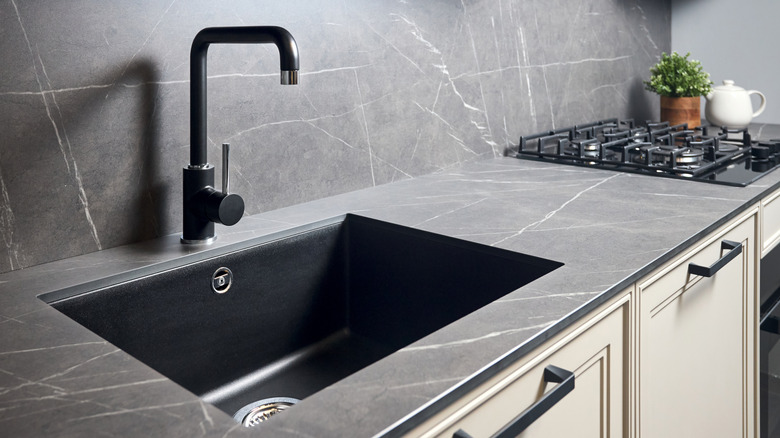
If you want to make a major design impact with your countertops, you may want to consider marble. The stone slabs come in a rainbow of colors, with veining ranging from subtle and soft to high-contrast. However, there are some disadvantages of marble countertops. Marble is porous and requires regular sealing to help prevent stains, still acidic items like citrus or tomatoes can etch its surface if left on the counter for too long. Marble is also softer than granite or quartz and more prone to scratches. Granite can also require sealing, depending on the slab, but generally offers greater heat and scratch resistance. If you're ponying up for marble countertops, you may as well splurge on a great wooden cutting board to protect your investment.
Soapstone also has its pros and cons. This stone has a unique, soft, almost soapy texture, which is where the name comes from. Soapstone is available in rich, organic colors — equally beautiful but less flashy than marble. Soapstone has a more matte, patinated appearance than high-gloss marble, granite, and quartz. Unlike marble or granite, it is nonporous and highly resistant to staining. However, it scratches easily, though scratches can often be buffed out to smooth the surface. Soapstone is also highly heat-resistant and can handle hot pans without a trivet. The color of the soapstone will deepen with age, or you can apply mineral oil to enhance the coloring more quickly.