

What Restaurant Servers Wish Diners Knew About Split Checks
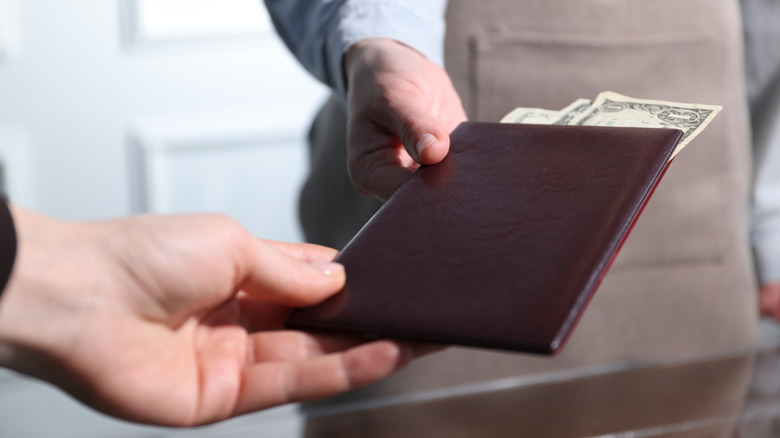
If you're anxious about asking a server to split your check, don't be. It might feel a little awkward, like you're asking for special treatment or for your server to do a bunch of extra work they didn't sign up for, but that uneasiness is a holdover assumption from the time before modern point-of-sale systems made dividing a bill pretty simple. In most restaurants these days, splitting the total evenly between two or three people is accomplished with the click of a button. Having worked as a restaurant server, I can attest that this is one thing diners tend to worry about way more than the people serving them.
The software does still need a human to operate it. Each card has to be swiped and processed, and depending on the restaurant, that may involve printing and distributing separate receipts and collecting signatures. That's why a six-way split takes longer than running a single card, which may be annoying if the restaurant is busy and the server has a dozen other things demanding their attention, including arriving guests and those who linger at tables after eating. Some restaurants limit the number of ways a check can be divided, so it can be worth checking if you're dining with a large group. But, for the most part, splitting a check is an ordinary part of restaurant service, and you don't need to feel guilty about requesting it, any more than you would about asking where the bathroom is, or for a side of sauce.
The fine art of splitting hairs

If you know from the outset that your party will want to split the bill, it's considerate to mention it when you're seated, giving your server the opportunity to explain the restaurant's policy, or suggest setting up separate checks from the beginning. But, servers know that decision doesn't always happen until after the bill arrives. Who's treating whom, whether someone wants to cover the wine, who ordered and ate what can involve some delicate social negotiations. A little advance notice is appreciated when possible, but there's no need to make your dinner plans around the capabilities of a credit card terminal.
It is important to note that splitting a check is not the same thing as itemizing a bill. While splitting a $200 check four ways is straightforward, figuring out which of the four diners had the extra cocktail, who shared an appetizer, or how to allocate the communal side of fries requires considerably more attention and calculations, and is not a reasonable request. This was a routine pet peeve among restaurant servers I worked with, particularly if the ask came at the end of a busy meal.
Many POS systems can assign items to individual seats, and some allow servers to move items between checks after the fact, but even that requires a tedious sorting-through of the table's orders. If everyone intends to pay for their own food and drinks, asking for separate checks at the beginning of the meal makes everyone's life easier. If you must, assume the mathematical burden yourself, and tell the server how much to charge each card for, as in, "$50 on this one, and the rest on the other."
Tips on splitting the check
When deviating from the single-payer method, make sure to keep track of what's going on with the gratuity. If everyone is concentrating on settling their share, it's easy for the tip to get lost in the negotiations and arithmetic. If a check is divided between several cards, ensure everyone knows that they should tip on their individual portion, and clarify if an automatic gratuity has already been included, as is sometimes the case with larger parties.
Keep in mind, too, that your server isn't in screensaver mode until you need something — they're working the whole time they're on shift: juggling the needs of other guests, keeping track of the timing of each course for the tables seated next to you, running food, clearing tables, and attending to multitudinous other small tasks that keep the dining room functioning. Even a small request may take a few moments to fulfill if they're in the middle of something else, so practicing good situational awareness and keeping it simple is a courtesy your server will appreciate.
Restaurant servers are hospitality professionals who want their guests to have a comfortable and enjoyable experience. Accommodating reasonable requests is part of that work, and most servers would rather help you than have you spend the end of your meal worrying about inconveniencing them. Every establishment has its own policies, and sometimes a particular arrangement simply isn't possible. There's no reason to feel sheepish about splitting the bill, but good manners, a little patience, and respectful, clear communication go a long way. The easier you make it for your server to understand how you want to pay, the easier it will be for them to make it happen.