

Why You're Always Seated Next To Others In An Empty Restaurant
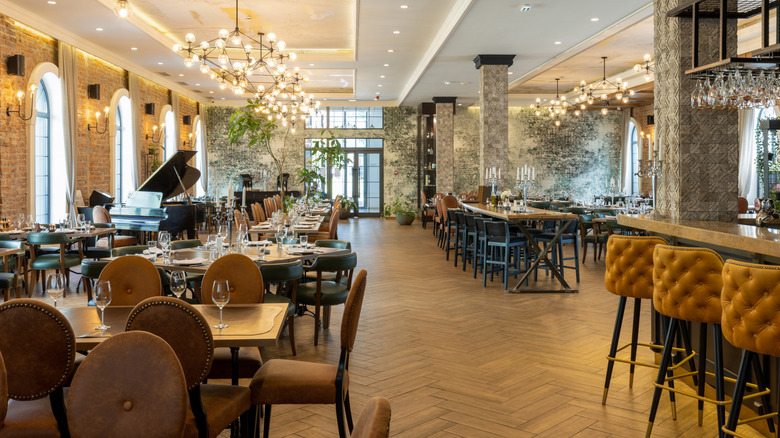
You walk into a restaurant with dozens of empty tables, only to be escorted to one occupied by the only other guests in the room. Why does it feel like the server is intentionally preventing you from having a quiet, intimate meal? Why must you be forced into the peripheral vision of a set of strangers when there's plenty of space to spread out? The thing is, a restaurant dining room is functionally two different spaces simultaneously.
For guests, its a place of leisure, designed to feel welcoming, spacious, and effortless. For the staff, it's a workplace every bit as real and valid as a carpenter's bench or an auto mechanic's garage. For the most part, they make every effort to ensure you never have to think about that other reality, but the room has to accommodate both experiences at once. Good, gracious hospitality depends on making the work disappear, which is why the underlying logistics can be easy to forget.
After working in restaurants, the dining room stopped looking like rows of tables where people come to enjoy a nice meal. Now, I see efficient walking routes, heavy but well balanced trays, server stations for completing side work like rolling napkins, coworkers with sections full of guests who linger, and tables that need clearing. Hosts don't assign tables according to what looks nicest from the front door. They're balancing sections and timing out a choreography of reservations, ensuring one server isn't overwhelmed while another stands idle, and gradually opening the dining room as service moves through its cycle. What might look, at first glance, like an empty room is actually a carefully organized map of labor.
The art of the seating chart
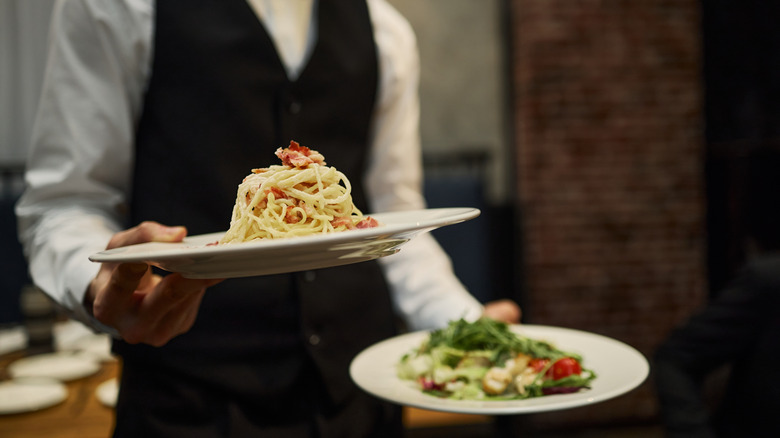
Walking is work. Walking is time. Every extra trip to refill water, deliver a side of ranch, clear plates, and bring the check adds distance to a shift that covers miles. Keeping one server responsible for neighboring tables shortens those routes, making service faster and giving them more opportunities to notice if someone's drink is empty or they're frowning into their salad or to really take their time when asked for recommendations. The goal probably isn't to pack the diners together for fun but to make attentive service physically possible.
Of course, that doesn't mean efficiency is the only factor at play. A table might already belong to an upcoming reservation or need to be bussed. Part of the dining room might stay closed because there are only two servers scheduled during the lunchtime swing shift or because a rush is expected soon. Some restaurants may avoid seating guests where the late-afternoon sunshine pours in at a blinding angle or in corners that are unusually cold because the HVAC is acting up that day. The arrangement of the dining room is the culmination of dozens of small considerations all juggled at once, and ideally, they're invisible to the people walking in.
Still, if you'd rather sit somewhere else, it never hurts to ask politely. While restaurant workers may have some guest-behavior pet peeves, they generally do want you to feel comfortable. Hosts and servers accommodate requests to change tables all the time when the floor plan and reservations allow it. The next time you're seated beside another occupied table in an otherwise quiet restaurant, chances are there are plenty of behind-the-scenes decisions that led to that seat, all designed to make your meal unfold as smoothly as possible.