

15 Best Gins For Making Your Next Gin And Tonic
We may receive a commission on purchases made from links.
Certain cocktails tell you everything you need to know about how they're made just by their titles; drinks like a rum & Coke or gin and tonic. While these tipples may be easy to throw together on a moment's notice, the ingredients you use can absolutely make or break them since there isn't a lot for the liquor to hide behind.
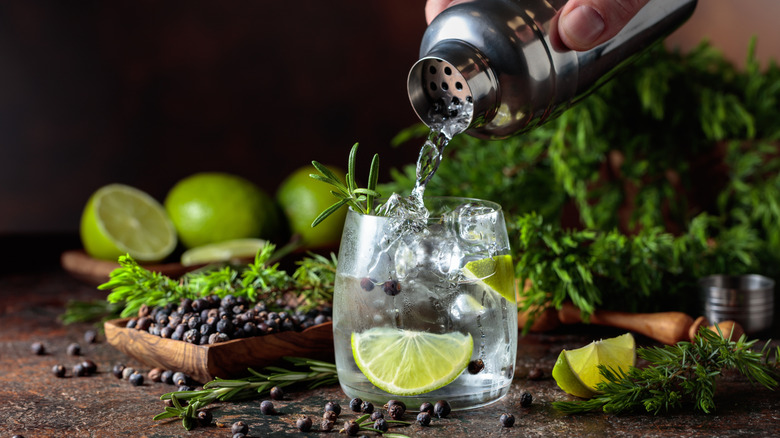
For example, a gin and tonic is a simple mixture of gin, lime juice, and tonic water. But the tonic and gin you choose could make a G&T that's amazing or something that tastes like dirty bath water. While Jennifer Yim, master mixologist at the Bellagio Resort & Casino in Las Vegas, believes the tonic you use is just as important as the gin — telling us that "its sweetness, bitterness, and carbonation can really complement the gin and amplify its botanicals" — we wanted to focus on the spirit. Which gins really do make the best G&Ts?
Is a London dry better than a floral option? Maybe it should be a foreign import rather than a domestic brand. We really don't know. So, we reached out to several experts to find out which gins they reach for when mixing up the cocktail, including Yim; James Beddie, bar manager at Juniper's Gin Bar in Kentucky; Natasha Bahrami, owner of The Gin Room in St. Louis; Kristen Love, director of F&B Outlets at InterContinental New York Barclay; frequent "Bar Rescue" consultant Mia Mastroianni; and entertaining expert Paul Zahn. You'll recognize some brands and some you won't. But no matter which you choose, our experts guarantee you'll end up with gin and tonic to remember.
Beefeater London Dry
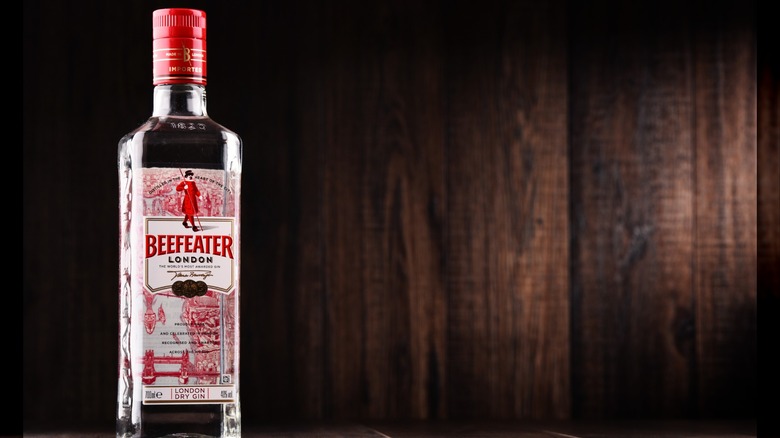
There are a few gins on our list that are easily immediately recognizable. Beefeater London Dry is one of them thanks to its square bottle, red cap, and English beefeater emblazoned on the front. A classic London dry gin, Beefeater has been around since 1876, when James Burrough started distilling it 13 years after purchasing the Chelsea Distillery for a mere 400 pounds. The gin, which has been winning awards since the 1870s, is made with nine different botanicals, including lemon and Seville orange peels. It's also on the cheaper end of the spectrum, coming in at about $20, which means you could make a whole slew of gin and tonics without breaking the bank.
That affordability and citrus-forward flavor are why mixologist and frequent "Bar Rescue" consultant Mia Mastroianni says it's a great choice for the cocktail. Explaining that this spirit "hits clean and bright on the palate," she says it also happens to be the gin of choice for her entire family. In fact, she tells us that whenever her family makes up a batch of G&Ts, Beefeater is the bottle they grab.
Hayman's Old Tom Gin
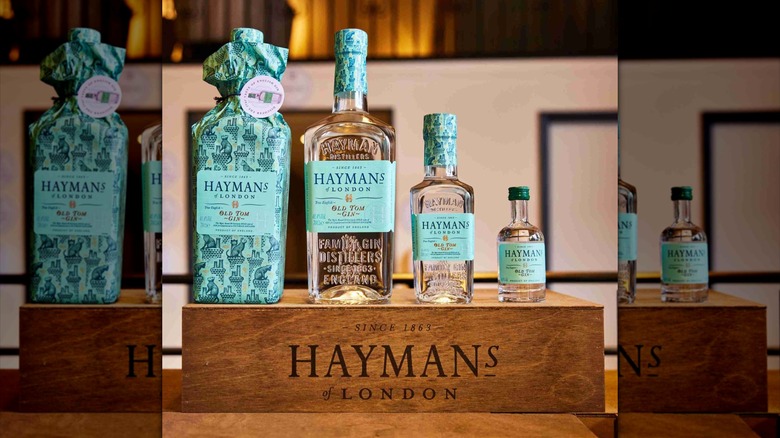
James Burrough, the man who created Beefeater, also happens to be the man behind Hayman's ... sort of. Turns out the famed pharmacist and supposed gin innovator happens to be the great-great-grandfather of James and Miranda Hayman, the current owners of Hayman's; also turns out Hayman's London Gin has been a family-run business since the 1800s. This family, which includes James, Miranda, and their father, Christopher Hayman, uses the same recipes to make Hayman's that Burrough used centuries ago.
While Hayman's has 13 different expressions, James Beddie says, "My personal favorite to use in a gin and tonic is Hayman's Old Tom Gin." The bar manager at Juniper's Gin Bar adds, "It's a slightly sweeter style of gin that has a hint of barrel aged to it." Explaining that this gin's flavors complement the tonic, Beddie insists, "A squeeze of lime isn't 100% necessary; however, I find adding the citrus element really ties it all together."
Bombay Sapphire
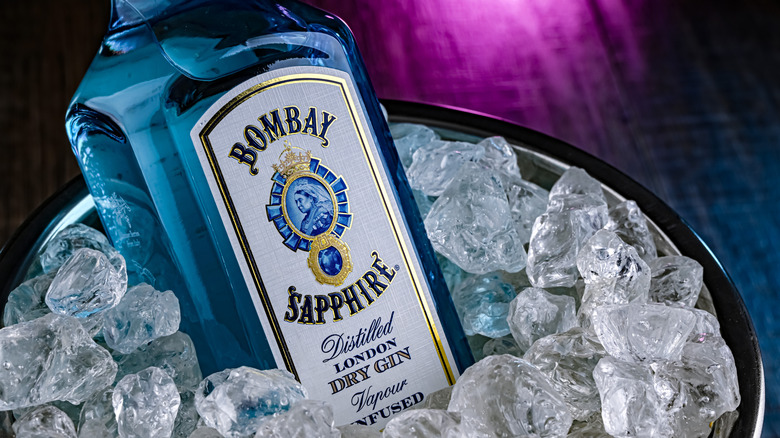
Fans of gin will definitely recognize a giant blue bottle of Bombay Sapphire. While the original Bombay Dry Gin first appeared back in 1761, Bombay Sapphire is a much more recent expression, only making its appearance in 1987. The reason behind the new look? Bombay was floundering in the late '80s. So, Michel Roux, the then-CEO of Carillon Imports, the primary importer for Bombay in the U.S., decided to change the brand's look. Roux opted for the blue bottle after drawing inspiration from the Star of Bombay sapphire. But the bottle wasn't the only thing that changed, as two more botanicals were added to the eight that made up the original gin: cubeb berries and grains of paradise.
Mia Mastroianni really appreciates those extra botanicals, since she says they "[give] way to more floral notes." Those floral notes mean you not only end up with a gin whose flavors aren't as harsh, but you also get a gin whose flavors will shine without overpowering the lime and tonic.
Letherbee Original Label Gin
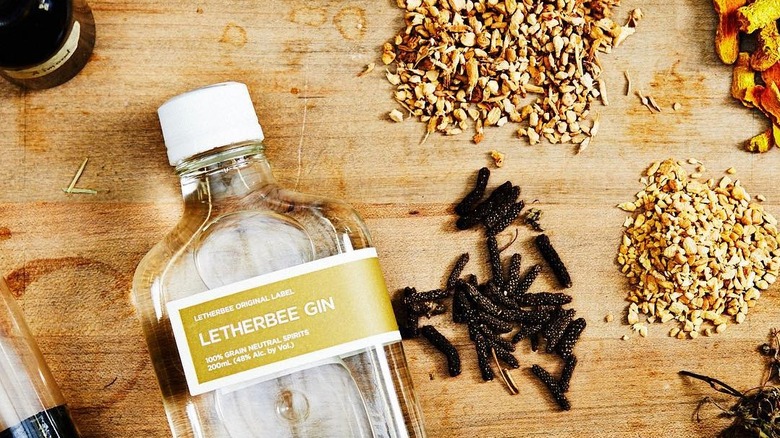
Ever heard the term "bathtub gin?" It was a spirit that was usually made quietly at home by amateurs so they could continue enjoying spirits during Prohibition. Believe it or not, that's basically how Letherbee started. Back in 2007, Brenton Engel was making moonshine in his Chicago basement. Known as Illinios Joy, the resulting spirit became popular in the area within a couple years, which led to a bartending gig. Those years behind the bar allowed for further experimentation with herbs and spices, and in 2012, Engel released his first spirit under the Letherbee name: the Original Label Gin.
Today, Letherbee offers 10 different spirits, including a few gins. But it's the Original Label that Natasha Bahrami, owner of The Gin Room, picks for a gin and tonic thanks to its "beautiful fatty mouthfeel." Bahrami believes that texture comes from the way the gin is distilled. Engel skips the chill filtration process, which allows the essential oils from the botanicals to really shine. "The result is a voluptuous mouthfeel that pairs beautifully with botanical-forward, crisp tonics like Boylan Heritage Tonic," declares Bahrami.
Plymouth Original Strength Gin
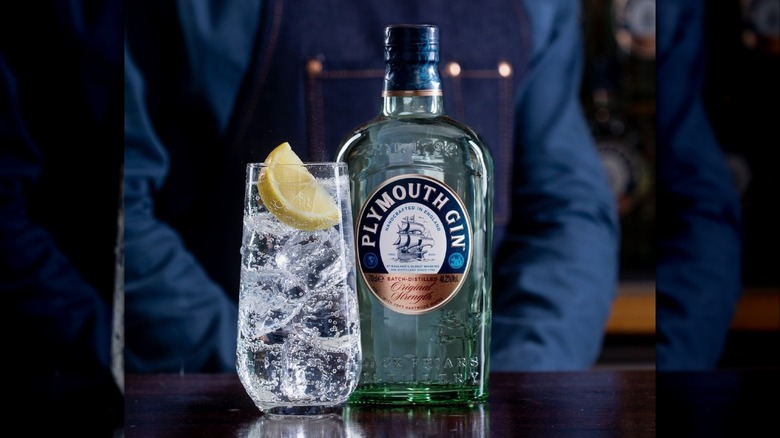
Plymouth Gin may have launched in 1793, but its story goes back even further. The distillery in which the gin is produced dates all the way back to the early 1400s, where it was used as a monastery for the Black Friars, and the ship that dons its label is none other than the Mayflower. That famous ship was supposedly picked because the Pilgrims spent their final night in England at the monastery before traveling to America. While the building was a working malt house in the late 1600s, it wasn't until master distiller Thomas Coates joined Fox & Williamson in 1793 that Plymouth Gin was created.
Today, Plymouth makes six different expressions, but it's the original that entertaining expert Paul Zahn says makes a great gin and tonic. The reason? Its seven botanicals; the same botanicals the distillers have been using since the gin was first launched. "I love Plymouth Gin because it's incredibly smooth and balanced, with a beautiful blend of citrus, botanicals, and that classic juniper character," he explains. But the real reason Zahn prefers Plymouth is because "the quinine from tonic water perfectly complements the notes of Plymouth Gin."
St. George Terroir Gin
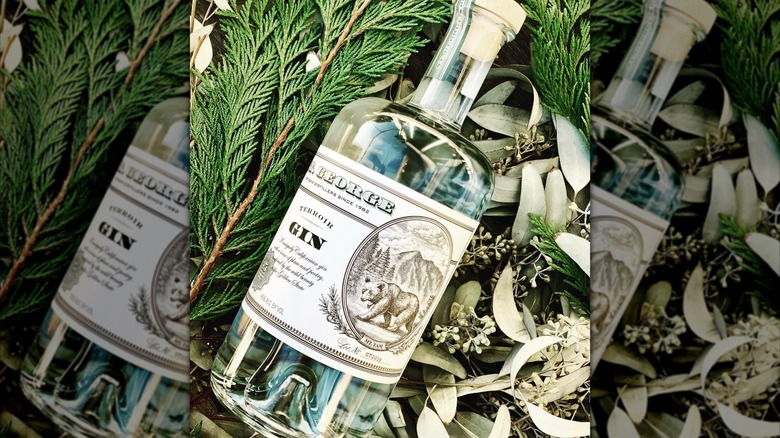
Unlike some of the other gins on our list, whose distilleries have been around for centuries, St. George Spirits was only established in 1982. Based in Alameda, California, the company was started by Jörg Rupf after he emigrated from Germany and discovered all the amazing fruit growing in the Golden State. He started making eau de vies from those fruits, and St. George was born. Master distiller Lance Winters joined the team in 1996 and has since created some of St. George's most iconic spirits, including all five of its gins.
While any of these bottles would be a delicious option for a gin and tonic, the Terroir is Jennifer Yim's pick. "[It's] one of my favorites because it captures a true sense of place, almost like drinking a California forest," she explains. That forest flavor is thanks to the Douglas fir, bay laurel, and sage used to create the spirit. Those three botanicals, along with nine others, produce an aromatic profile that Yim believes "stands up beautifully to tonic." Although this cocktail is great on its own, Yim garnishes her Terroir G&Ts with fresh citrus or herbs to really amp up the gin's botanicals.
The Botanist Islay Dry Gin
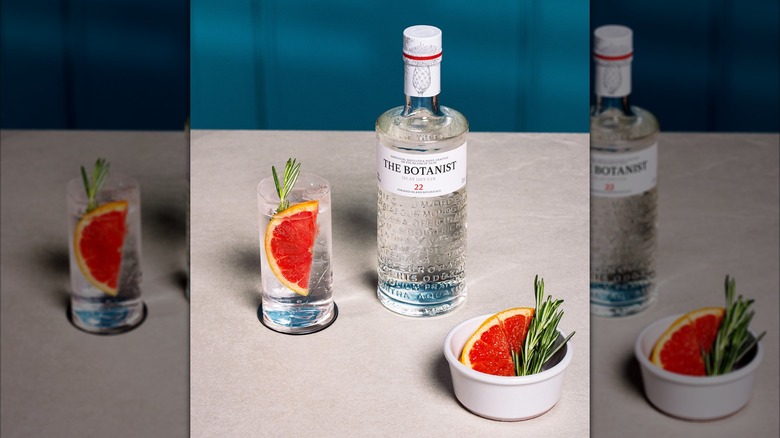
"The Botanist is a wonderful choice for those who appreciate a more herbaceous and layered gin and tonic," declares Kristen Love, the director of F&B Outlets at InterContinental New York Barclay. That herbaceousness is due to The Botanist's 22 different botanicals, which include three different kinds of mint, wild thyme, wood sage, and one sprig of Islay juniper. Those botanicals and the flavor they produce are the main reason why this gin, which launched in 2011, snagged the runner-up slot when we ranked the most popular gins available.
But what really impresses us about The Botanist is that each one of those botanicals is hand foraged directly from the Island of Islay. Two retired botanists who were living there at the time were asked to recommend a variety of flora to create the gin. They returned with 33 different possibilities, and master distiller Jim McEwan honed in on the 22 botanicals that are still used today. Love believes this "diverse blend of botanicals creates a complex profile of fresh herbs, wildflowers, and subtle citrus that evolves as you sip." She continues, "Paired with a quality tonic, it delivers a beautifully balanced cocktail that is both refreshing and sophisticated."
Fords Gin
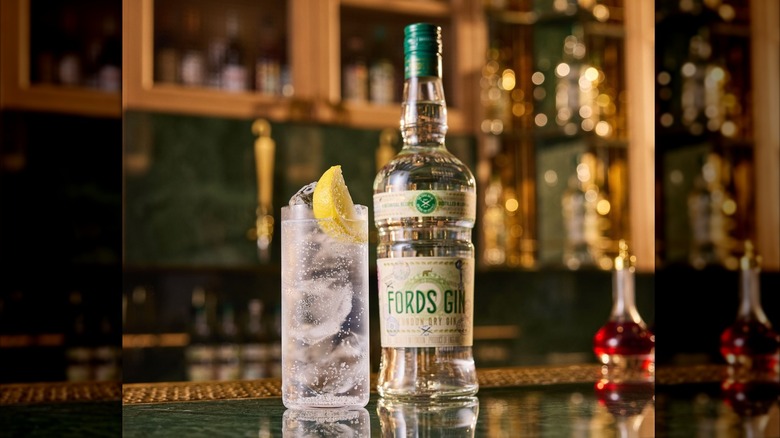
Simon Ford had been working in the spirits industry for over two decades when he made it his mission to create a gin that he felt worked exceptionally well in a cocktail. It took over 80 recipe tweaks and taste tests before Ford and his team of fellow experts, whose experience ranged from bartending to distilling, to land on what would become Fords Gin. This spirit uses nine different botanicals, including bitter orange and lemon peels, coriander, and jasmine flower.
Considering Ford's goal was to create the "ultimate cocktail gin", it's no surprise that it's one of James Beddie's favorites for a gin and tonic. "Fords Gin stands out at 90 proof and is a classic London dry style," explains Beddie. "The slightly higher proof allows the flavor profile of the gin to stand out in the tonic instead of being covered up by it." The bar manager thinks it's the perfect gin for those who prefer a London dry gin that's more juniper forward.
Hayman's Exotic Citrus
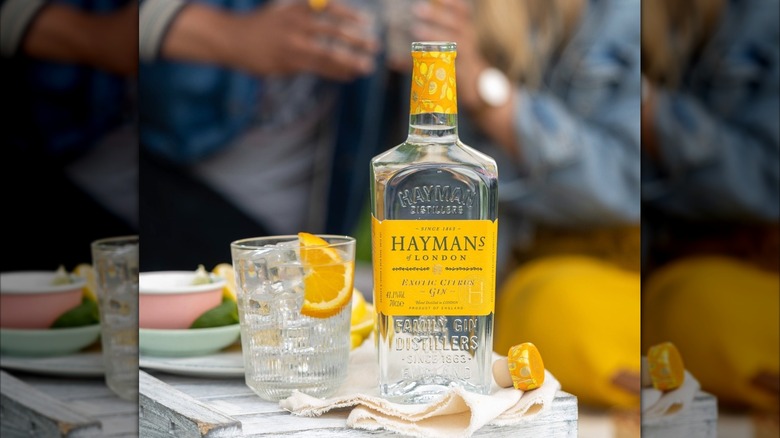
If you prefer a citrus-forward gin and tonic, Natasha Bahrami recommends Hayman's Exotic Citrus gin. First released in 2021, this award-winning bottle of Hayman's uses the same 10 botanicals as its original London Dry. But then sun-dried mandarin, kumquat, pomelo, and Persian lime peels are added to the mix. The peels are dried out in order to preserve the fruits' flavors and their natural oils. The end result is gin that Bahrami says creates "a near-perfect G&T gin."
There is something to be aware of before you buy this gin, though: the label. If you see a bottle of Hayman's Exotic Citrus and the bright, sunflower-yellow label reads Vibrant Citrus instead, don't leave it on the shelf. It's the same gin; it just has two different names depending on where you purchase it. See, if you pick up a bottle while visiting the United Kingdom, the label reads Exotic Citrus. Here in the United States, it says Vibrant Citrus. But we promise, inside the bottle is the exact same gin with that bright, citrus-forward flavor.
Malfy Gin
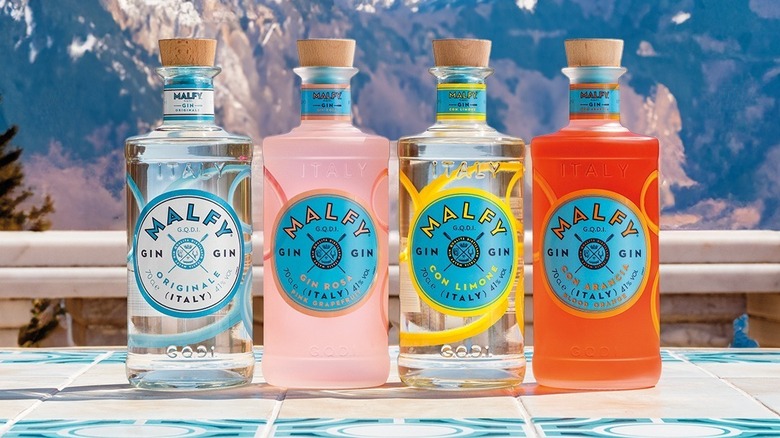
Most of our experts point to one specific gin as the base for their gin and tonics. But Paul Zahn believes that any of Malfy Gin's four expressions will make a great G&T. "Malfy Gin is like a trip to the Amalfi Coast in a glass," he says. "I love using it in G&Ts because of its bright, fresh citrus character and incredibly approachable style."
That approachability is why Zahn often recommends this gin to those who don't have a lot of experience with the juniper-based spirit. Distilled in Moncalieri, Italy, Malfy Gin uses nine different botanicals to make up its four expressions. Each bottle uses water from the Piedmont region of Italy and Tuscan juniper berries, but then, depending on which bottle you pick, you could have pink grapefruit, Sicilian blood oranges, or lemons from the Amalfi Coast. Those various citrus notes are why Zahn believes a gin and tonic made with Malfy is "instantly refreshing."
Since the entertaining expert loves all of Malfy's expressions, he suggests creating a G&T bar for your next afternoon affair. Simply set out all four flavors along with a variety of tonics and garnishes, and each guest can create their own cocktail. "A large spritz glass, some Malfy Gin with tonic, and some colorful garnishes, like rosemary and pomegranate arils, make for a great fall cocktail," Zahn exclaims.
Nolet's Silver Gin
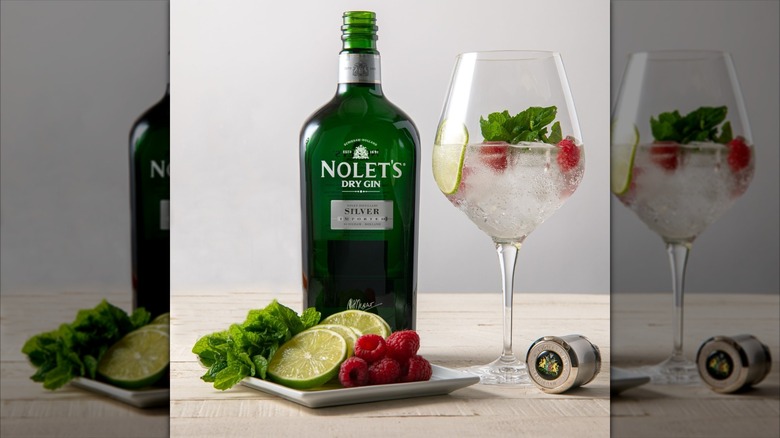
Similar to Hayman's, this gin comes from a distillery that's been owned and run by the same family for centuries. But unlike the London-based Hayman's, the Nolet Distillery's spirits have been made in Holland since 1691. In 2010, the distillery's 10th- and 11th-generation owners launched Nolet's Silver Gin, which really stands out due to its recipe. Most gins start with juniper berries and build out from there, but the Nolet family wanted to create a gin with botanicals that hadn't really been used before. Juniper berries are used, but the base is rose, which adds a light airiness, peach for sweetness, and raspberries for tartness.
That combination of floral and fruit flavors is why Jennifer Yim thinks it's a great option for a gin and tonic. "Nolet's showcases a softer, modern side of gin," Yim says of these notes, adding that "its higher proof gives it enough structure to remain expressive with tonic, while the delicate botanicals keep the G&T bright and elegant." If you want to enhance those floral notes, try this lavender twist that's perfect for those warmer months.
Arbikie Kirsty's Gin
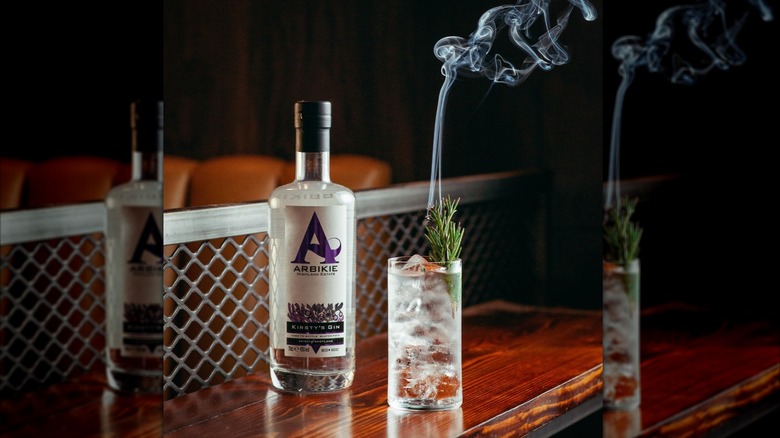
Arbikie started as a farm back in the 17th century, and the Stirling family has grown various crops there since taking over the land in the 1920s, which they now use to make various spirits. But the bottle that "recently impressed" Kristen Love was Arbikie's Kirsty's Gin. "It offers vibrant citrus notes, delicate florals, and a fresh botanical character that remains expressive even when paired with tonic water," she explains.
While the farm's been around for centuries, it wasn't until brothers David, Iain, and John Stirling decided to build a distillery on the property in 2013 that it started producing spirits. There are five different gins under the Arbikie umbrella. Kirsty's is named after master distiller Kirsty Black, who helped forage the botanicals used to create this gin, which include kelp from the local shoreline and blaeberries from the farm. Those botanicals create a gin whose "balance between brightness and complexity makes for a refreshing yet elegant G&T," says Love, "particularly when served with a premium Indian tonic and a simple citrus garnish that allows the gin's distinctive character to shine."
Gin Mare
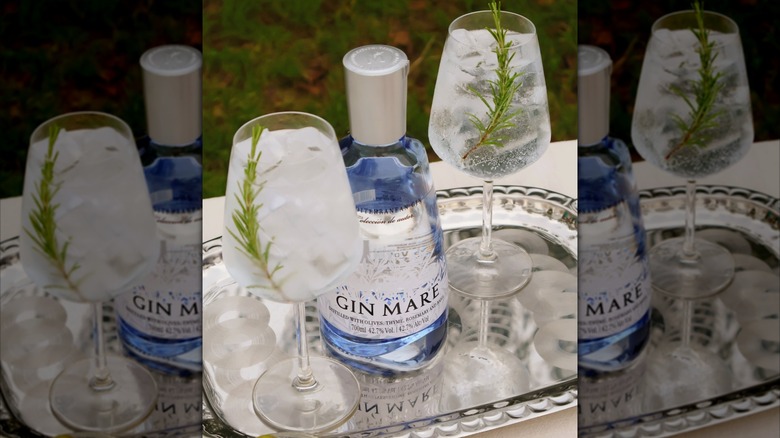
James Beddie says he often recommends Gin Mare to guests when they order a gin and tonic. Originally distilled in an 18th-century chapel just outside of Barcelona, Spain, Gin Mare uses nine different botanicals to create the spirit. But of those nine, which include the classic orange, lemon, and juniper, the base of the Gin Mare recipe are four botanicals that are synonymous with Mediterranean cuisine: Arbequina olives, rosemary, thyme, and basil.
What makes this gin really unique, though, are its olives. See, the olive crop varies each year due to Mother Nature and how she behaves, which makes each distillation slightly different. This is why this gin clocks in at about $40 a bottle and made our list of top-shelf gins that are worth the price. Those herbs and olives are also why Beddie often reaches for this gin when creating the classic cocktail: "It's herbaceous, slightly savory, and I highly recommend drinking it with Fever Tree's Mediterranean Tonic."
Bluecoat American Dry Gin
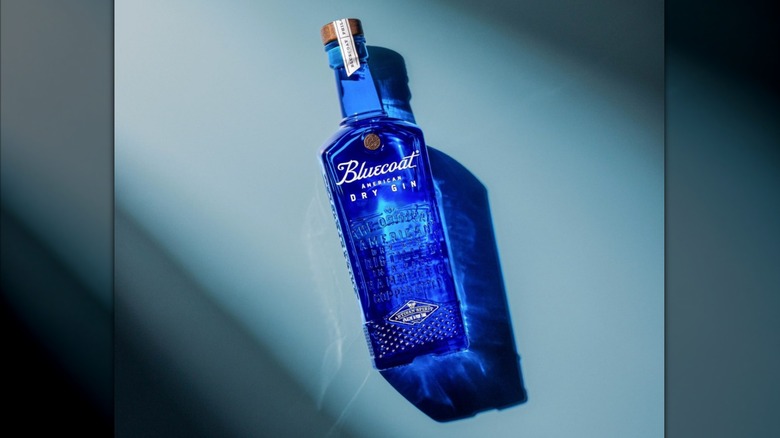
First launched in 2006, Bluecoat was the first gin created by Philadelphia Distilling and the first to be labeled an American dry gin. We've all heard of London dry gin, but what is the American version? London dry gins tend to be very juniper forward, relying heavily on juniper berries for their base. But the distillers at Philadelphia Distilling wanted to create a gin that would be more palatable to Americans. So, while juniper berries are still an important part of Bluecoat's recipe, there's a significantly larger percentage of citrus botanicals Bluecoat calls an "American Citrus Blend," which is made up of sweet citrus and lemon peels.
The citrus and "fragrant pepper" notes create a gin that Natasha Bahrami says "continues to evolve into a beautiful finish of candied orange peel and cardamom notes that shine in a crisp, bright G&T." The Gin Room's owner explains the distillers created Bluecoat this way specifically so it would shine in a gin and tonic.
Tanqueray No. Ten
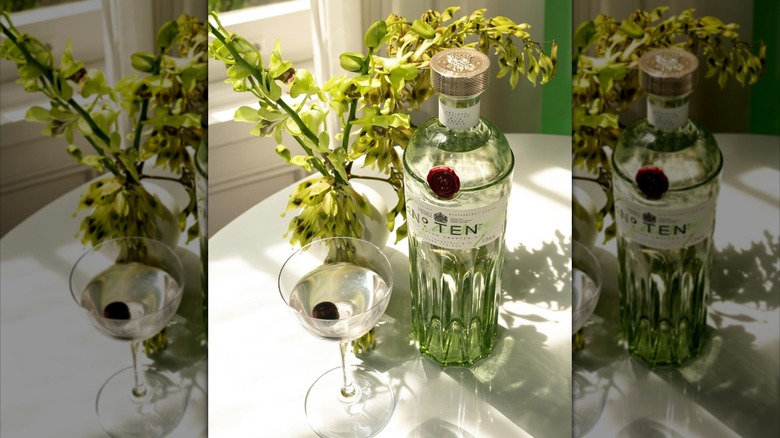
One of the most iconic gins on the shelf has got to be Tanqueray. That bright green bottle of gin made up of just four botanicals has been donning liquor shelves since 1830, when Charles Tanqueray founded his London distillery. But it isn't the original Tanqueray that Kristen Love points to for a G&T. She prefers the No. Ten. "Tanqueray No. Ten remains one of the benchmarks for a classic gin and tonic thanks to its bright citrus-forward profile and exceptional balance," the food and beverage director declares.
Unlike Tanqueray's original London Dry, the No. Ten has a lot more citrus in its botanical blend. That citrus, which includes grapefruit and citrus hearts, "provides freshness and structure that stand up well to tonic water without becoming overly bitter," Love explains. "The result is a clean, crisp, and highly refreshing cocktail that showcases why simplicity often works best."