

Bombay Sapphire: The Ultimate Bottle Guide
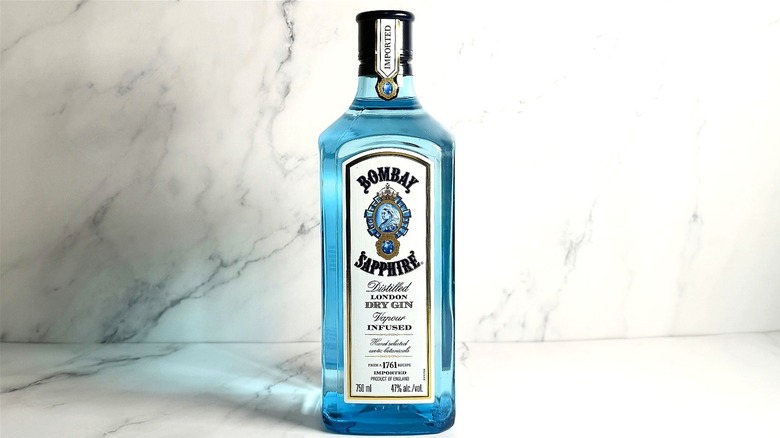
Any gin drinkers here? If you're a particular fan of the botanical spirit, there's a 99% chance you have a bottle of Bombay Sapphire in your collection. Since its 1987 release, it's been known for being very accessible to gin novices and enthusiasts alike, and it's an incredibly versatile spirit that's partially responsible for giving gin the status it has today.
Bombay Sapphire is a relatively strong gin. Gin tends to sit between 37.5% and 47% ABV — Bombay Sapphire boasts the latter, or a stunning 94 proof. Juniper is central to its development alongside nine other botanicals, including lemon peel and coriander. The result is a very well-rounded gin that can adapt itself to any mood, and it's a relatively safe choice if you're not sure about your own gin preferences. Here's everything you should know about Bombay Sapphire, including its unique production method, flavor profile, and how to enjoy it.
History of Bombay Sapphire
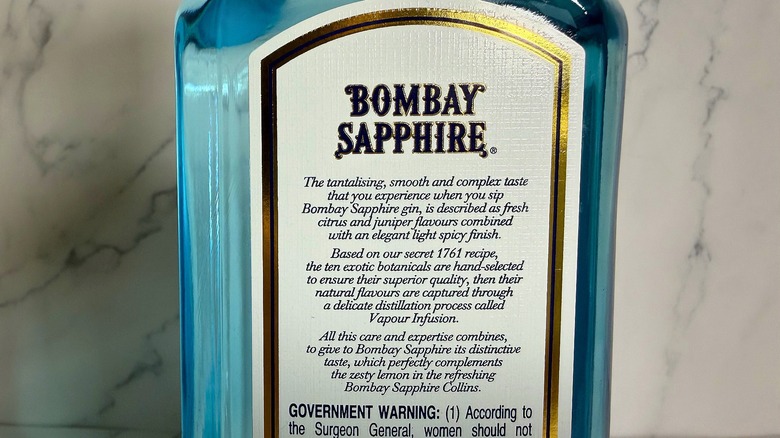
Bombay Sapphire was created entirely out of necessity. The Bombay brand was flatlining in the mid-'80s as other gins (like Tanqueray) rose to the forefront of consumer consciousness. It was time for Bombay to do a little rebranding, the result of which was the iconic blue bottle that's now instantly recognizable even to non-gin drinkers. In addition, the company took this opportunity to introduce two new ingredients to the gin: cubeb berries and grains of paradise.
The roaring success of Bombay Sapphire led to a resurgence in the company's brand recognition and identity, allowing it to expand to release bottles such as 2011's Bombay Sapphire East, 2014's Bombay Amber, and 2015's Star of Bombay. The brand's 1998 acquisition by Bacardi definitely had a lot to do with that growth — in the first decade since acquiring the brand, Bombay Sapphire saw a significant growth in popularity, cementing it as one of the most iconic gin bottles on the market today.
What does Bombay Sapphire taste like?
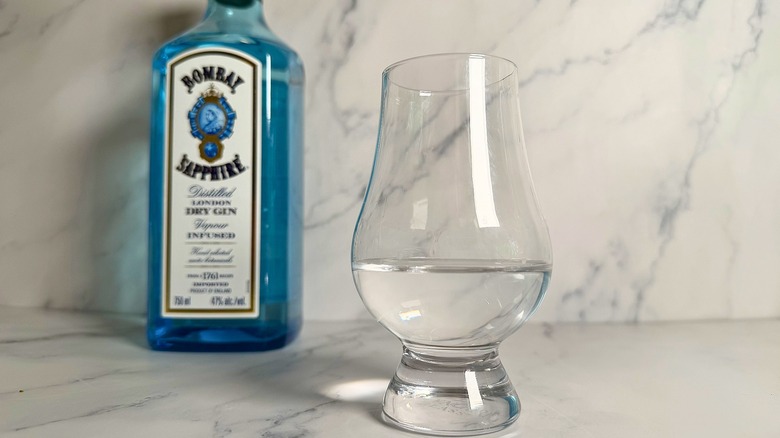
Bombay Sapphire is very gentle on the nose, with juniper and obvious dry herbal notes immediately apparent. Bright citrus notes lift the scent and give it a springtime appeal. It's an impeccably smooth gin. It's bright and citrusy on first taste, with some sharper botanicals lingering at the front and sides of the mouth, but nothing so strong that it would turn a newbie off to the spirit. It finishes a little peppery and lingers for a while after the sip has ended.
It will be obvious upon tasting it why those familiar with the spirit recommend using it in minimalist concoctions, like a gin and tonic or a gin and Coke — the spirit could easily be overwhelmed by anything too complicated. Because it's not overly assertive, it will shine beautifully in simple applications.
How is Bombay Sapphire made?
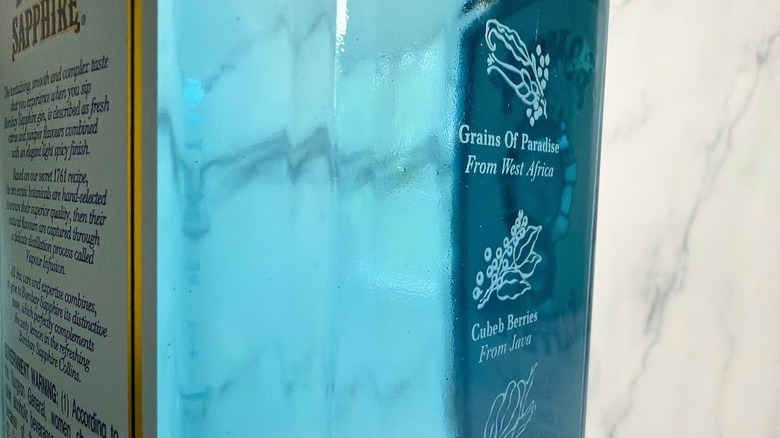
One of the reasons Bombay Sapphire has been able to dominate the gin industry is largely due to its unique production process. The gin is made from a combination of 10 botanicals: licorice, cassia bark, coriander, angelica, juniper, orris, lemon peel, grains of paradise, cubeb berries, and almonds. And& while most gins develop their flavors by steeping their varied botanicals in the spirit, Bombay takes a gentler approach when crafting its Bombay Sapphire.
The bottle is made using a vapor distillation process, where the vaporized spirit is introduced to the botanicals via perforated baskets. After the botanicals are moist enough to give off their oils, the vapor passes back into containers and is cooled until it reaches a liquid state. The result? A gentler, fresher gin than many of its alternatives. This is also why the bottle is known for being particularly palatable and versatile — it lacks the occasional scorched notes that steeped botanicals can give off.
How to drink Bombay Sapphire
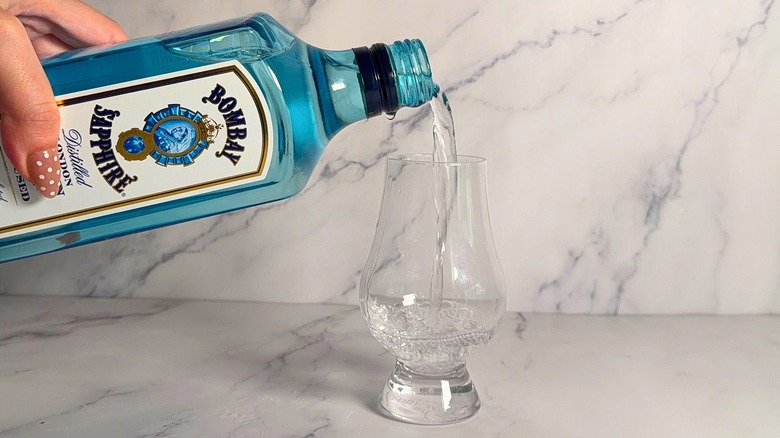
One of the beautiful things about Bombay Sapphire (aside from its undeniably gorgeous bottle) is that it doesn't limit itself to just one or two applications. The simplest way to enjoy the spirit is by drinking it neat, which all new imbibers should absolutely do if they want to fully experience the spirit's botanical qualities.
Bombay Sapphire is also excellent in the classic gin and tonic (served in a highball glass, of course), but don't let its "easier" uses keep you from experimenting with the spirit. Dress up your gin and tonic with some complementary notes, like basil and raspberry, a combination recommended by the brand itself. You could go a little more vintage and use it to make an Aviation cocktail or use it instead of vodka in a Moscow Mule recipe to create a Bombay Mule.
Bombay Sapphire was named after an actual jewel
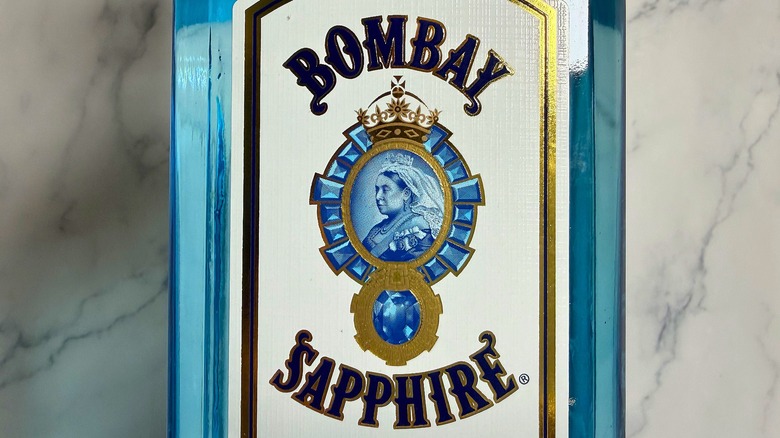
In case you've ever wondered about the titular "Sapphire" in the spirit's name, it turns out that an actual sapphire inspired the now-iconic moniker. The Star of Bombay (which is widely considered to be one of the finest sapphires in the world) is a 182-carat gemstone in a stunning blue hue that we can thank for the bottle's coloring. It's also depicted on the front of the bottle, outlining a frame of Queen Victoria.
The actual Star of Bombay can be visited on your next trip to D.C. — it's on display at the Smithsonian's National Museum of Natural History, though it once belonged to Mary Pickford, an actress and founder of the Academy of Motion Picture Arts and Sciences. The stone is impressive in size and notably features a reflective star-shaped burst of lines.
Bombay Sapphire's distillery is almost 1,000 years old
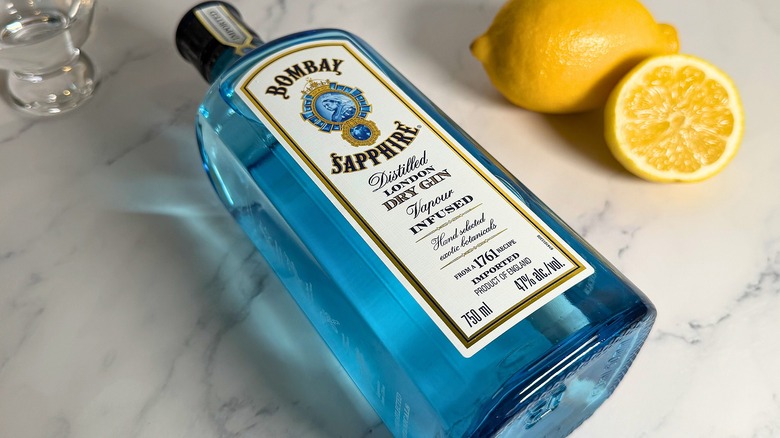
Bombay Sapphire's U.K. distillery is based in Hampshire and, located at the Laverstoke Mill, a former paper mill. (Fun fact: The mill notably invented the watermark.) Records of the building date back as far as 1086, and it became a massive printing operation in the 1700s.
The property was acquired by Bombay Sapphire in 2012, and it's since undergone millions of dollars' worth of renovations to make it into the stunning gin hub it is today. Various on-site greenhouses grow the botanicals used in Bombay Sapphire's production. You can also visit the distillery for a tour of the property and a little inside look into how Bombay Sapphire is made.
Bombay Sapphire was once recalled for being too boozy
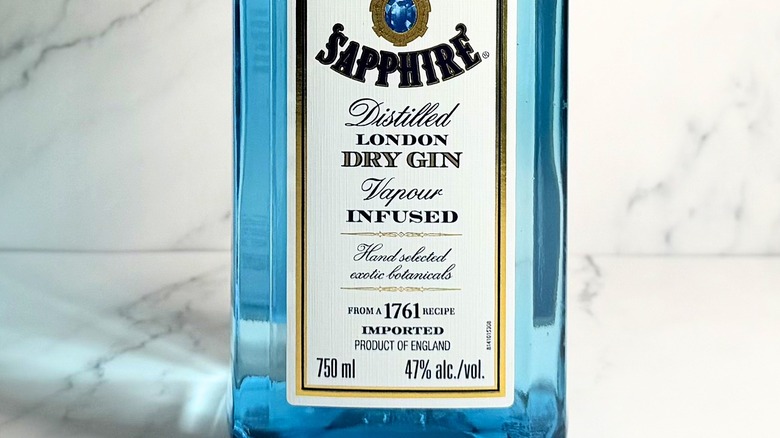
As it goes with pretty much everything, Bombay Sapphire hasn't cemented such an enduring legacy without suffering through the occasional hiccup. Perhaps the most notable "scandal" the bottle has ever experienced occurred in 2017 and affected Bombay Canada's market, potentially becoming very dangerous to those buying bottles unaware of the fact.
The gin was advertised with a 40% ABV at the time — reasonable, right? The only problem is that a dilution error resulted in far stronger bottles being sent to market. The affected bottles were almost twice as strong, with a shocking 77% ABV. Thousands of bottles of the spirit had to be recalled as a result, and consumers were warned not to drink the bottles. We can't imagine that a 154-proof Bombay Sapphire would be very pleasant to drink, so let's hope that was the only time such an oversight will happen.