

10 Top-Shelf Gins That Are Always Worth The Price
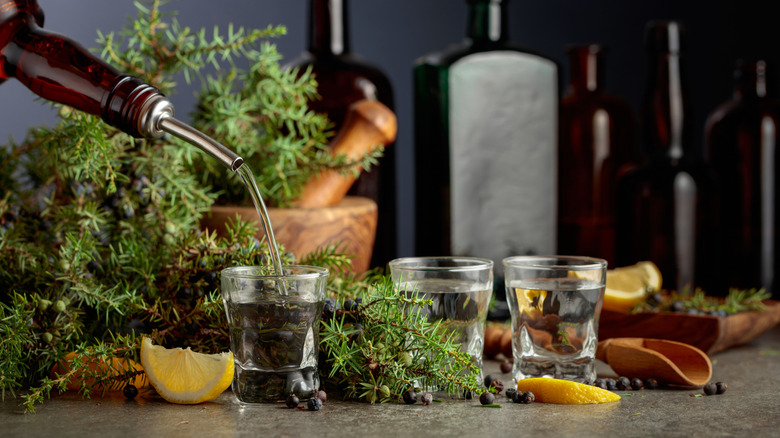
Gin is a spirit that wears its botanicals on its sleeve. Its distinctive flavor and seemingly endless versatility make it a popular choice for cocktail connoisseurs and bartenders alike. Juniper is gin's main flavor, but the botanicals paired with it give each bottle its own drinkable personality influenced by everything from citrus and flowers to herbs, spices, and even fruits and vegetables. These varied flavor notes can shine in a bold gin and tonic, a classic Negroni cocktail, or a gin rickey. Gin purists may prefer to drink gin neat to fully experience its botanicals, while adventurous chefs even cook with gin.
Some premium gins that are made with high-quality or unusual botanicals, locally sourced ingredients, or specialized production methods, command a higher price. But which bottles are actually worth the cost? We turned to four beverage professionals and gin aficionados for their recommendations of the top-shelf gins that are always worth the price, including Alyssa Hackbarth, general manager of Lucky Danger restaurant; Nicole Hassoun, founder of Cocktail Curations; Natasha Bahrami, owner of James Beard Award-nominated The Gin Room; and Dave Mattern, director of beverages at Truluck's Restaurant.
Prices are as of the date of publication and may vary based on region.
Pickering's Gin Original 1947
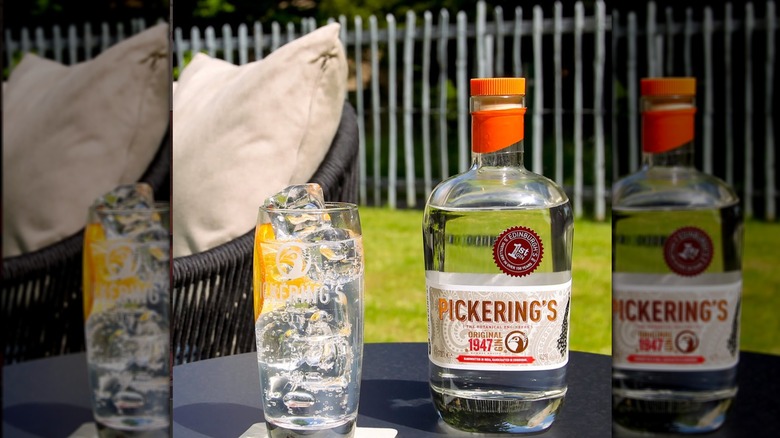
Juniper may be the leading flavor in Pickering's Gin Original 1947, but eight other botanicals help give this top-shelf gin its balanced flavor. Pickering's Original, which was based on a recipe first written in Bombay in 1947, is known for its bold, spice-forward flavor, with good reason. While other Pickering's gins feature coriander, cardamom, angelica, fennel, anise, lemon, lime, and cloves alongside juniper, the 1947 version swaps the angelica for cinnamon, adding another layer of spice. It's this combination of botanicals that puts Pickering's, which is typically priced between $38 and $45 a bottle, at the top of general manager Alyssa Hackbarth's list of favorites.
"What makes Pickering's special is the balance of those botanicals," she says. "It is fragrant and juniper-forward without being dominated by juniper, with citrus and spice adding layers of flavor." Hackbarth believes Pickering's is a prime example of how gin doesn't have to rely solely on juniper for great flavor. "What you're paying for is a gin with enough complexity to sip and appreciate on its own, but enough versatility to work beautifully in cocktails," she says.
Hackbarth recommends enjoying Pickering's Gin Original 1947 in a variety of ways. "I love it in a dry martini with a fresh lemon twist or in a gin and tonic with Fever-Tree tonic," she says. While you can't go wrong with classic cocktails, her favorite preparation is far simpler: Pickering's, soda, and a wheel of fresh blood orange, a combination that lets the gin's citrus and spice notes shine.
Nolet's Silver Gin
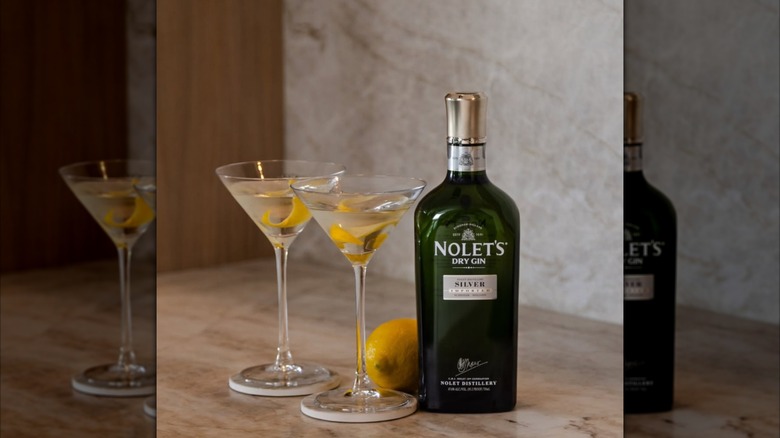
Nolet's Silver Gin isn't afraid to challenge what gin is supposed to taste like. It's made in small batches in the Netherlands by the Nolet family — who also produce Ketel One. Nolet's Silver puts a different spin on the spirit's traditional flavor profile. Rather than letting juniper dominate, Turkish rose, peach, and raspberry are infused into the gin, a blend of botanicals the distillery says has never been used in gin before.
According to Cocktail Creations' Nicole Hassoun, this eclectic mix gives Nolet's Silver "floral, fruit driven notes that really pushes the boundary of what gin can be." Alyssa Hackbarth believes this unconventional approach will appeal "to a broader audience — or perhaps win over the drinker who insists that all gin tastes like pine trees."
It's this unique flavor profile that makes Nolet's Silver worth the higher price tag, which is about $35 a bottle. "The value here is in the flavor profile and versatility. You're getting a gin that can transform a cocktail rather than simply providing the alcoholic base," says Hackbarth.
Hassoun suggests serving Nolet's Silver with sweet vermouth. "It's a sweeter gin that likes to sit in drier cocktails," she says. Hackbarth recommends drinks that highlight Nolet's Silver fruit and floral notes, like a French 75, or even adding a splash of Nolet's to warm apple cider for a fall treat.
Hayman's Old Tom Gin
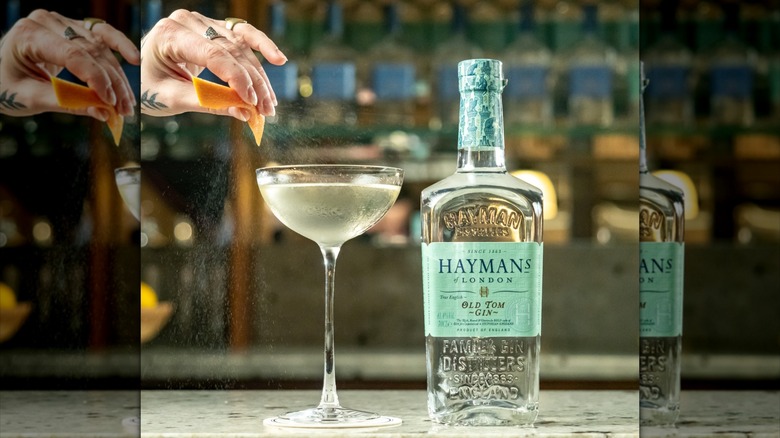
Hayman's Old Tom Gin comes with more than a century of gin history in every bottle. In 1863, James Hayman, known by some as the great gin innovator of his time, incorporated citrus into his gin recipes and helped develop Old Tom, the original style of London gin. Today, Hayman's Old Tom is still made from the family's recipe, resulting in a smooth, juniper-forward gin with a hint of sweetness that costs around $30 a bottle.
"If you're a cocktail drinker, Hayman's Old Tom is for you," says Alyssa Hackbarth. "That combination of sweetness, juniper, and richness is what sets it apart." She lauds its ability to hold its own alongside bold cocktail ingredients without competing with them.
"This is the bottle I'd recommend to someone who wants a premium gin specifically for cocktails," she says. "A more moderately priced gin can certainly make a good cocktail, but a well-made Old Tom brings texture, depth, and balance that can make a classic cocktail feel significantly more nuanced." She puts that theory to work in what she calls her "deathbed cocktail" — the Ramos Gin Fizz — and also recommends Hayman's for cocktails like a Negroni and even an old fashioned.
Ohoro Gin
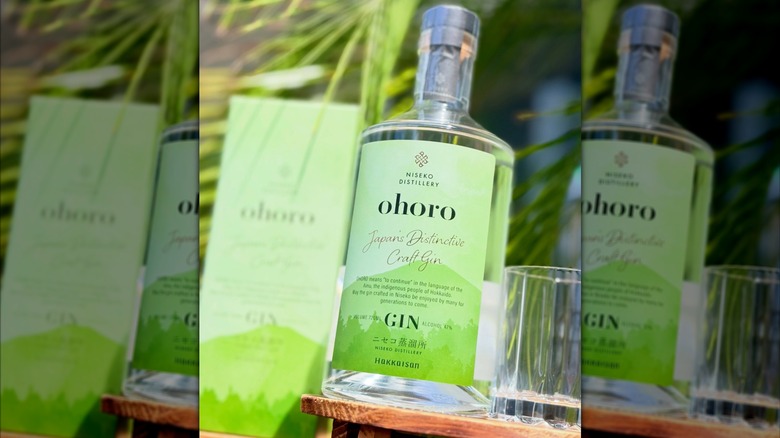
Ohoro Gin gives drinkers a literal taste of where it comes from. Distilled in Niseko, Hokkaido, Japan, Ohoro's botanicals include locally grown sweet gale and Japanese mint, and the gin is proofed with local, soft groundwater. This combination creates a smooth gin with hints of citrus and fresh herbs that stands out from the crowd. Its distinctive taste hasn't gone unnoticed. Ohoro was named the World's Best Classic Gin at the 2024 World Gin Awards. A bottle will cost you between $64 and $80, depending on the retailer.
For Nicole Hassoun, it's Ohoro's sense of place — that combination of regional botanicals and local water — that makes this gin worth seeking out. "For me, this is a perfect snapshot of where this gin is from: the local botanicals and water source give it a clean, soft, distinctly Japanese profile that couldn't come from anywhere else," she says.
Hassoun recommends Ohoro in a Southside cocktail or Tom Collins where "a little citrus and herbs make this gin shine in the most wonderful ways." For an even simpler pour, she mixes 2 ounces of Ohoro with 2 ounces of sparkling water or club soda, garnished with a slice of orange and fresh mint.
Fishers Gin
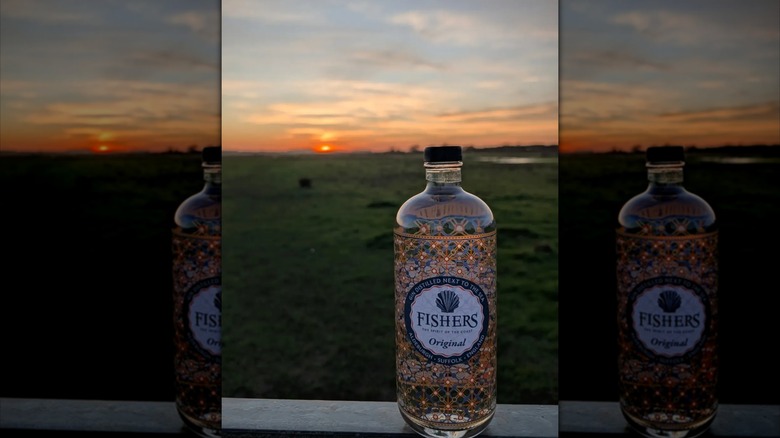
Fishers Gin is a small-batch gin distilled on the coast of Suffolk in the United Kingdom. It's made with wild herbs and botanicals from the surrounding area. It's a distinct combination of familiar ingredients like caraway and fennel seed and a few unexpected finds like bog myrtle, rock samphire, wood avens, and spignel. These out-of-the-ordinary botanicals are the source of Fishers' unique savory flavor, with herbal, briny notes that reflect its coastal origins.
Fishers Gin's proximity to the ocean plays a big role in its flavor, per Nicole Hassoun. "Fishers Gin ... is the closest gin distillery to the sea in the UK. You can taste every note of that in this gin. It's beautiful, savory, and herbaceous," she says. As she alludes to, the work that goes into capturing those flavors may be why this bottle is worth its price, which is about $50 a bottle. "It's the labor and rarity behind hand-foraging wild coastal botanicals that grow only in narrow, specific conditions," Hassoun says. "We are paying for something that cannot be scaled or sourced anywhere else."
Fishers' savory flavors make it well-suited for cocktails. "'Fishers Gin always goes into a 2:1 Martini with orange bitters for me, garnished with a lemon twist and one olive sunk at the bottom of the glass," she says.
Moletto Tomato Gin
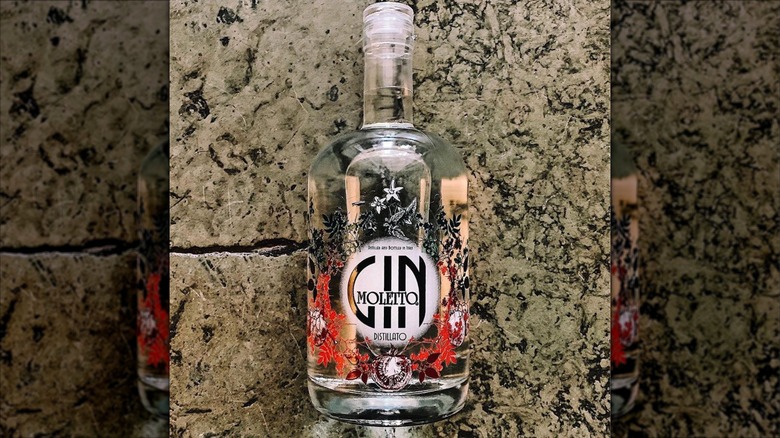
It should come as no surprise that an Italian gin would make tomatoes the star of the bottle. Produced in Veneto, Italy, Moletto Tomato Gin combines traditional juniper and Mediterranean maquis, a type of shrub, and its defining botanical, tomato. According to Natasha Bahrami of The Gin Room, the distillers use "indigenous tomatoes that exclusively grow in their region to create such a rich and pronounced flavor profile that it makes you crave it explicitly." The result is a sweet and savory flavor journey that starts with juniper, then melds into ripe tomato, and ends with herbs and citrus.
For Bahrami, Moletto's distinctive flavor and Italian origins are what make it worth its premium price, which ranges from $40 to $50 a bottle. She also appreciates the family-run producer's efforts toward sustainability. She recommends enjoying Moletto in two ways: in a crisp, Gibson-like martini and in a salted tomato gimlet made with Moletto, lime juice, simple syrup, and a pinch of Maldon salt.
Gin Mare
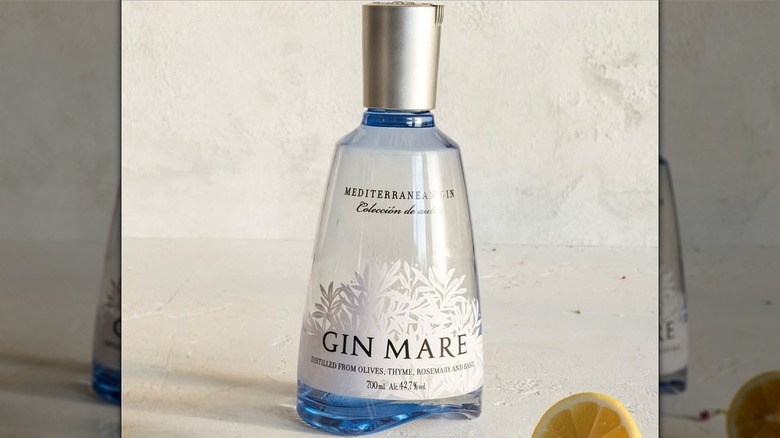
Olives usually meet gin in a martini glass, but Gin Mare brings the two together much sooner. In addition to expected botanicals like juniper, herbs, and citrus, Gin Mare gets its defining flavor and texture from Arbequina olives. Each botanical is distilled individually in an 18th-century chapel near Barcelona, Spain, before they're combined to create a gin that captures the taste of the Mediterranean.
For Natasha Bahrami, the olives are an important element in what makes Gin Mare special. She believes they impart "such a mouthfeel and viscous texture to the gin alongside the oils from the rosemary, thyme, and basil." They also offset the heat from the alcohol and the sweetness of the botanicals. The result is a gin with botanicals prominent at first, followed by a soft, sweet finish that balances the savory components. "It is not often that you can find a gin with salinity and sweetness that is so well balanced," Bahrami says. That unusual balance, along with the texture from the olives, gives gin lovers something they're unlikely to find in a more moderately priced gin. Gin Mare costs about $40 a bottle.
Bahrami recommends Gin Mare for its versatility in cocktails. She loves it in its "natural gin and tonic habitat," but says it is also a martini gin — "rich, luscious and lingering on your mind long after you drink it."
Archipelago Botanical Gin
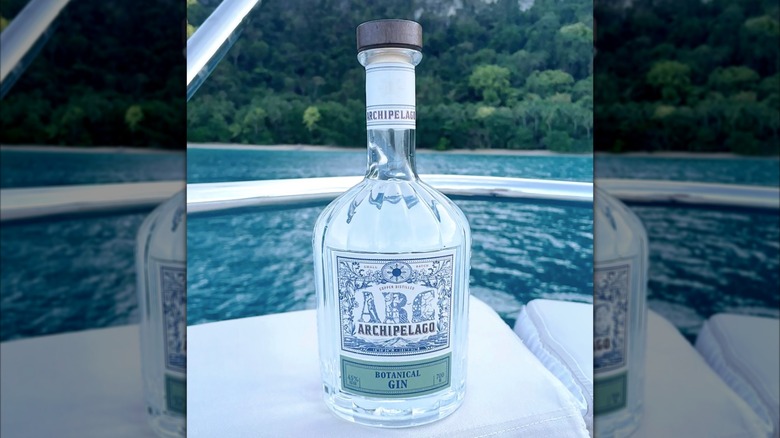
Archipelago Botanical Gin is not only produced in the Philippines; many of the ingredients that flavor it also come from the archipelagic country. Twenty-two of the 28 botanicals used to produce the flagship gin from Full Circle Craft Distillers are procured from across the Philippines. The lengthy list is filled with botanicals such as calamansi, Benguet pine, sampaguita, and ylang-ylang to create a refreshing and citrusy gin showcasing the flavors of the Philippines.
"Arc Gin was established to show that not only could the Philippines distill award-winning gin, [but that] they [also] could utilize gorgeous indigenous botanicals," Natasha Bahrami says. These ingredients produce a premium gin with a taste drinkers are unlikely to find in bottles made with more traditional botanicals. Archipelago's efforts to highlight Filipino flavors have paid off. The gin has received many accolades, including taking home gold at the 2019 World Gin Awards and platinum at the 2021 SIP Awards. You can take a bottle home for about $40.
The tropical botanicals make Archipelago particularly versatile in cocktails, according to Bahrami. She suggests using it in citrus-forward drinks, but says it can also "hold its own in a Negroni." Bahrami also recommends trying it in a simple gimlet that lets the tropical botanicals shine.
Monkey 47 Schwarzwald Dry Gin
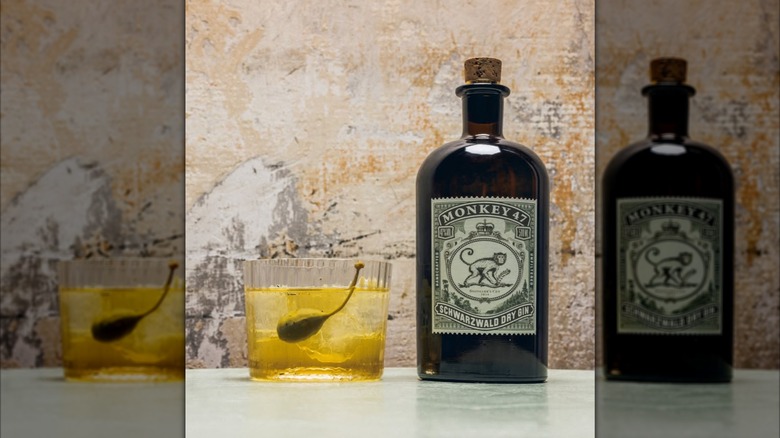
With 47 botanicals in every bottle, it's no surprise that words like "complex" and "quality" are used to describe Monkey 47 Schwarzwald Dry Gin. The German gin combines botanicals from the Black Forest and beyond, including locally sourced lingonberries, which the distiller refers to as its "secret weapon." After it's distilled, the gin matures for 100 days in earthenware vessels, which contribute to the smooth, full-bodied character that puts Monkey 47 among the gins good enough to drink straight.
"Monkey 47 Schwarzwald Dry Gin is so worth it," says director of beverages Dave Mattern. For Mattern, the lengthy list of botanicals, the maturing process, and the gin's higher proof — 47% ABV — all help justify its premium price, between $40 and $79 depending on the bottle size. Layers of juniper, citrus, herbs, floral notes, and Indian spices also give drinkers plenty to discover whether they sip it neat or mix it into a cocktail.
Mattern puts Monkey 47 to work in a Bon-Ton Martini, a freezer martini made with gin, elderflower liqueur, Italian white vermouth, and orange bitters. "I could drink these all night and every day, and it is just not the same without Monkey 47," he says.
Barr Hill Tom Cat
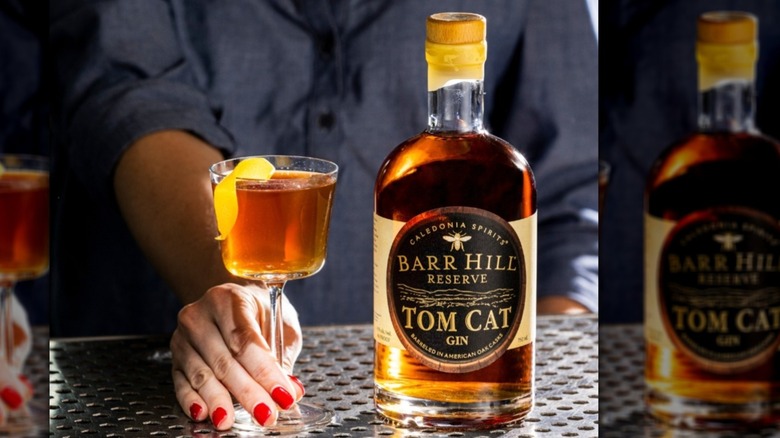
Barr Hill Tom Cat Gin blurs the line between gin and whiskey. The Vermont gin is aged in new American oak barrels before being finished with raw honey. The result is a spirit with notes of oak, juniper, and wildflowers. At 86 proof, Tom Cat has the strength to hold its own in cocktails and is one of the best gins for a Tom Collins.
"Barr Hill Tom Cat Gin is killer," says Dave Mattern. Although it's a more affordable premium pick, Mattern says its American craftsmanship, ingredients, and "honest deliciousness" make it worth buying. The barrel aging, which gives it some of the richness and oak character typically associated with brown spirits, sets it apart from other gins and makes the $55 price tag easier to stomach. These qualities make Tom Cat particularly appealing to whiskey drinkers and gin lovers. The distiller recommends using Tom Cat in a Negroni and in a gin old fashioned, where its oak-aged fullness can show off.
Mattern suggests keeping things simple when it comes to enjoying Old Tom. "When you are with friends on Friday afternoon and it's too early for scotch or bourbon, go ahead and put a couple of ounces of Barr Hill Old Tom gin over an ice block and sip away," he says.