

8 Frequent Complaints About Pappy Van Winkle Bourbon
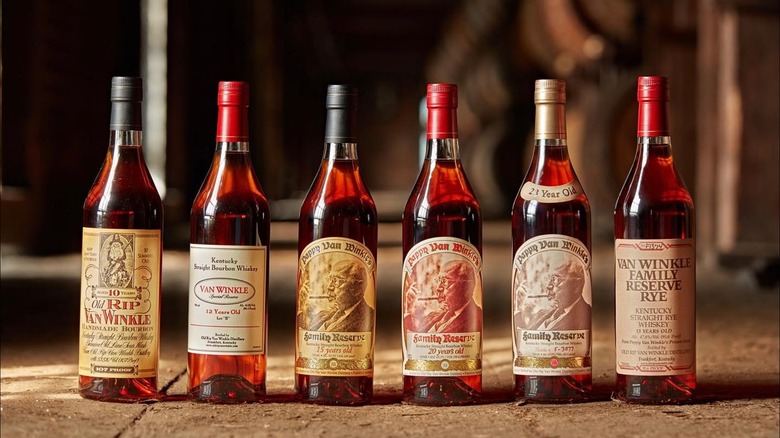
Pappy Van Winkle is an infamous name in the world of bourbon. Often referred to as simply Pappy, these bottles have legendary status, but often for the wrong reasons. There are plenty of frequent issues cited with the bourbon that comes from the brand, and it often has little to do with what is actually in the bottle. As a bourbon lover, these are issues I've often found out myself, but I've also looked high and wide to see if others have similar gripes.
Now produced at the Buffalo Trace Distillery in Kentucky, Pappy Van Winkle has six main expressions, with its bourbon coming at different age statements of 10, 12, 15, 20, and 23 years. Along with this is a 13-year-old rye. It's an impressive range, but getting to actually sample this whiskey is where many of the problems lie. Here, we'll be taking a look at what the frequent complaints are, if they are justified, and the truth behind them. By the end, you should be able to look beyond the hype surrounding one of America's most coveted whiskey brands.
1. You can't find Pappy bourbon bottles anywhere
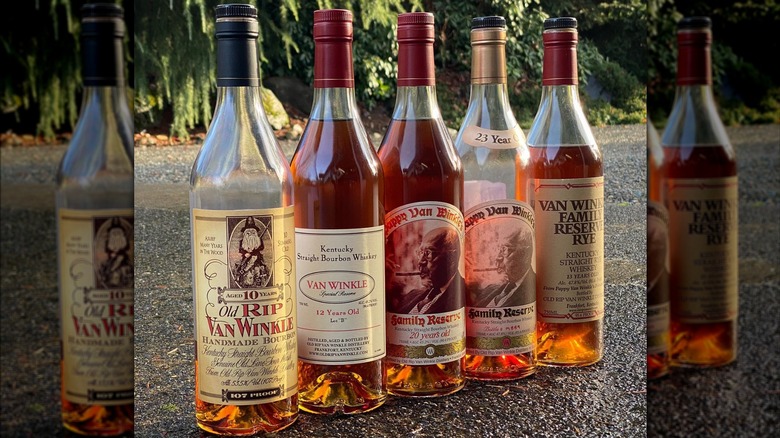
Perhaps the most frustrating and common complaint about Pappy Van Winkle is that you just can't find the stuff on liquor store shelves. Even if you have the money readily available to buy a bottle at retail price, it often isn't enough. All the Pappy bottles are known as what's called allocated bourbons. This is where each market, state, or retailer is only allocated a limited number of cases or bottles. A shop cannot simply order more cases on demand. This can then lead to further issues, as it feels like some bottles can be held back for loyal customers or those who happen to know someone in the trade. This can lead people to check numerous stores, join allocation lists, enter lotteries, or simply hope to get lucky.
This is a problem caused by limited production levels and high demand. Regular customers will be asking about bottles of Pappy long before they arrive on shelves. If they do appear, they will be gone almost immediately. This scarcity only accentuates the issue as it becomes part of the reason Pappy is so coveted.
Limited availability can happen in the world of premium whiskey, but the problem is never quite as stark as it is with Pappy Van Winkle. It often means that your best chance of trying this whiskey is at bars, whiskey tastings, or finding a generous bourbon friend. If you're incredibly lucky, you may be able to find a bottle at Costco. This rarity means that when you eventually get to taste it, it's a rush, as you know it's such a rare delight.
2. Secondary prices are absurd
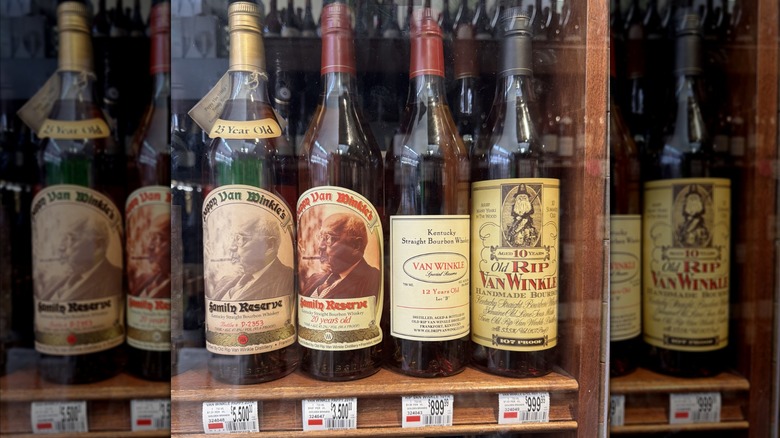
The reality is that if you want to buy a bottle of Pappy Van Winkle, you can. The other reality is that you're unlikely to do that by picking one up from a store. Instead, you'll have to go through secondary markets. These are places that have managed to get bottles of Pappy with the intention of selling them far above recommended retail prices. That may be a palatable option if those prices were anything other than eye-watering.
Take the 15-year bottle. It has a recommended retail price of $299.99. Yet, the average price on secondary markets is over $2,400. That is 8x the cost. It's a similar story with all of its whiskeys, with the 23-year-old bottle having an average price of around $5,000. These bottles are already expensive at their suggested retail prices, and anything above that, you're buying for reasons that go beyond just a love of bourbon.
There's nothing inherently wrong with whiskey becoming a collectible, but prices reaching several times the original retail level can make it difficult to assess Pappy purely as a drink. You're simply paying for the opportunity to own something that many other bourbon drinkers can't get. Of course, the price is there because the demand is there. But for regular bourbon lovers, Pappy can feel like an impossible dream.
3. Pappy Van Winkle is bad value for money
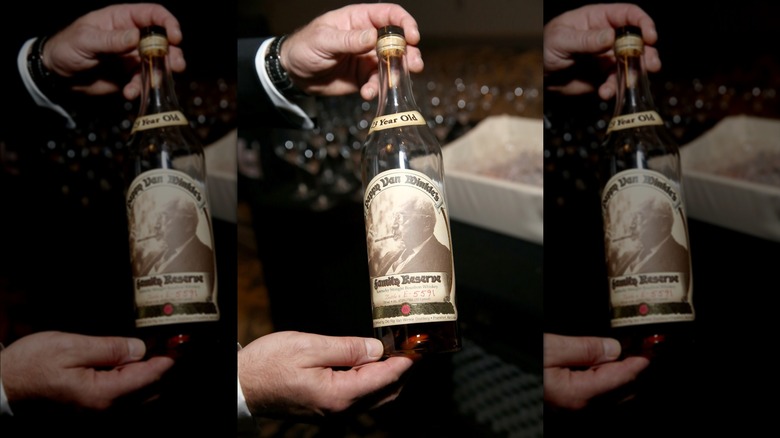
Even if you are able to avoid those inflated secondary-market prices, there is an argument that Pappy Van Winkle isn't particularly good value for money. If you are able to buy a bottle for, let's say, 50% more than retail price, you may think you have a great deal. Yet, even at a more modest price, you're not necessarily getting enough extra quality to justify the premium over other excellent bourbons. You can still be a fan of Pappy bottles, and this would be true.
It's also probably fair to say these bottles have an elevated status for a good reason. The wheated mash bill helps to produce a softer and sweet style of whiskey, which is contrasted by the extra level of maturity and oak influence they have. There is also a prevailing feeling that, whilst made at the same distillery as plenty of other brands, only the best barrels are used for Pappy. Everything aside, it is excellent bourbon.
Even taking that into account, there is a threshold where Pappy stops being good value for money. The recommended retail prices may already be beyond that point. And once you start paying more, any sense of value goes out of the window. Pappy may be very good, but it's not so good that you should break the bank for it. Judged purely on what you get in the glass for every dollar spent, the Pappy premium can be difficult to justify.
4. The whiskey is overly oaky
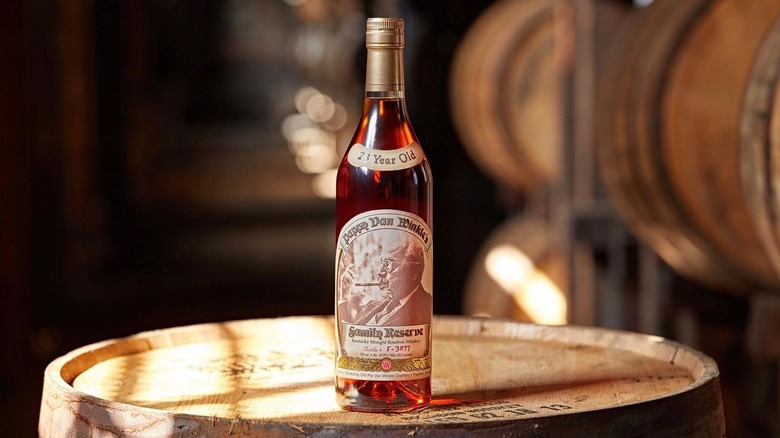
One of the aspects of whiskey that's easy to forget is that each expression has its own personality. Just like there isn't one song out there that everyone loves, there isn't one whiskey that is the universally agreed upon to be the best. Generally, the more time whiskey spends maturing, the more the barrel will influence its flavor. For bottles of Pappy, and especially the three oldest expressions, this can come with a noticeable oak flavor. There are some people who are going to enjoy these types of tasting notes, but there are many others who don't.
Due to it being the oldest, this is a common criticism of the 23-year-old bottle. If you prefer a brighter or well-balanced bourbon, you may not appreciate how the oak influences can begin to dominate the underlying spirit rather than simply complement it. Pappy Van Winkle 23 has plenty of other qualities, but you need to be a fan of those earthy flavors to truly love it. The 20-year-old bottle is quite oaky, too, with the 15-year also having that influence, but less notably.
There's an important lesson here that all bourbon lovers learn along the way, which is that older doesn't automatically mean better. Additional time in the barrel can push a bourbon past the point where you'd personally judge perfect balance to be.
5. Pappy Van Winkle's flavors are underwhelming
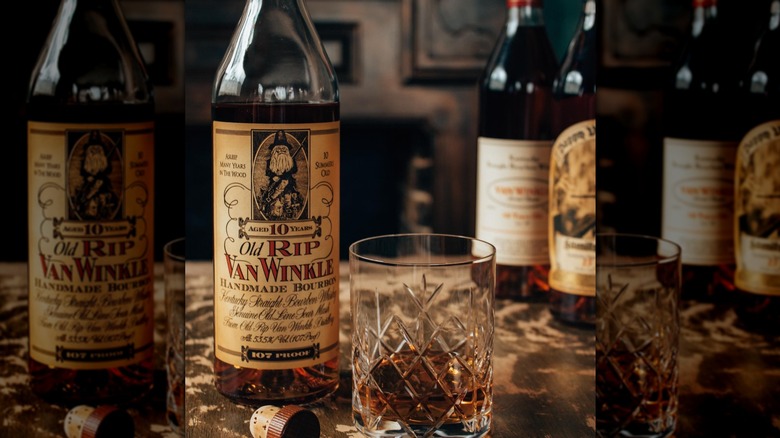
Pappy Van Winkle is undoubtedly a well-regarded bourbon, but some drinkers find its flavor profile less impressive than its reputation suggests. The complaints here are rarely that the whiskey tastes outright bad. Instead, some argue that the flavors don't offer the depth, intensity, or complexity they would expect from such a highly regarded premium bourbon. A part of this may come from the wheated mash bill that gives it a soft and rounded profile. Along with that usually comes a fairly modest proof. There are plenty of other bourbons out there that are more layered and robust. They can seemingly change with each sip, reveal new flavors with a drop of water, or perhaps give you complex tasting notes.
For all its intrigue, Pappy bottles can seem relatively straightforward, with a handful of familiar bourbon characteristics dominating the palate. This means that Pappy's profile can seem restrained in comparison to others. Again, personal preference plays a role here. Some like elegant bourbon, others prefer bottles with more raw energy. The older expressions do bring additional maturity and oak-derived characteristics, but age doesn't automatically translate into greater complexity. Sometimes, oak can even obscure some more delicate flavors.
Pappy bottles are far from simple, but in general, they deliver a refined bourbon rather than an exceptionally deep or intricate one. That may be disappointing to some.
6. Expectations can ruin the tasting experience
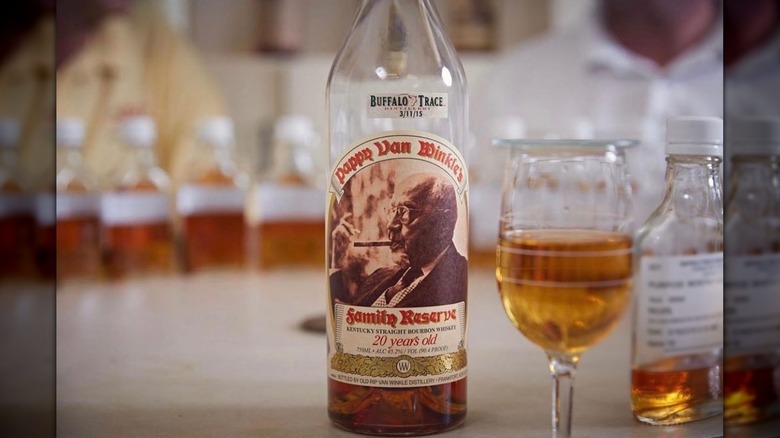
Have you ever paid far more for something than you were expecting? This could be anything from a concert ticket to a meal at a restaurant. When this happens, it can be hard to focus on the enjoyment you're having in the moment. Everything you do can end up being an assessment of whether or not what you're doing is worthy of the money you've just spent. This can be the same with Pappy.
Even if it's one glass that you've gotten from a bar, it can be hard to appreciate the whiskey for what it is. You start wondering if you got the most out of each sip; start to question the bourbon in intricate detail. Those questions can turn what should be an enjoyable drink into trying to justify the purchase.
When paying so much, you are almost wishing yourself to find something exceptional and almost mythical in the glass. If the bourbon tastes merely very good, rather than extraordinary, it can be difficult to accept that you've spent so much money on it. Separating the amount you've spent from the bourbon becomes difficult. As with most of the complaints about Pappy, it isn't really about the liquid, but the whiskey not living up to expectations can be a sinking feeling.
7. There are better, cheaper alternatives to Pappy Van Winkle
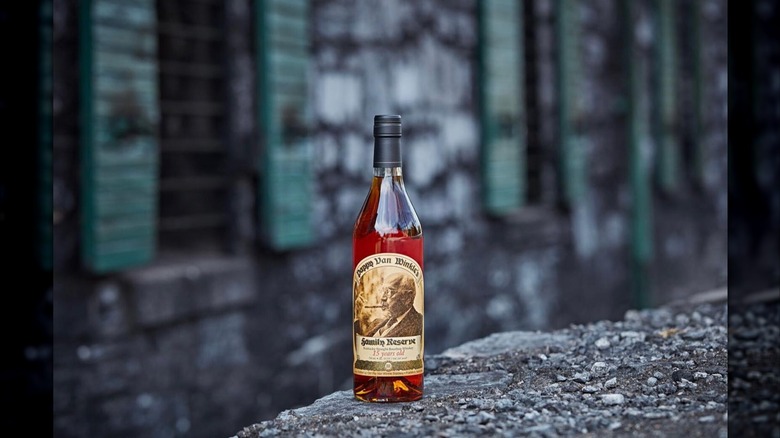
Pappy Van Winkle is far from the only bourbon that is made with patience and quality craftsmanship. There are many incredible bourbons out there that produce distinctive flavor profiles but without the premium price tag and scarcity. It's also worth pointing out how whiskey is highly subjective. There is a genuine chance that $50 bottle you like treating yourself to will taste better to you than any bottle of Pappy. This is especially true if you enjoy tasting notes that Pappy Van Winkle bottles don't excel in.
Pappy's soft character and influence from long-term aging won't necessarily suit every palate. You may love whiskey that has a more robust character and a spicy kick. Perhaps you love those fruitier whiskeys that have a lighter mouthfeel. Or maybe you enjoy a smoky element to your spirits. In these cases, paying a premium for a bottle of Pappy makes little sense.
The market is full of top-shelf alternatives that offer great value. If you're interested in Pappy, it's also worth exploring cheaper wheated bourbon first to see if that's the style of whiskey you most adore. In this sense, Pappy Van Winkle shouldn't be seen as the holy grail, but more like just another bourbon to enjoy whenever you get the chance. With so many quality bourbons available, you may find something cheaper, easier to obtain, and ultimately better suited to your own tastes.
8. Bottles can be seen as collectables rather than something to enjoy
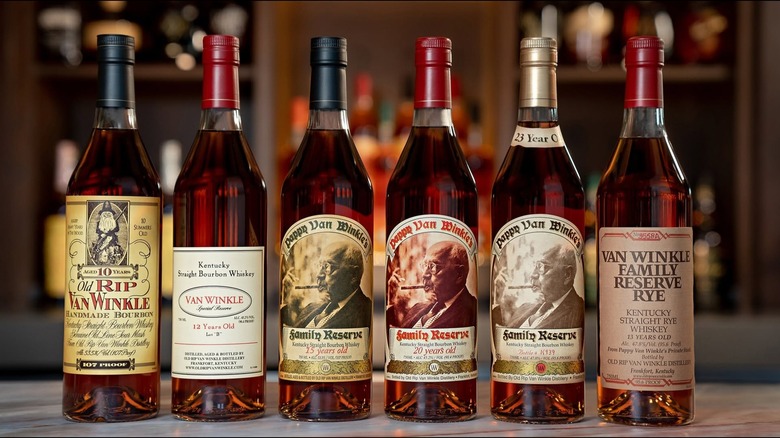
For bourbon enthusiasts, one of the more frustrating aspects of Pappy Van Winkle's popularity is that the bottles can sometimes seem to be valued more as collectables than as whiskey to be enjoyed. When you're paying that much for something, the whiskey can end up being displayed prominently on a shelf or kept unopen for years. Whiskey is something to be enjoyed, but it can feel as though the liquid itself has become secondary to the status attached to owning it.
If you're a whiskey enthusiast, you probably love exploring and sharing bourbon. Simply having a bottle shouldn't provide a sense of achievement in itself. This can be frustrating, as there are likely thousands of bourbon drinkers who would be happy to drink what's inside rather than leave it on a shelf.
There's nothing wrong with collecting bourbon, of course. There are many bottles that deserve to be drunk on special occasions, and it may take you years before you finally finish them. But you sense that the ownership of a bottle of Pappy can become greater than the enjoyment of it. For drinkers who care more about tasting great whiskey than possessing rare bottles, the obsession with collecting Pappy can seem to miss the point.