

7 Store-Bought Frozen Lasagnas With High-Quality Ingredients
We may receive a commission on purchases made from links.
Nothing beats homemade lasagna. Except when you're in a time crunch and don't have the bandwidth to shop for three kinds of cheese, layer them with sauce and pasta in a casserole dish, and wait an hour for the concoction to bake. This dish's intensity is why store-bought frozen lasagnas have become so prolific, and market competition ensures that at least a few are made with high-quality ingredients.
With my background as a certified nutrition coach, I've reviewed the nutrition labels and ingredient lists on frozen lasagnas to determine which ones are most worth buying. The definition of a "high-quality" ingredient isn't set in stone. Here, I've taken it to mean an ingredient that is a nutritional powerhouse, thoughtfully sourced, or else known for its outstanding flavor (as is the case with many imported cheeses).
I avoided recommending products with artificial flavors and an excessive amount of highly processed ingredients. Rarely can a product hit all the criteria above, so don't expect these lasagnas to, either. Instead, each one featured shines in a different way. You can learn more about my methodology at the end of this article.
Rao's vegetable lasagna
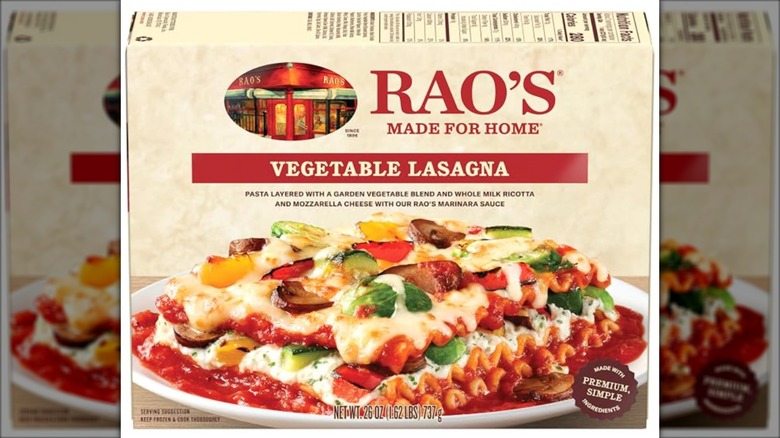
Rao's isn't just using Italian tomatoes and olive oil in its sauces as a gimmick. Italian tomatoes taste better than most other tomatoes because they're sweet and naturally nuanced. With the right amount of acidity, these tomatoes shine in dishes like lasagna, which is why Rao's uses them in its famous meat and vegetable lasagnas.
I particularly recommend Rao's vegetable lasagna; each 1-cup serving is slightly lower in sodium, cholesterol, and fat (including saturated fat). While it's also lower in protein, the vegetable lasagna still has an impressive 14 grams per serving. Plus, the added Brussels sprouts, zucchini, mushrooms, and bell peppers translate to more fiber. As you might expect, this lasagna is high in calcium, with each serving meeting 25% of your daily needs. And thanks to those sweet, flavorful tomatoes I mentioned earlier, it has no added sugar.
Three types of cheese mingle in this frozen lasagna: Romano, mozzarella, and whole milk ricotta. Add to that flavor boosters like onion, garlic, and a few spices, and you get the picture. It comes in two different sizes, too, making portion control easier.
365 cheese lasagna
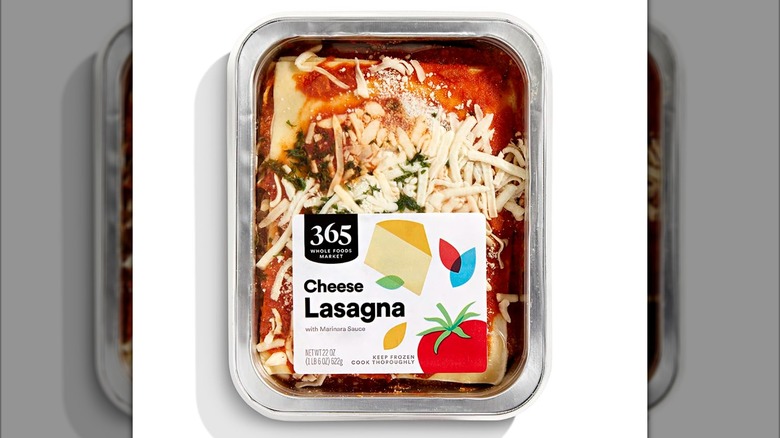
If you're shopping at Whole Foods and want to feed a family of three a filling dinner for under $10, the 365 cheese lasagna is a great place to start. Per serving, this lasagna's sodium content isn't as outlandish as you might think. It weighs in at 390 milligrams, or 17% of your daily limit. That's half what's in a few other frozen cheese lasagnas on the market, which is great news for your cardiovascular health and kidneys. This product is also rich in calcium and protein. Still, the saturated fat and cholesterol contents are both higher than ideal.
In terms of ingredients, this lasagna contains many of the same ones you might use when preparing a homemade version. It includes four types of cheese, ricotta, Romano, mozzarella, and parmesan, layered with pasta, spices like parsley and oregano, and a marinara sauce made with heart-healthy extra virgin olive oil. Notably, the cheeses are made using microbial enzymes, not rennet, so they are suitable for vegetarians.
Each lasagna comes in a 22-ounce tray that yields three servings. Some customers have expressed a desire for more sauce to balance the cheesiness of this lasagna, so keep some of your favorite marinara on hand if you agree.
Amy's vegan gluten-free vegetable lasagna
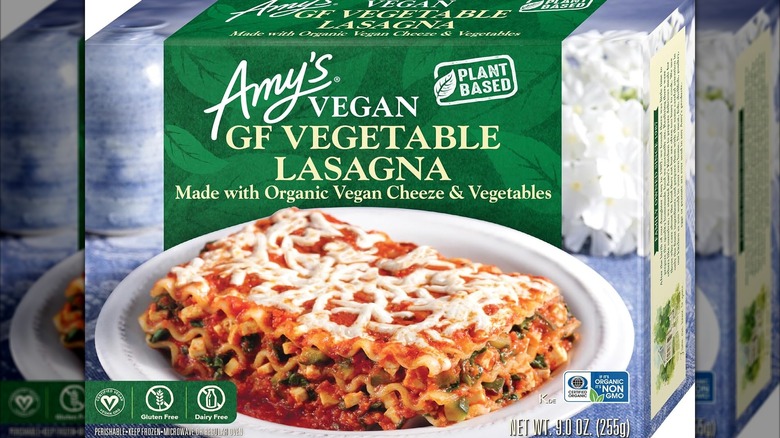
Vegan lasagna is mind-boggling enough, but add gluten-free certification, and you've got my attention. As a vegetarian who largely leans toward veganism, I find Amy's vegan gluten-free vegetable lasagna a breath of fresh air. One customer noted it excels on many levels: the pasta's texture is superb, the lasagna is easy to digest, and you can add meat if your diet allows. Another customer was pleased that it tastes more like a freshly made meal than a microwaveable one.
So what all goes into this innovative product? For starters, rice pasta replaces wheat pasta. It's layered with vegetables like zucchini, carrot, and spinach, plus a vegan mozzarella made with sunflower kernels, potato starch, and coconut oil. Tofu presumably acts like ricotta in this lasagna, but don't think for a moment it's bland. It has enough spices and herbs to keep each bite interesting, plus some natural flavor, which I admittedly have mixed feelings about. Happily, these ingredients are largely organic, though not entirely.
This lasagna's serving size is larger than many competitors, but it still packs roughly the same number of calories. Because plant-based ingredients steal the show, it has no cholesterol, but the sodium level remains high. If you want a version with real cheese, try Amy's standard vegetable lasagna, which a fellow writer once ranked as the best frozen lasagna, period.
Udi's gluten free lasagna with meat sauce
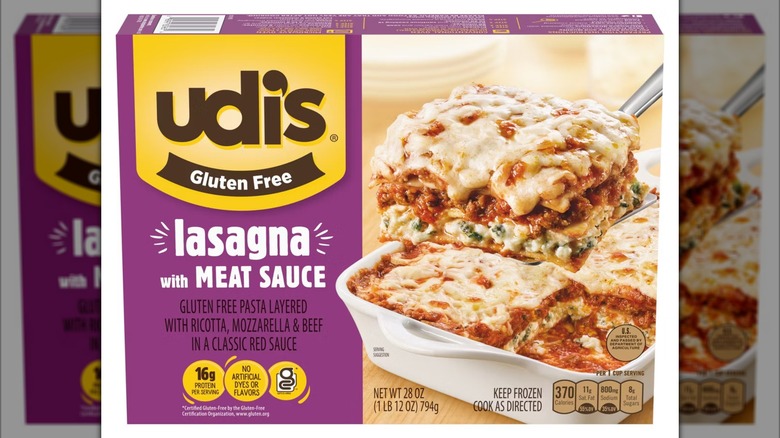
Here's one more gluten-free lasagna to try, this time with meat. Udi's gluten-free lasagna with meat sauce uses brown rice flour instead of wheat, and the pasta's texture comes from standard gluten-free ingredients like potato and tapioca starch, eggs, and xanthan gum. This pasta serves as the base for other ingredients, including tomatoes, ground beef, and onions. It also includes spices like basil and marjoram, and four types of cheese: ricotta, mozzarella, parmesan, and cream cheese.
As usual, keep an eye on the sodium, cholesterol, and saturated fat levels in this dish. The saturated fat content (10 grams per 1-cup serving) is especially concerning. Still, it has excellent amounts of protein, calcium, potassium, and fiber. I recommend slightly reducing the serving size and pairing it with steamed vegetables on the side. If you want more control over your nutrition and have the time, you could also try preparing our classic gluten-free lasagna recipe.
Lately, customers have been noting that Udi's lasagna would benefit from more noodles to carry the sauce, cheese, and meat. So if you're nearing the end of a dry pasta box, boil the remaining noodles and add them to this lasagna, or use leftover boiled pasta that's been sitting in the fridge for a few days.
Giovanni Rana 5 cheese lasagna
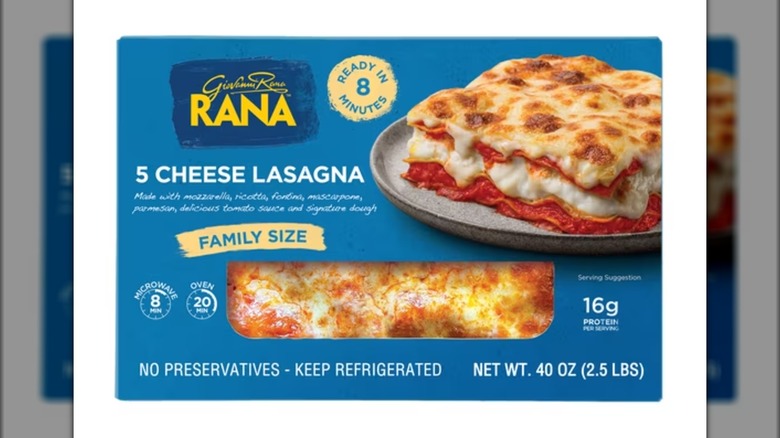
We make my grandmother's signature lasagna once a year, if not less. Not because we don't love it, but because the recipe requires so much work. I know firsthand how time-consuming it is to source and grate several types of cheese, so I'm grateful folks have options like Giovanni Rana's 5 cheese lasagna to make life (or at least dinner) five times easier. You can buy this lasagna in single-serving and family-size packages, depending on how much you want to control portions.
Mozzarella, fontina, ricotta, mascarpone, and parmesan all shine in this dish. That's a lot of cheese, of course, so watch the saturated fat, sodium, and cholesterol levels. Still, you can enjoy the generous amounts of fiber, protein, and calcium, plus the fact that it has no added sugar. Some folks may question the added vegetable starch and corn starch, but in small amounts, they typically pose no threat.
Reviews for this lasagna are typically glowing, which doesn't surprise us; Giovanni Rana is well known as one of the best fresh pasta brands you can buy at the grocery store. The brand is also widely praised for its pesto and Alfredo sauces. One Italian reviewer called it the best frozen lasagna they had ever eaten, which says a lot.
Stouffer's vegetable lasagna
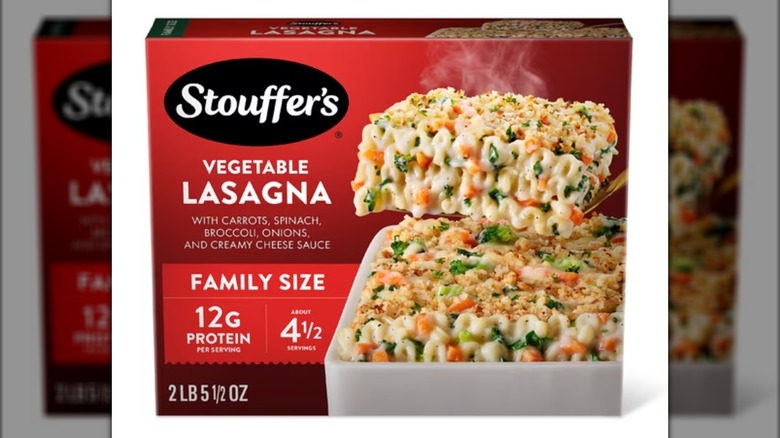
If you're a regular visitor to the grocery store's frozen aisle, then you're probably already familiar with Stouffer's. This brand is a carb-lover's best friend, making everything from mac and cheese to French bread pizza. There's nothing wrong with a carb-heavy dinner every once in a while, but you should still keep an eye on other nutrients. I appreciate that Stouffer's frozen vegetable lasagna includes carrots, spinach, broccoli, and onions, and folks say that the vegetables are both tender and delicious.
I'd recommend Stouffer's frozen vegetable lasagna over its frozen meat lovers lasagna because the former has a better nutritional profile regarding calories, cholesterol, calcium, and fat content (including saturated fat). While the vegetable lasagna is slightly lower in protein, it still has a respectable 17 grams per 297-gram portion. Nevertheless, you should remain wary of the fat and sodium levels in this lasagna, as with most lasagnas.
I gave this product extra kudos because it comes in single-serving, party-size, and family-size packages. That's conducive to both portion control and feeding larger families on a budget. The party-size lasagna weighs a whopping 6 pounds and feeds 11 people, so save that one for large gatherings.
Trader Joe's family style meat lasagna
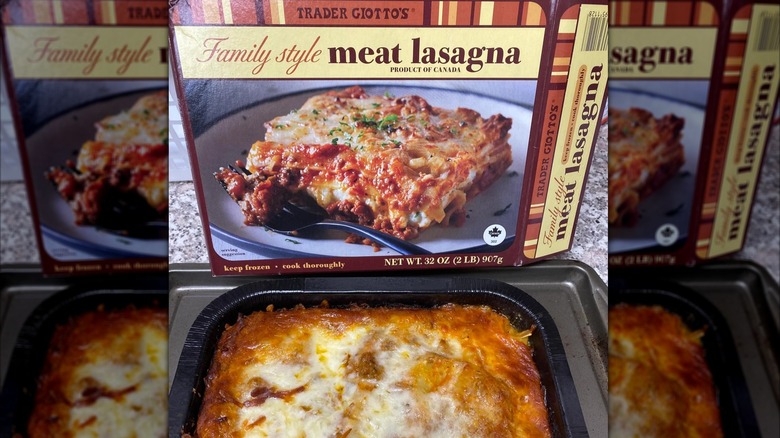
Though I don't eat meat myself, I've stumbled across Redditors' recommendations for Trader Joe's family-style meat lasagna several times. It's clearly a customer favorite, and so another Tasting Table writer did the hard work and compared it to Costco's frozen lasagna. They were pleased with the nuanced flavors and homemade feel of Trader Joe's product, and they also noted that it's especially generous with the cheese.
Speaking of cheese, this lasagna has four kinds: part-skim ricotta, low-moisture part-skim mozzarella, Romano, and Parmesan. Additionally, ground beef, pork, and tomato sauce shine alongside durum wheat semolina noodles. Spices like fennel seeds, oregano, parsley, and basil add to that complexity.
This lasagna is especially high in protein, with 23 grams per serving. Though you should be aware of the fat, cholesterol, and sodium levels in this dish, none are off the charts for lasagna. Also worth trying is Trader Joe's chicken Florentine lasagna, which has less saturated fat than the beef-and-pork version. Meanwhile, vegetarians will delight in the seasonal butternut squash Italian lasagna, an herbaceous option made in Italy.
Methodology
I compiled this list primarily based on the nutrients and ingredients listed for each frozen lasagna. I gave a leg up to those with widely recognized premium ingredients (such as organic vegetables and Italian tomatoes), while those with artificial flavors and highly processed ingredients lost points. I made sure each product had largely positive customer reviews before recommending it.
Most lasagnas are high in saturated fat and sodium, so expecting a perfect product is unrealistic. Instead, I took a big-picture view and recognized that enjoying frozen lasagna every once in a while can fit into a healthy diet, especially when you choose the right ones and are mindful of portion sizes. If you want to control the ingredients and nutrients, make one of these fabulous lasagna recipes and give it your own spin, for example, by adjusting the amount of cheese or adding more vegetables.