

12 Best Imported Beers For Under $15 Per 6-Pack
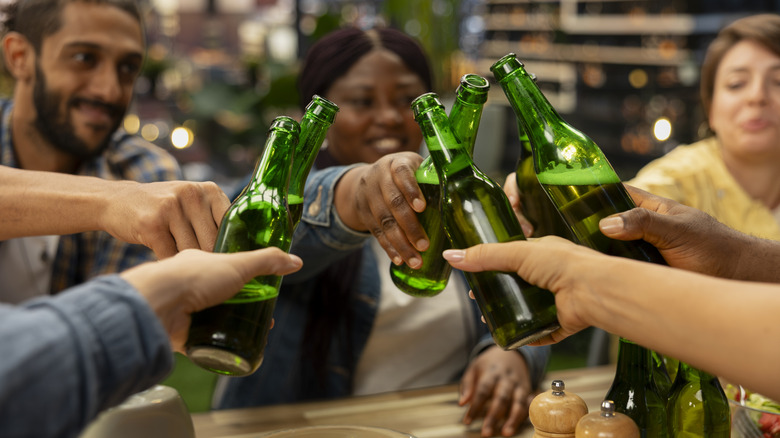
You'll hear a lot of complaints lodged against American beer, and if you already get what we're saying, we hear you, and we've got your back. Sure, you can pick up a decent, no-frills American beer for under $10 a six-pack, but surprisingly affordable imports are on the shelves, too. We wanted to see what you can score for under $15, and honestly, we were kind of surprised by the choices.
Whether you're looking for something from Germany or Ireland, Belgium, Spain, or even Iceland, there are options — and darn tasty ones, too. You might prefer a deeply flavorful stout, an ultra-refreshing lager, or something delightfully fruity, and we've got you covered. Don't believe it? Keep reading.
First, a disclaimer. Beer prices will, of course, vary by state and region, so to find the ones under our $15 mark, we checked scores of beer and liquor retailers across the country. Some places might be higher than others, but as of this writing, we're confident you can score these six-packs under our $15 mark. We made our final picks using a mix of personal experience (this writer is perhaps overly familiar with beer), reviews, Reddit chat, and the longevity and popularity of the beers in their home countries. Here's what to look for if you want to score a delish import without breaking the bank.
Guinness (Ireland)
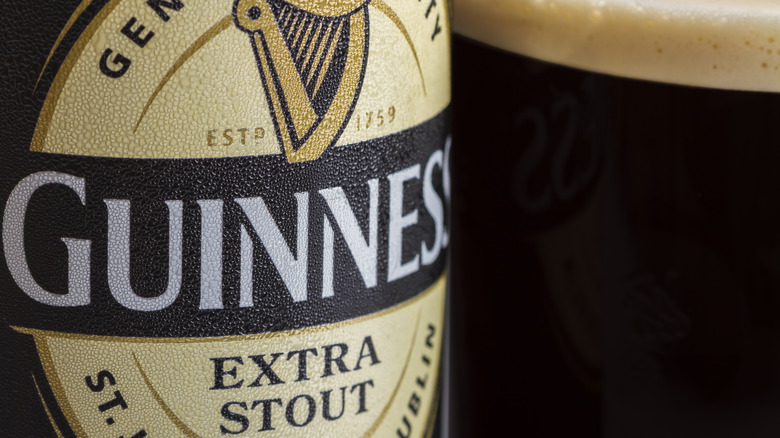
You've probably heard the claim that Guinness tastes better in Ireland, and it's absolutely true. Researchers have studied the phenomenon, and while they chalk it up to things like freshness and a dedication to the art of the perfect pour, Guinness tastes pretty darn good in the U.S., too. It's also surprisingly affordable, and as of this writing, you can pick up a six-pack of Extra Stout or Draught Stout for around $10. That's not bad at all — especially when you consider the average price of a pint in Ireland is about €6. (That's just about $7 U.S.)
Now, you're probably wondering what the heck separates Draught Stout from Extra Stout. Pick up the Extra Stout, and you're getting something close to the OG, 19th-century recipe. It's not exactly the same, but it's closer than the Draught. That one has lower alcohol, isn't quite as carbonated, and is closer to what you'll get in a pub these days.
Either way, you won't go wrong, and we would like to suggest one more thing. Guinness pairs well with beer-battered fish and chips, and for that price, you can absolutely justify setting a bottle aside.
Hofbrӓu Oktoberfestbier (Germany)
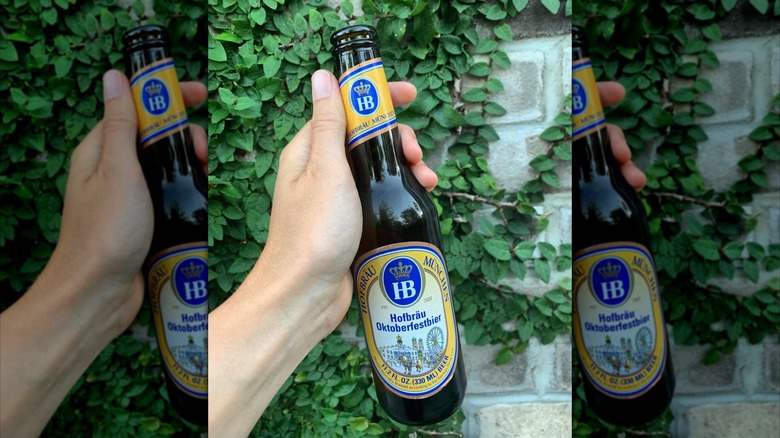
Even if you won't be heading to the real Oktoberfest any time soon, you can still bring Oktoberfest to you — any time of year — with some great, affordable options. Hofbrӓu Oktoberfestbier is an outstanding way to bring the festivities into your kitchen, and you can pick up a six-pack for about $13 or $14.
What can you expect? If you're new to Oktoberfest beers, keep in mind what makes them unique. They're typically smooth, easy to drink, and balanced, walking the line between sweet and malty. Hofbrӓu's entry fits the bill, and while it may be affordable, it also has an impressive pedigree. The brewery itself dates back to 1589, and originally catered to Bavarian royalty. As for the beer, expect something wonderfully rich, grain- and malt-forward, yet still easy to drink.
And you're drinking the real deal, too. The Hofbrӓu tent is one of the largest in Munich's Oktoberfest, and at any given time during the festival, you'll find as many as 10,000 people gathered there. People from all over the world come together there to share beer, music, and festivities, so when you're kicking back with one at home, you can close your eyes and pretend you're there.
Heineken (Netherlands)
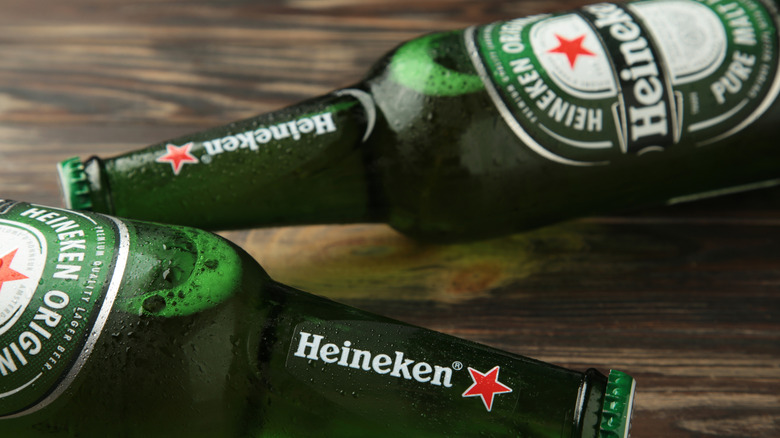
Is Heineken fancy? Absolutely not. Is it downright delightful on a warm summer evening? Definitely. It's on the popular end of the spectrum for imports, and there's a good reason. It's light, infinitely easy to drink, and a safe bet if you're wondering what to bring to a party, backyard BBQ, or game night. No one will be unhappy to see Heineken at the celebrations, and a six-pack will set you back around $10. We also appreciate this one because a few different types are on the market for about the same price.
Heineken also has a non-alcoholic version for about the same price, and we appreciate the fun options for anyone going the non-alcoholic route. In addition to the original, there's a citrus-forward lime and a downright delightful, botanical-inspired one that delivers hints of nectarine and juniper.
Seriously, kudos to Heineken for being inclusive! Interestingly, being cutting-edge really isn't anything new for Heineken. The brewery started in Amsterdam in 1873, and Gerard Heineken was at the forefront of developing the science of yeast and its role in fermentation. Lagers were still something fairly new, and Heineken helped lead the way.
Leffe Blonde (Belgium)
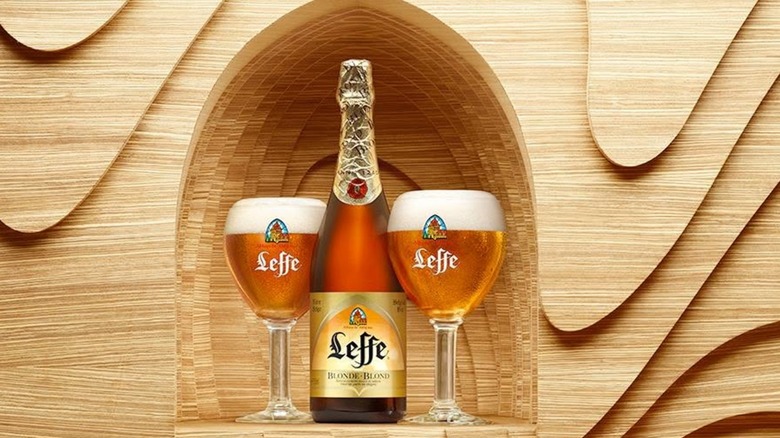
This one's a little different, and there's some full disclosure that has to happen here. Leffe advertises itself as part of a brewing tradition that dates back to 1240, and that's true. For centuries, the Belgian abbey of Notre-Dame de Leffe brewed beer. Things are different today, and they were the subject of a 2016 lawsuit alleging deceptive marketing. Leffe isn't brewed in an abbey anymore; it's made alongside Stella Artois at a commercial brewery in Leuven. Giant AB InBev also owns it, so you should know that. (The lawsuit was ultimately dismissed.)
That said, Leffe is still a perfectly fine blonde ale, and you'll likely find six-packs in the $10 to $12 range. It's easy to drink but still sippable, with hints of citrus, clove, and malty nuttiness wrapped in a creamy mouthfeel.
If you love it, it's worth picking up one of the beer's bespoke glasses. The chalice-shaped glass has neat little Easter eggs in its design, but it's practical, too. The stem keeps it from warming in your hand, the interior engraving encourages bubbles, and the shape guides the nose and affects flavor. Fancy!
Sapporo (Japan)
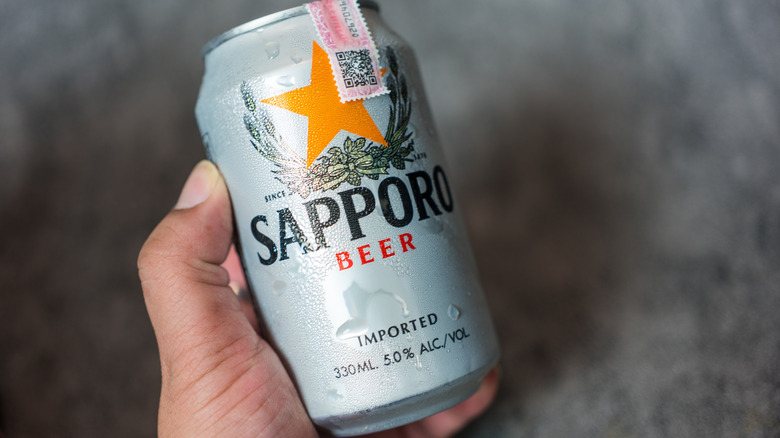
We're heading to Japan for this one. Sapporo has been around since the late 19th century, and the story of its founding brewer, Seibei Nakagawa, is pretty cool. After being told he was — under absolutely no circumstances — allowed to leave Japan, he did precisely that. He ended up in Germany and brought the country's brewing traditions back, founding Sapporo in 1876. Fast forward to the 21st century, and it's still a powerhouse in the Japanese beer market.
Following centuries-old Bavarian purity laws, Sapporo is made only with barley malt, hops, water, and yeast. The result is a delightfully malty brew so successful it paved the way for Asian beers in the U.S. market, and it's still worth picking up — especially if you're looking for something heavy on the carbonation and lightly creamy.
It's also surprisingly affordable. You can probably find this for around $10 for a six-pack, and you'll quickly see why it's stayed so popular for so long.
Estrella Galicia (Spain)
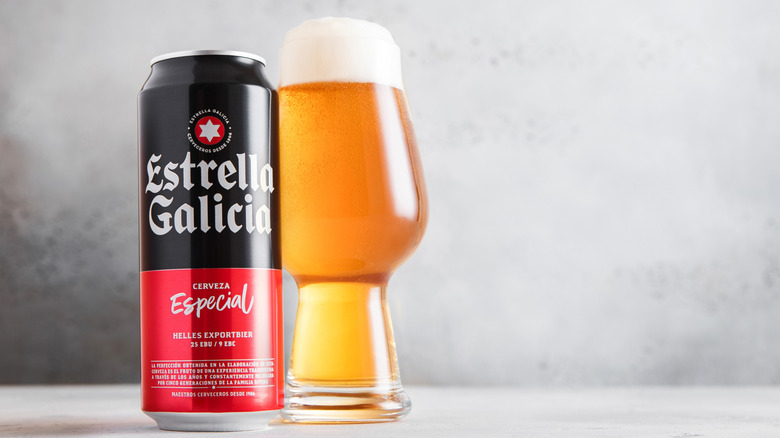
Estrella Galicia might give you a little side-eye, because you'll see this Spanish import described as an American all-malt lager. That makes more sense if you know founder José María Rivera Corral spent time in the U.S. before returning to open his brewery in 1906.
Interestingly, the brewery remains family-owned, and for its 100th birthday, it doubled down on that promise. As for the beer, this place is putting out a lager that's a little hoppy, with a dash of botanicals and a little sweetness, and it's incredibly mild. That's by design: it's meant to be the kind of beer you'll want to kick back with on the hottest days of the year, when you want something super-chill and extra-refreshing.
As we're talking about it now, you already know it's under our $15 price point. In fact, at the time of writing, we found places selling six-packs for as low as $8.99, with others closer to $13. If you're looking for the perfect beer for a summer afternoon, for sipping while grilling, or for a post-sprinkler run, this might just be your next go-to.
Schöfferhofer Grapefruit (Germany)
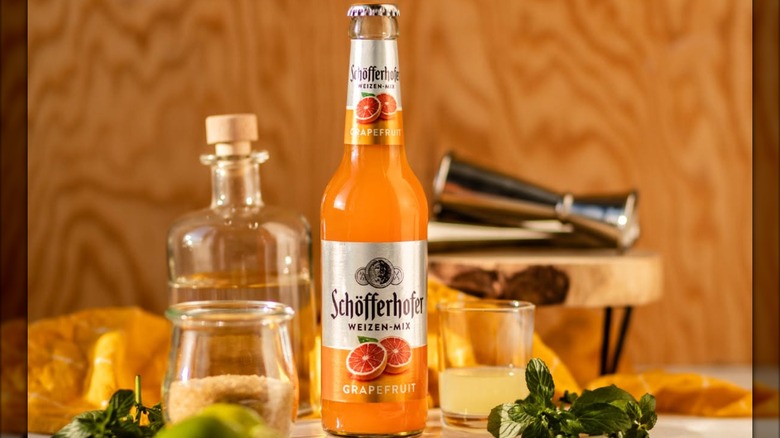
Sometimes you're just in the mood for something a little outside the box, after all, and Schöfferhofer Grapefruit definitely delivers. Technically, it's a wheat beer mix: half wheat beer and half carbonated grapefruit juice. (You might also see it labeled as a radler or a shandy.) Whatever you call it, it absolutely works to create something low-alcohol, perfectly refreshing, and delightfully unique.
Drink this one cold, and while it's pretty perfect on its own, it also makes an ideal cocktail base. Dress it up a bit and turn it into a mimosa, paloma, spritzer, or bellini, and give your next weekend brunch an upgrade. That makes it sound like a trendy new player on the scene, but here's a fun fact: the brewery is named for Peter Schӧffer, who loved beer and worked alongside Johannes Gutenberg on the printing press. (That was back in the mid-15th century, for anyone who's not up on their history. His namesake brewery was founded slightly more recently — in 1978.)
One thing we noticed is that this one can be a little tricky to find in some places. We get why, it's downright delicious and hits the spot any time the temperature starts to rise. Keep an eye out, though; you can find it for around $13 a six-pack.
Smithwick's (Ireland)
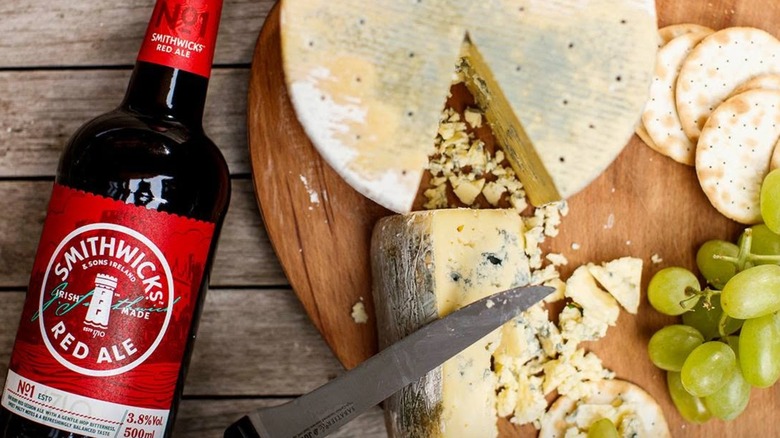
Variety is the spice of life, and that brings us to Smithwick's. Red ale is a style that doesn't crop up often enough, and Smithwick's is an outstanding — and wonderfully affordable — example. Made in Kilkenny, Ireland, Smithwick's Red Ale sits at the intersection of hops, barley, and malt... and at that perfect tipping point between bitter and sweet. It has a little caramel, a hint of citrus, and a crisp yet creamy texture.
Best of all, you'll find it going for somewhere around $11 a six-pack. It's easily one of the best Irish beers you'll find in the U.S., and that kind of makes sense. Smithwick's has, after all, had a lot of time to get things right.
This one goes all the way back to 1710, and it was nearly a century before the Smithwick family could go public with what they were doing. They operated in the shadows out of necessity: why? John Smithwick was Catholic and lived under severely restrictive laws governing things like property ownership. Some were repealed as the century wore on — with the last disappearing in 2020 — and Smithwick's went from best-kept secret to beloved brew.
Erdinger Weissbier (Germany)
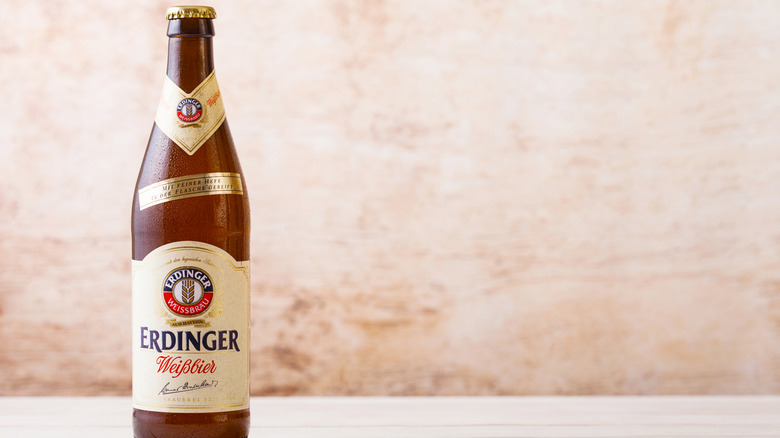
Those familiar with European beers know that there's a big difference between German and American beers. Generally, German beer has a reputation for being much more flavorful and rich, and you don't have to spend a pretty penny to find a great example of what makes Germany's brews so widely beloved. Erdinger Weissbier is — as the name suggests — a wheat ale that will set you back about $13 for a six-pack. That's not bad at all, especially for what you get.
Scroll back through Erdinger Brewery's timeline, and you'll go all the way back to 1886. The guiding principles the privately owned brewery still follows go back even further, as it still brews under the circa 1516 Bavarian purity laws. With only a few ingredients allowed — water, yeast, hops, and malt — each one is of the utmost importance.
It's no small operation, either — it's the largest in the world focused on wheat beers. Pick up the Weissbier, and you'll quickly learn why this is such a popular style. It's wonderfully creamy, a little fruity, delightfully fragrant with hints of floral malts, and perfectly bubbly. It's been around since the brewery's founding for a very good reason.
Carlsberg (Denmark)
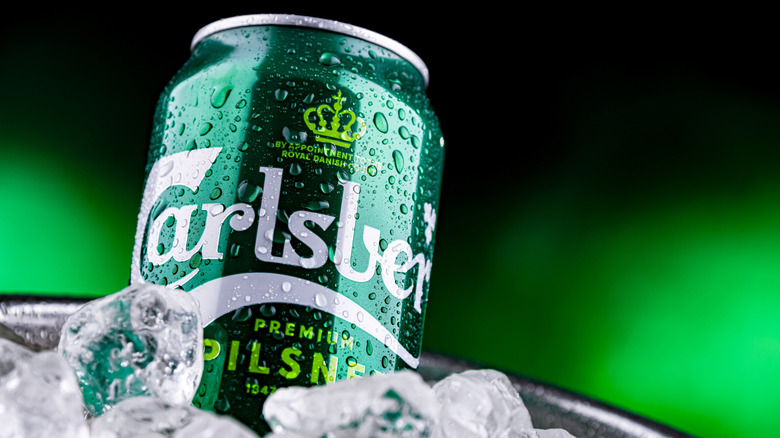
Carlsberg is a pilsner, and it's nothing complicated. It's light, refreshing, and so easy to drink that we'd say it's one of the best beers to have if you're planning to spend the evening chilling on the back porch and watching the sun set. When we say there's nothing complicated about it, we mean it as a compliment. The best things in life are often the simple, straightforward ones, after all, and Carlsberg fits the bill. Best of all, it often costs between $10 and $14 for a six-pack.
For a long time, Carlsberg billed itself as "Probably the best beer in the world," and that's a bold claim. If you see something like that and are immediately skeptical, you're not alone. The brand got a major makeover in 2019, with recipe and slogan changes, so if you haven't had one in a while, maybe it's time to give it another go.
Carlsberg also has a wild history, and the beer industry wouldn't be the same without it. Founded in 1847, Carlsberg — led by J.C. Jacobsen — spent decades funding and overseeing research into topics like the role of yeast in brewing and fermentation. The company's research division also developed the pH scale, cultivated yeast strains, and developed new types of barley. So... maybe tip one back for progress next time you crack open a Carlsberg?
Einstök (Iceland)
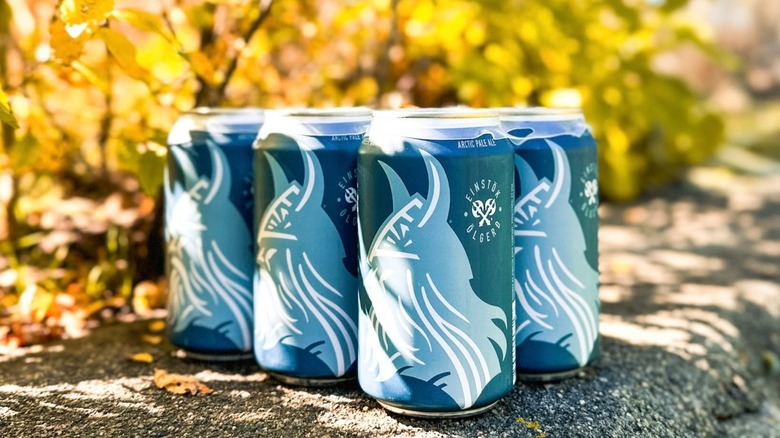
You probably expected us to visit places like Germany and Ireland on our exploration of outstanding and reasonably priced imports, but Iceland? Absolutely. Einstök is a relative newcomer to the European beer scene, only appearing in 2010. The brewers here take great pride in taking months to perfect a beer before the public even gets a taste, and fortunately, you can find quite a few in the U.S.
Look for fun options like the Icelandic Arctic Berry Ale, an Icelandic White Ale, or the Doppelbock for something uniquely off the beaten path. You can expect to pay $10 to $13 per six-pack, and if the awards are any indication of quality, it's well worth going out of your way to pick up these buzzy Icelandic craft beers.
Here's a neat bit of trivia: this brewery couldn't get much farther north. Einstök sits alongside the chilly Icelandic waters, and if you head out, you'll hit the Arctic Circle in about 60 miles. Those beers have come a long way!
Pacifico Clara (Mexico)
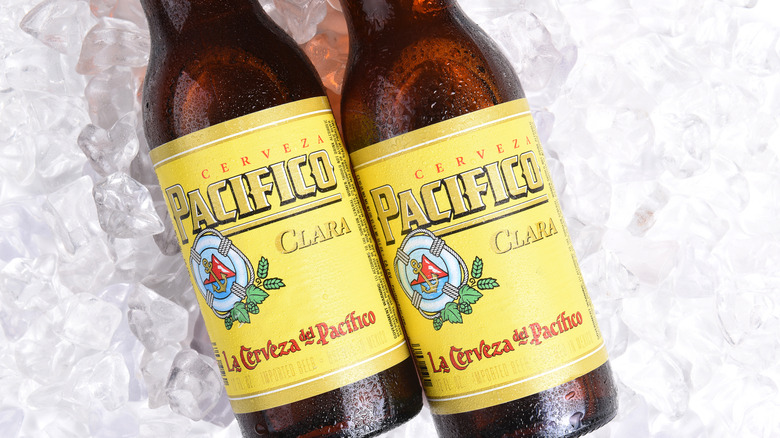
Mexican lagers can be just what the day calls for when you want something light and refreshing, but if you're stuck in the rut of reaching for the big names, we need to talk. Forget Modelo and Dos Equis: there's an even better option on the market, and yes, we're talking about Pacifico Clara. This pilsner-style beer was born at the turn of the 20th century and eventually became a favorite among beachgoers on both sides of the border.
You can call this one Pacifico, and a six-pack will set you back about $10. That's not bad at all for a wonderfully easy-drinking beer with a bit of apple, a bit of grain, and a bit of cherry sweetness, all wrapped up in a package so light it might win over even those who typically aren't big beer fans.
Combine that drinkability with the price point, and it's no wonder you'll hear people say it's the best lager to come out of Mexico, full stop. It's the kind of beer that's perfect any time in the summer, but we'd also suggest it's great in those deep, dark winter months when you just need a reminder that brighter days are ahead. That's something we can all get behind.
Methodology

To recommend some of the best, most wallet-friendly imported six-packs, we started with a confirmed price. To do that, we checked multiple stores and services across multiple states and confirmed that, at the time of this writing, six-packs were widely available under our $15 price point.
We based our top picks on a mix of personal experience and favorites, along with customer reviews from various stores and social media platforms like Reddit. We also considered how popular beers are in their home country, the breweries' longevity, and awards.