

Quartz Vs Marble Countertops: Which Has The Longest Lifespan?
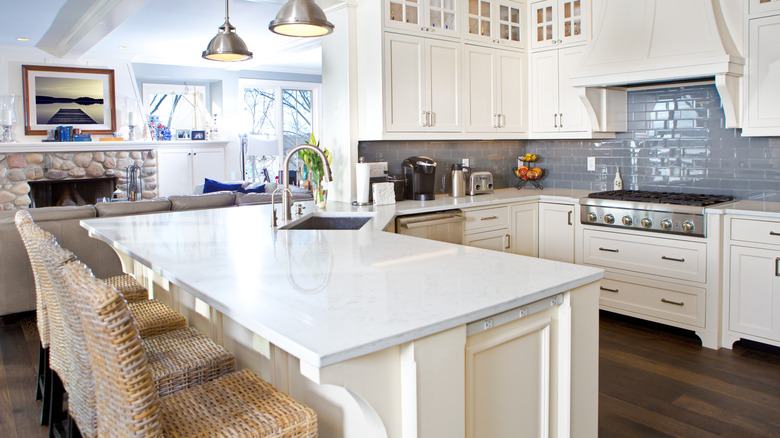
Choosing a new kitchen countertop is a big decision, and while the appearance is always important, there may be no bigger factor to consider than the lifespan of the material you choose. More than anything, countertops are something you are going to use every day. If your kitchen counter isn't durable, it won't just cost you money. That pretty pattern you shelled out for could also scratch, stain, and dull over time.
In general, quartz is expected to last more than 30 years, compared to about 20 years for marble. But choosing between the two isn't quite that simple. To learn more about two of the most popular materials for kitchen countertops, we reached out to Kerrie Kelly, the CEO and creative director of Kerrie Kelly Studio.
The question of lifespan for countertops can be tough, and Kelly tells us, "Both quartz and marble can last for decades when properly installed and maintained." The reason it's so hard to estimate a countertop's lifespan is that a lot comes down to how you personally maintain it. Marble can actually last longer structurally because it's solid rock, compared to the stone and resin mix that makes up quartz. However, that's not the only factor in a kitchen countertop's lifespan. Kelly explains, "The distinction is less about which material can physically last longer and more about which can maintain its original appearance with less maintenance over time."
Why quartz kitchen countertops have a better chance of lasting longer than marble
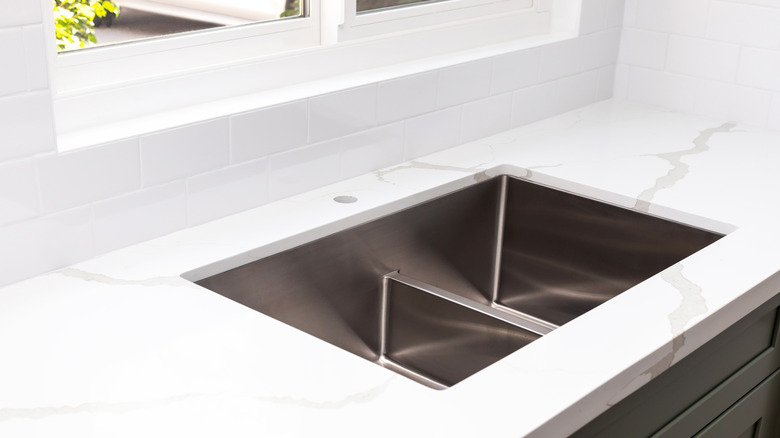
Comparing what contributes to each materials' lifespan, Kerrie Kelly says, "Engineered quartz generally requires less ongoing maintenance because it is nonporous," while telling us that "marble can also have exceptional longevity but is porous and more susceptible to staining, etching, and scratching." That nonporous nature is a big plus in the pro and cons list for quartz, and goes a long way towards extending its life. Kelly explains that low porosity offers, "stain resistance, and consistent performance without routine sealing, which is why I routinely specify engineered surfaces." Quartz is also naturally harder than marble, and more scratch-resistant. While Kelly warns that it is still sustainable to heat damage, all those factors combine to make quartz one of the most durable and low maintenance kitchen counter materials.
While marble can also last a long time, it requires attentive care to get there. 'Marble benefits from appropriate sealing, prompt cleanup of spills, protection from acidic ingredients such as citrus and vinegar,' Kelly says. You'll also need tools like trivets to protect it from heat, good cutting boards, and cleaners that are specifically safe for stone. Another disadvantage of marble countertops is that it's a relatively soft stone, which makes it prone to chipping and cracking. Being solid stone still makes marble a durable countertop material, and some people actually like the aged look it develops as it stains and wears down. However, visible damage may make you want to replace it sooner, and marble's high price means replacements can be costly.