

Forget Basic: Give Braised Pork A Kick Of Flavor That Starts With Apple Cider
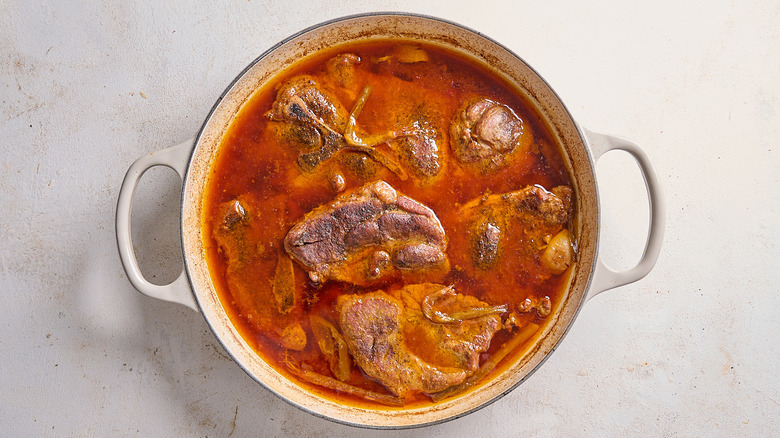
When you think of a rich braised pork, it's often the fatty, meaty flavor that comes to mind. To truly elevate the experience, however, you want to balance some of that fattiness with just enough acidity to create a more stimulating and overall satisfying flavor. Braising works magic by taking a tougher cut of meat, comprising intramuscular fat and connective tissue, and slowly breaking them down for maximum flavor and tenderness. While apple cider can be sweet, it also provides a refreshing acidity to the braising liquid, which balances the fattiness. Our apple cider and gochujang braised pork recipe, developed with Michelle McGlinn, plays on both sweet and spicy for a kick of flavor that's anything but basic.
As per this recipe, one cup of apple cider (equal in portion to the stock used, and twice the amount of rice wine used) is enough to do the trick. The cider is added along with the other liquid ingredients after rice wine is used to deglaze the pan. There's no one cut of pork for braising, in fact there are several suitable options, but pork shoulder is definitely the poster child, comprising rich meat and ample tissue and fat that render out to contribute flavor. Pork butt (which is subtly different to pork shoulder), loin roast, and belly are also great candidates for the same reason.
Don't be afraid to get creative
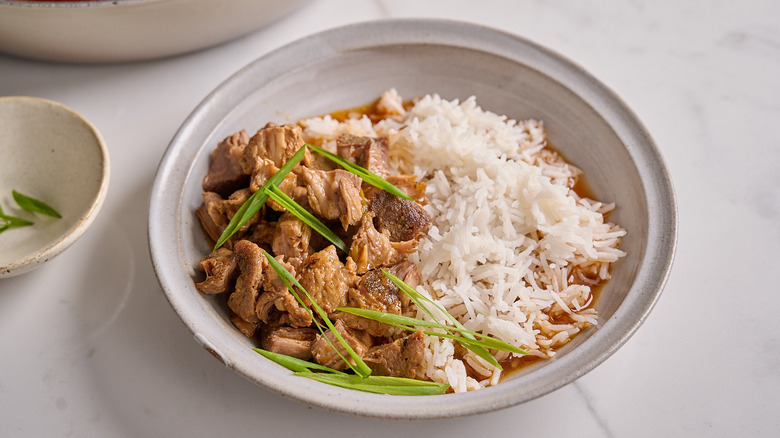
In Michelle McGlinn's recipe, a simple braised pork is upgraded by incorporating a classic flavor pairing of gochujang, the Korean fermented chile paste. However, there are certainly other ways to customize a braised pork that coalesce with the flavor of apple cider. You could go the herbal route, with pork-friendly herbs like thyme, bay leaves, or rosemary. For more of a BBQ flavor profile, you can incorporate your favorite pork spice mixes or dry rubs. You can also play around with different types of stock or broth, with chicken broth offering a lighter braising liquid, and beef stock providing more richness. You may see some recipes out there that incorporate ingredients like dry white wine, but be weary, this may not work in the same way as the less-acidic Shaoxing rice wine did in McGlinn's recipe, and you might end up overdoing the acidity when combined with apple cider.
Cutting pork shoulder into one-inch-thick blade steaks can make the braising go quicker, and even impart more flavor in the searing stage by creating more surface area. This is where you put a sear on seasoned pork to brown it and add extra flavor before you start the braise. When all is said and done that braising liquid, enriched by the simmering ingredients and rendered fat, yet balanced with apple cider, can be spooned over your braised pork. If you're making pulled pork, this sweet-yet tangy liquid is what you'll use to add back into your shredded meat for an unbeatable flavor.