

One Simple Paint Technique Prevents Brushstrokes On Kitchen Cabinets
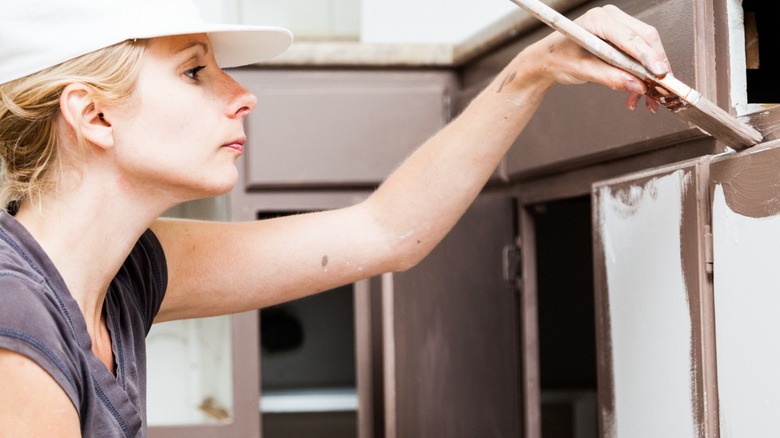
If you want to remodel your kitchen on a budget, painting your cabinets is a more affordable option than replacing them altogether. This is especially true if you DIY rather than hiring professional painters. To ensure smooth results without obvious brush marks, you need to use the right materials and brushing techniques.
For professional-looking results, it's crucial to prepare your cabinets properly before applying paint. Thoroughly clean your cabinets of food debris and dust, then use a degreaser to remove buildup. After cleaning, sand all the surfaces to be painted. If your cabinets don't have gouges or rough, splintered wood pieces that need to be removed with a good, coarse sanding, you could use a deglosser or liquid sander instead of sanding by hand.
Your kitchen cabinet painting project won't be a one-and-done project finished in an afternoon. You'll build the paint and let each coat dry thoroughly before painting the next layer. The same goes for your primer: Start with a thin layer, then let it dry completely before adding another layer.
How to make your kitchen cabinet painting look professional
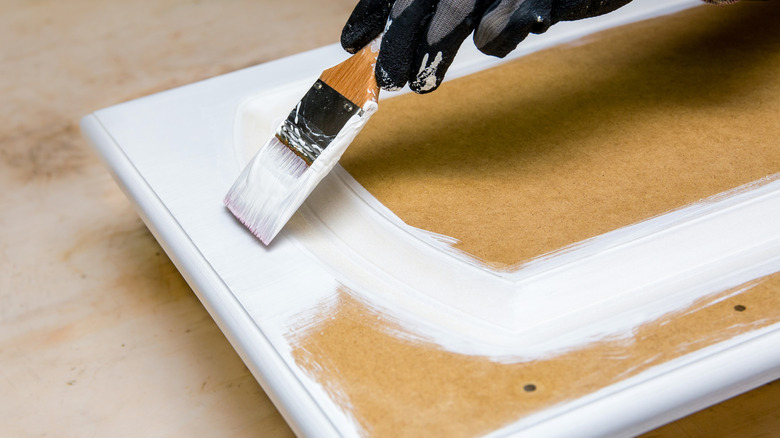
After the primer dries, repair any imperfections, such as using putty or wood filler to fill holes. When picking your shade of paint, look for enamel or oil-based paints. They're durable and long-lasting, and can stand up to the wear and tear of daily use.
Make sure you have a selection of soft, high-quality paintbrushes (rougher brushes are more likely to leave brushstrokes) with a variety of angles. Most importantly, don't overload your brush with paint. Instead, dip your brush about one-third of the way up into the paint, then carefully wipe off any drips and excess paint on the sides of the container.
In one solid, flowing motion, flex the brush flat on the surface of the cabinet and brush it all the way to the end. This will help to banish brush marks and ensure even paint coverage. Use thin, flowing strokes and let each coat of primer and paint dry before applying the next to ensure a smooth, brushstroke-free finish.