

5 Ordering Tips For Better Steaks At LongHorn Steakhouse
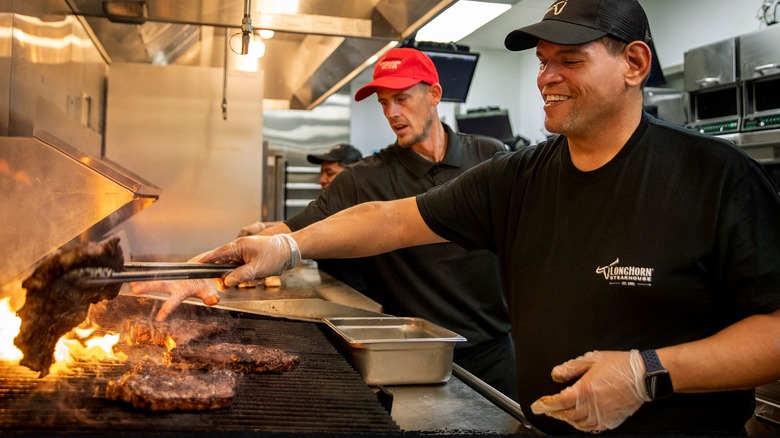
There's nothing like going to a steakhouse. You can generally expect an inviting, cozy atmosphere with dimmed lights and hardwood floors. As you push through the front doors, the aroma from the grill is immediate, enticing taste buds and eliciting snapshot memories of past barbecues. The smell of fresh bread lingers teasingly through the air. The music is upbeat; so is the staff. And as you sit down in a cushy seat, saddling up to a large table, it seems the possibilities are endless for what to spread before you. But one thing is for sure: Steak is the reason we are here.
LongHorn has a great selection of steaks. We know, because we've tasted and ranked them. And something all LongHorn Steakhouse first-timers should know is that these steaks are fresh. You're getting top-quality, never-frozen cuts of meat. That in and of itself sets you up for a really great steak dinner. But if you're looking for ways to venture even further into greatness, you might want to listen up.
LongHorn offers a variety of add-ons to consider for elevating your meal that you may never have tried. These textures and flavors can be added to take your steak to the next level. Just like steak and potatoes are a classic pair, a good steak can be made great by the perfect companion. So check out these tips on ordering better steak when you visit LongHorn.
Order your steak at the perfect temperature
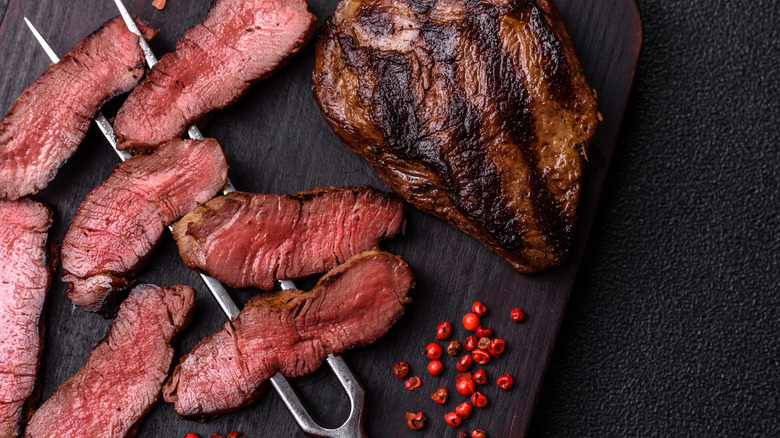
Like many other steakhouses, LongHorn offers you the ability to order your steak anywhere from rare (125 to 130 degrees Fahrenheit) to well done (about 160 degrees). Rare only has a slight sear on the outside and remains cool and red through the majority of the meat. Well done, on the other hand, is cooked throughout. And none of these options is wrong, per se. However, steak aficionados and grill masters alike say that medium rare (130 to 140 degrees) is the perfect temperature for the smoothest texture and natural robust flavor of a steak, at least for the cuts you can choose from at LongHorn.
While tougher cuts of meat, like flank steak, need longer on the grill to break down muscle and fibers, the steaks you find at LongHorn are less fibrous, fattier cuts that taste best at lower temperatures. At medium rare, steaks like the sirloin, filet, and ribeye have had enough time for the marbling to render and fibers to loosen, letting the grill's smoke and the steak's natural flavor and texture shine through.
While this steak will have a warm center, the redness may be a turnoff for some. If this sounds like you, perhaps try medium (140 to 150 degrees). A medium temperature offers a more pink, less red, center without sacrificing too much of the natural flavors and juicy texture.
Top it with caramelized onions
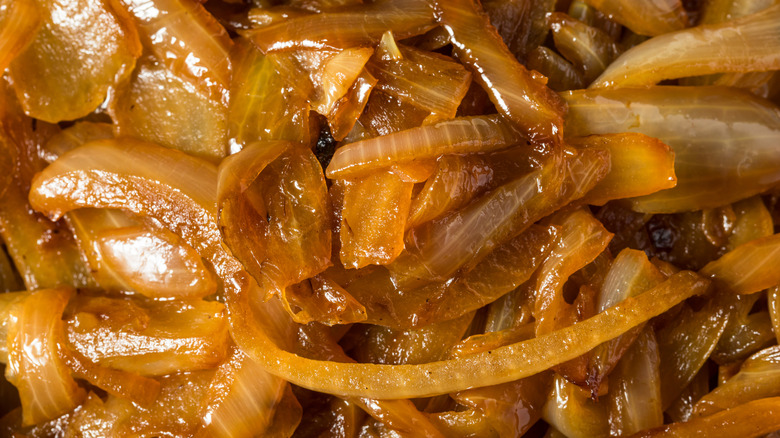
Steak and caramelized onions have a history that dates back way before our country was founded. Bistec encebollado, for example, often known as Puerto Rican steak and onions, is an old Latin American dish thought to have been brought here by Spanish colonials. Of course, Americans have taken the flavor favorites of steak and onion and made a few iconic steak dishes as well, like fajitas and the Philly cheesesteak. And when it comes to sitting down for a steak at LongHorn, there might not be a tastier option than topping your selection with a pile of caramelized onions.
Caramelized onions are available at LongHorn and already come atop the chop steak, which is typical of a steakhouse. And while you don't see them offered as a side or add-on on the menu, fans of having these two flavors together have no trouble requesting this little upgrade. While it will probably cost you a small charge, the flavor combination of the tender umami steak paired with the buttery, sweet sharpness of caramelized onions is worth it. Offering an elevation of juiciness to your steak, caramelized onions also melt deliciously in texture alongside the meat, giving the tongue and teeth a heightened blend of both smooth and silky. Once you try it, you may like it so much that you start preparing your steak with caramelized onions at home. (If so, we have the perfect recipe.)
Try it with some roasted mushrooms
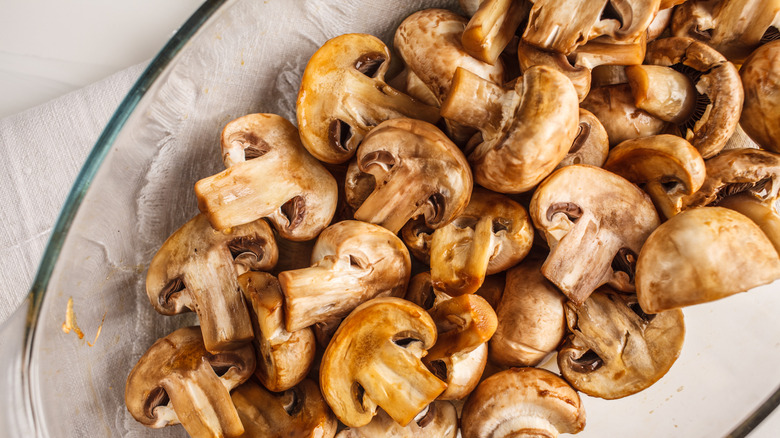
The roasted mushrooms at LongHorn are already touted as one of the restaurant's "Great Steak Additions" and can be easily added to any steak for around an additional $4. Of course, LongHorn is right to classify these roasted treats as great additions. It isn't the only steakhouse that knows roasted mushrooms, much like sauteed onions, go brilliantly atop a tasty cut of meat. This addition is so popular that you can find many steakhouse mushroom copycat recipes just waiting for you to discover and fall in love with the flavor. It's such a favorite that for years I asked, "Would you like mushrooms with that?" whenever customers at the steakhouse I worked at ordered their choice cut.
Roasted mushrooms have an earthy, meaty flavor that goes excellently with red meat. Just think about beef stroganoff, Salisbury steak, or once again, the LongHorn menu's chop steak. A slow-cooked mushroom offers a sensory profile that adds robustness to the already plentiful flavor of the steak. The texture of roasted mushrooms gives a nearly parallel mouthfeel to the steak, with a different bite for the teeth to sink into. Juicy and tender, mushrooms take what we love so much about steak and give it to us with a quality that complements every bite.
Add the parmesan crust to your steak
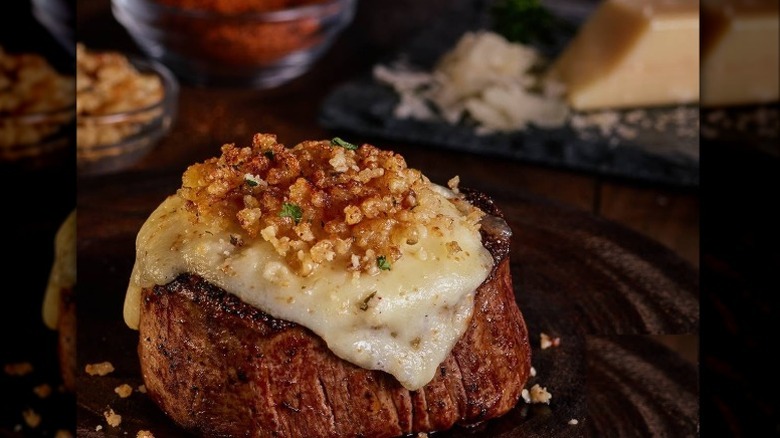
LongHorn has been offering its parmesan crust (described as a parmesan and garlic cheese crust on the menu) for years. And while the steakhouse did create specific menu selections of what it thought customers would enjoy the creamy, cheesy crust on the most — the Parmesan Crusted Spinach Dip, the White Cheddar Stuffed Mushrooms, and the Parmesan Crusted Chicken — customers have always had the option of crusting any LongHorn menu item of their choice. In a recent viral trend, this took a crazy twist with fans topping everything from the free bread to the cheesecake, which may be going too far. However, we do have to side with the fans who have been adventurous enough to try the parmesan crust on a steak.
According to an inside scoop we received from a LongHorn employee, the parmesan crust actually includes panko crumbs, parmesan, garlic, herbs, some of the steakhouse's homemade ranch dressing, and more cheese. And that yummy combination of zest, sharpness, and cool creaminess doesn't just elevate your steak; it creates a whole new main course that blows plain steaks out of the water. Adding the parmesan crust to your steak highlights the meat's savory flavor, complements it with garlic and herbs, and provides textural elements of snap and smooth. Rich and robust, a parmesan crusted steak is a meal in itself. We, and many other fans, highly suggest you try it at least once.
Add some surf to your turf
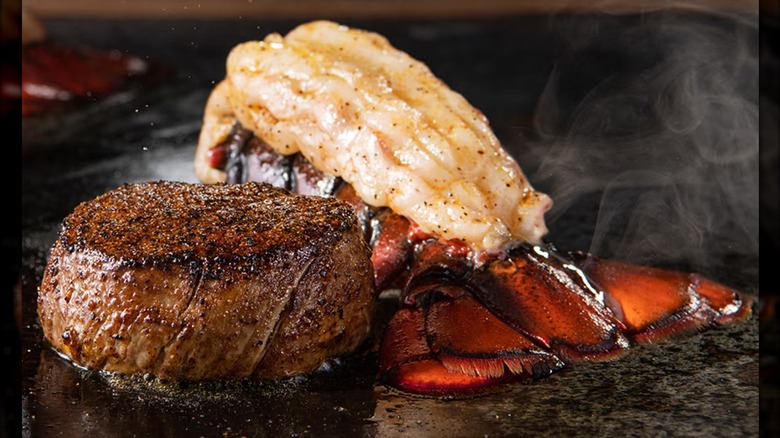
Surf and turf is not a new concept, nor is it necessarily an American one, despite the many restaurants touting that the U.S. was the first to offer the more commonly known steak and lobster combo. The origin of surf and turf can actually be dated back for centuries, which only goes to show how naturally steak and seafood pair. And at LongHorn Steakhouse, the menu is already set up for you to make this meal your own by either choosing lobster tail or Redrock shrimp as an add-on to your steak of choice. Adding the lobster will cost around $15, and four shrimp prices at about $8.
The LongHorn menu also has two Grill Master Combos that showcase surf and turf, with the 6-ounce sirloin and eight shrimp for around $25 or the filet and lobster tail for around $38. Ultimately, it comes down to your personal definition of indulgent. Any way you pair the land and sea offers you a decadent meal filled with light, fresh flavors meeting earthy, savory ones. The texture of both the seafood and steak will be meaty, juicy, and lush, while they offer complementary differences in their delivery. Where the steak is bold, the seafood is dainty. The meat is savory and rich while the seafood is silky and buttery. They're both good, but when put together, they are great!