

The Meat Byproducts Hiding In Your Favorite Deli Dishes (And Why It's A Good Thing)
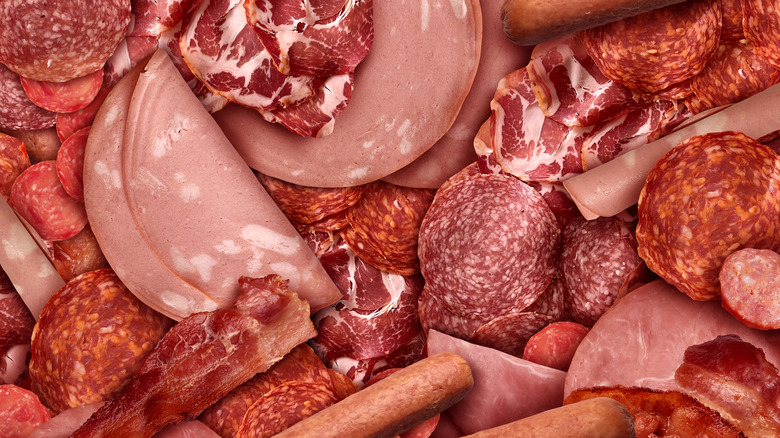
If you always pick up a tub of pasta salad or buffalo chicken dip when you visit your local deli, you can probably thank some thrifty thinking going on behind the scenes. Chances are that some of your favorite deli dishes are made using meat byproducts — and there are some very good reasons why.
Anywhere that sells food has a vested interest in avoiding food waste, as that waste represents potential profits being lost. Some products commonly found at the deli counter are already the result of repurposing meat which might otherwise be discarded. Bologna, for example, will commonly include amongst its ingredients meat byproducts that are non-skeletal muscle organs, like liver or heart. However, even those byproducts produced by the deli itself can be utilized.
At Zingerman's Delicatessen in Ann Arbor, Michigan, one example of the business' long-standing commitment to waste reduction is turning chicken fat into schmaltz. This is then used to add flavor to their matzo balls and the Jewish deli staple chopped liver. Other options for waste-conscious delis include making new, value-added products like casseroles, salads, pastas, and soups using leftovers such as meat end cuts and other trimmings (check out these clever ways to use steak scraps if you'd like to do the same).
Even if the meat byproducts are not edible, some delis make sure nothing goes to waste
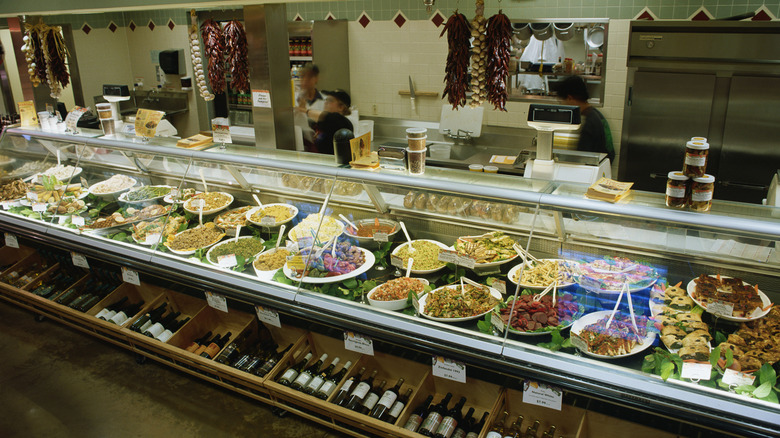
Finding creative uses for meat byproducts isn't just a matter of turning a profit. In the US, more than one third of available food is never eaten, and more food ends up in landfills than any other kind of municipal solid waste, even as millions struggle with food insecurity. The value of your family's food waste probably totals hundreds of dollars per month. Cutting down on this waste can help mitigate its impact on the environment and promote sustainability.
Even when meat byproducts cannot be repurposed into something tasty, some delis make sure that nothing is wasted unnecessarily. At New York's famous Katz's, the oldest deli in the US, an emphasis on quality means only the best cuts of meat are served to customers. The tough or fatty trimmings are not discarded, however. They are instead collected by a company which processes them for use in products like soap and shampoo — an not uncommon practice among delis (so the next time you take a shower, remember to thank pastrami).
You may need to ask your local deli if and how they are avoiding food waste by using any of these methods, but it never hurts to do a little research. If you are concerned about sustainability and minimizing waste, also be sure to read up on the grocery chains that regularly donate unsold food.