

Classic Cocktails That Taste Better With Rye
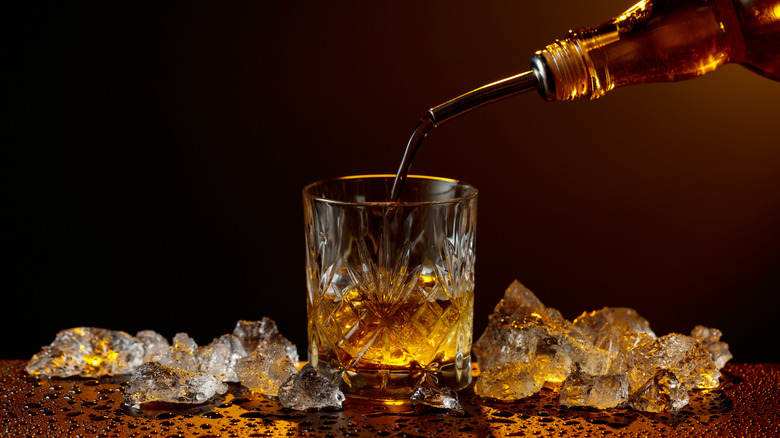
The world of mixology is incredibly vast, and if you've ever been overwhelmed and given up only to pour yourself a Jack and Coke — again — we see you. We'd like to suggest revisiting some of the classic cocktails, which have remained in vogue for good reason: they're steadfast and delightful standbys, and reimagining some with rye whiskey makes something just a little bit more adventurous.
Are we going to be talking about some of the old-school cocktails that Boomers still love to sip on? Absolutely, because the mixologists of days past got it right. Mostly. We wanted to know which drinks industry experts advise upgrading with rye, so we reached out to the pros for some insights. We'll introduce them as we go along, but we do want to share some wisdom from Chris Walster over at The Cask Connoisseur.
He gave us the down-low on what, exactly, makes rye whiskey a standout in cocktails. The first rule of mixology is that a cocktail needs to have balance, and that's precisely what rye brings. "Many whiskey cocktails contain sweet vermouth, sugar, liqueurs, or syrups, so using a whiskey with a naturally spicier and drier character can stop those flavors dominating," he told us. "You also tend to notice rye more clearly in a mixed drink. That peppery, herbal character can still come through when it is competing with bitters, citrus, and vermouth," he adds. Keep that in mind as you experiment, and let's talk about where to start.
Manhattan
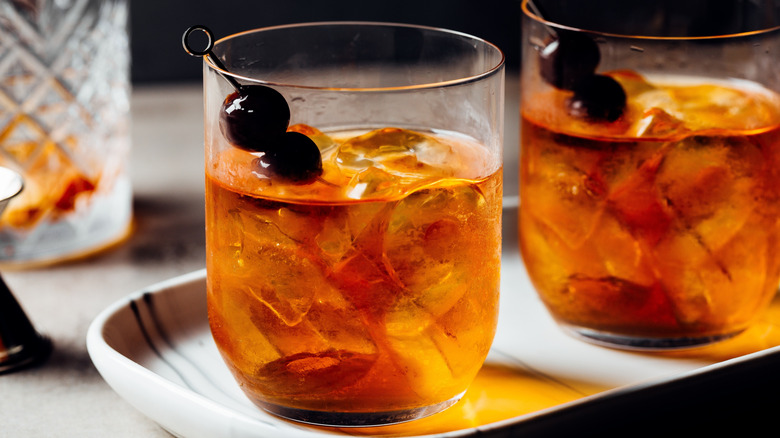
Many of the experts we spoke with agreed that rye whiskey is perfect for a Manhattan. This drink is ideal for those nights you want something a little classy but don't feel like mucking around with something incredibly complicated, as a classic Manhattan calls for only a few ingredients. There's whiskey, vermouth, Angostura bitters, and orange peel, and yes, when it comes to that whiskey, rye is the way to go.
Why? Nicolas Pierregrosse, the Director of Beverages at The Ritz-Carlton, Naples, explained why it's such a popular pick for an easy upgrade. "Rye brings peppery spice and a drier edge that balances the richness of sweet vermouth. It gives the cocktail more definition, allowing the whiskey to stand out while keeping everything harmonious. Some people would argue bourbon is better, but rye is really the only good choice."
Alvin Liang — a bartender at MKT Restaurant & Bar at Four Seasons Hotel San Francisco — agrees. He adds that using rye also brightens the drink, making it feel less heavy and less stodgy with the added complexity that the spicy rye brings to the table. The cocktail ends up feeling more structured, with an extra-delightful finish. A Manhattan with whiskey is fine, but adding a braver, bolder, spicier spirit turns it from an ordinary classic into a much more extraordinary, modern-feeling sip.
Old Fashioned
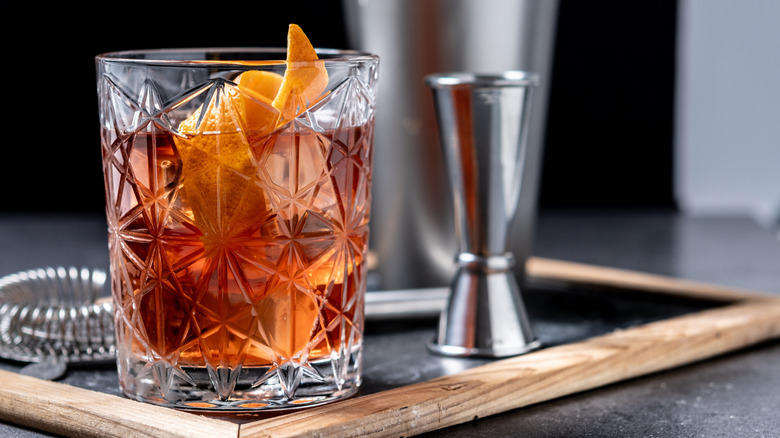
There are a number of incredible variations on an Old Fashioned that you should definitely try, and many of our experts also recommended swapping in rye whiskey. The Old Fashioned is a Manhattan-adjacent cocktail that calls for the same Angostura bitters, whiskey, orange peel, water, and sugar (instead of vermouth), so it makes sense that rye would be a wonderful choice here, too. Rohit Ray is the Food & Beverage Operations Manager at The Ritz-Carlton, Tysons Corner, and told us that it's the simplicity of the Old Fashioned that makes rye work so well.
"Since there are only a few ingredients in the drink, the whiskey really stands out," Ray explains. "Rye brings a nice spice and depth that works very well with bitters and sugar."
Chris Walster also mentioned the Old Fashioned as an excellent candidate for a rye whiskey, noting that because it's a very simple cocktail, it's a very whiskey-forward one as well. That makes the whiskey's profile extra important, and it's a swap that can create a cocktail that's entirely different — especially if you've grown used to making one with bourbon. "Bourbon can sometimes push the drink quite far towards the sweeter end of the spectrum. Rye gives you more spice and dryness, which helps balance the sugar while still letting those orange and aromatic bitter notes come through."
Negroni/Boulevardier
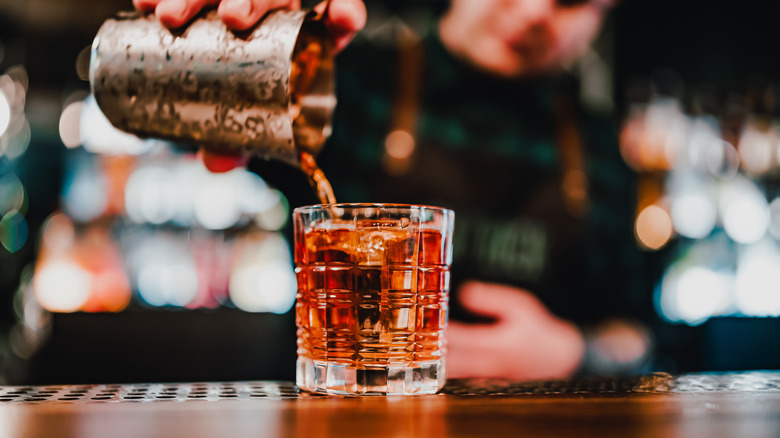
You might expect whiskey- or bourbon-based cocktails to be the ones getting a rye upgrade, but that's not always the case. Jennifer Turano, the Food and Beverage Manager at Topside Terrace Kitchen & Bar at Hotel Republic San Diego, says her favorite swap is replacing the gin in a Negroni with rye whiskey — which turns the cocktail into a Boulevardier.
The Boulevardier is a 1920s-era cocktail with an iconic backstory that involves upper-crust Americans heading to Paris, becoming absorbed in the glitz and glamour, and writing cocktail history. Turano says that you can absolutely do justice to that idea of old-school elegance with rye, and even gave us a specific brand. That's Angel's Envy Rye, and while any rye will make the cocktail richer and more flavorful, Turano uses this particular brand to illustrate how different types of the same spirit can completely change a cocktail.
"Angel's Envy Rye is finished in Caribbean rum casks, so it has a sweeter finish compared to other ryes," she explained. "Tasting notes can be described as bittersweet, herbal, and warming with hints of caramel and spice. The Boulevardier may be considered a classic cocktail already, but using different types of rye can immensely change the profile." Given that this drink has only a few ingredients — Campari, sweet vermouth, an orange twist, and the spirit — it's a great one to experiment with. Try different types of rye and see how it impacts the flavor profile of the finished product.
Greyhound
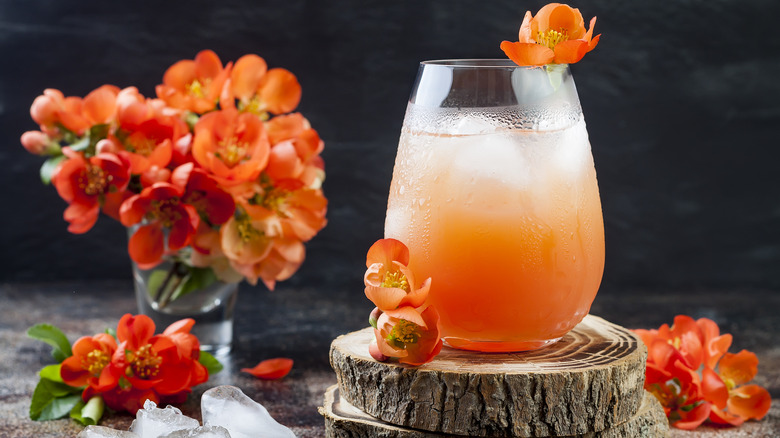
Sometimes, the best things in life are simple, and we think two-ingredient cocktails are the bee's knees. (See what we did there?) The Greyhound is the 1930s-era grapefruit cocktail that we want to drink all summer long ... and through the winter when we need a little pick-me-up. It typically mixes either gin or vodka with grapefruit juice, but this one can use rye for a whole new interpretation.
That's a recommendation from Kenna Chipman, a bartender at Farley at Cavallo Point. "The grapefruit juice gives you that sharp bitterness, but the spice of the rye cuts right through it while adding enough texture to keep the spirit front and center," she says. The good news is that this one doesn't require anything complicated to make it work — only a 2:1 grapefruit-to-rye ratio and perhaps a dash of agave.
Rye whiskey is famous for its distinctive spice, and at first glance, citrus might seem like a strange pairing. Something magical happens here, though, and the rye tends to elevate the citrus into something more sophisticated than a less complex spirit creates. When it comes time to select a particular rye for your reimagined Greyhound, keep in mind that ryes that have a mash bill that hovers right around 51% — the minimum to be considered a rye whiskey — will have a more balanced profile that will tend to meld better with not only this, but any citrus-forward cocktail.
Whiskey Sour
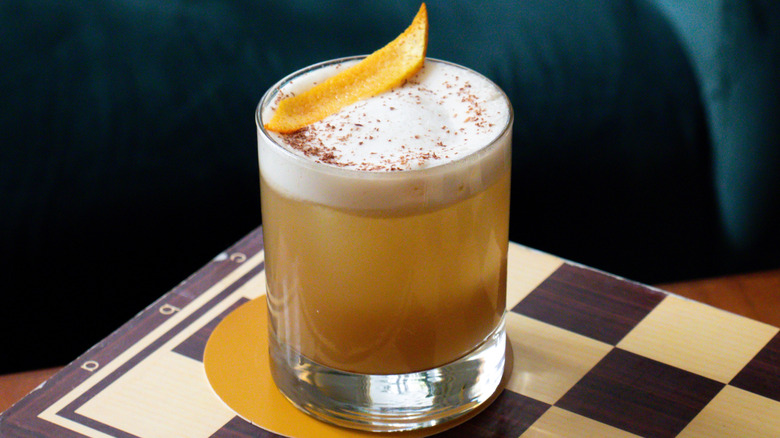
Cocktails don't get much more classic than the whiskey sour, and here's a fun fact to start us off: the history of sours dates back to Canada in 1856. While it's uncertain when the whiskey sour was added to the family, it likely happened around the same time. The basic recipe calls for a spirit, lemon juice, and simple syrup, with egg white and Angostura bitters often included as well. Keep a 3-2-1 ratio in mind and you'll have a perfect cocktail every time, and if you're looking for something extra, keep Chris Walster's advice in mind.
He says that rye whiskey is a great option to reach for when choosing your spirit here, and explained: "Bourbon makes a lovely whiskey sour, but it tends to produce something rounder and sweeter. Rye gives the cocktail more bite and creates a really nice contrast between the citrus, sugar, and whiskey."
And that's the thing about bourbon. Most bourbons skew firmly to the sweet side, and that's because of the corn. Much like rye, which must include at least 51% rye in the mash bill, bourbon must be at least 51% corn. The higher the percentage of corn, the more candy-like sweetness shines through, and in a cocktail like a whiskey sour, it can quickly become a bit too much. You're also adding simple syrup, and when you throw rye into the mix, it becomes a more robust experience.
Sidecar
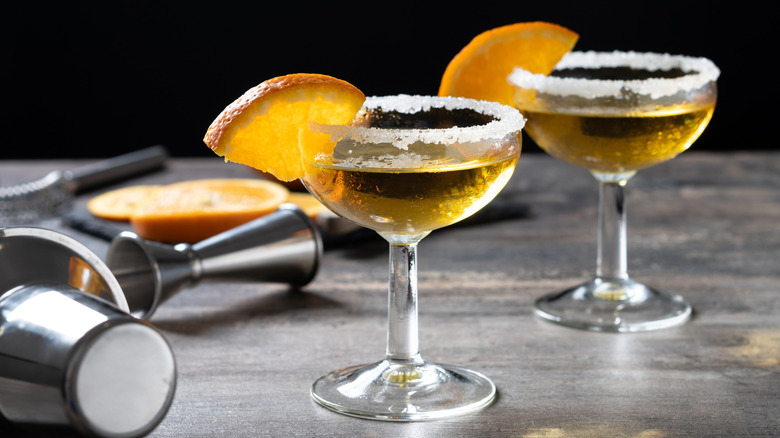
The Sidecar is a pretty interesting cocktail: it's been around since the 1920s, but the typical recipe has been overhauled quite a bit. You'll see modern recipes that call for a measure of cognac, then half as much of orange liqueur and lemon juice, while old-school original recipes called for all ingredients to be added in equal parts. Sweetness comes from sugar along the rim — if you like — and, according to Brandon Crumpler, the drink can also benefit from a rye upgrade.
He's a bartender at The Ranch at Laguna Beach, and told us that rye whiskey is an excellent way to turn this relatively straightforward cocktail into something wonderfully layered. "The black pepper and cinnamon notes help add complexity and heat to balance the sweet and sour nature of the cocktail," he said. "Use a 100-proof rye like Rittenhouse to really help that heat shine and a touch of simple syrup to add body and tame the tart lemon juice."
Generally speaking, the higher the proof of a whiskey, the more punch it packs. A 100-proof whiskey sits comfortably in the middle of things, not too meek, not too over-the-top. That makes it more than capable of standing up and making itself known alongside the other strong flavors you'll find in a Sidecar.
Sazerac
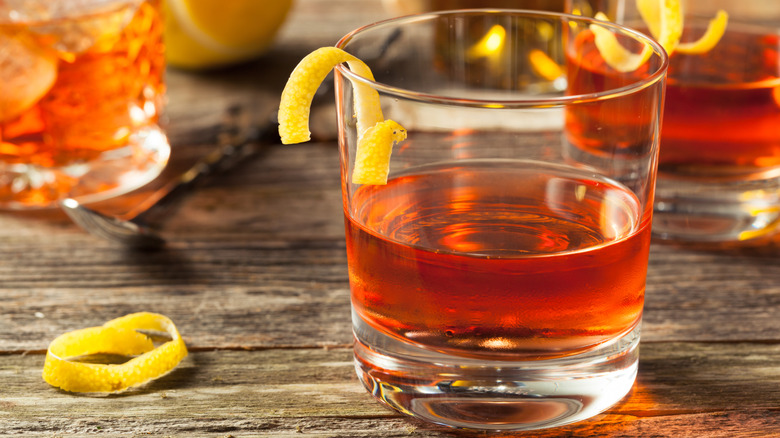
The Sazerac is the cocktail that everyone's heard of, but no one knows anything about. That's not an exaggeration, either, as the drink is believed to predate the name by around half a century, and there's a ton of debate about who actually created it. The first thing people can agree on is that there's more to the story than history remembers, and the second is that there are many whiskeys that make a great Sazerac.
Alongside the water, sugar, Peychaud's bitters, sugar cube, absinthe rinse, and lemon peel garnish is the whiskey or cognac. Chris Walster says rye can be the way to go, particularly for its characteristic bold flavors. "There is already a lot going on aromatically," he says of the New Orleans staple. "Rye has enough spice and intensity to hold its own without overwhelming those flavors. That combination of rye spice, anise from the absinthe, and aromatic bitters is what makes the drink so distinctive."
Balance is important in all cocktails, and especially in one like this. Each individual component is a powerhouse on its own, and it all needs to come together just right to make something incredible. Opt for a sweet whiskey or bourbon, and you'll end up with an entirely different cocktail, throwing off that oh-so-important element of equilibrium.
Last Word
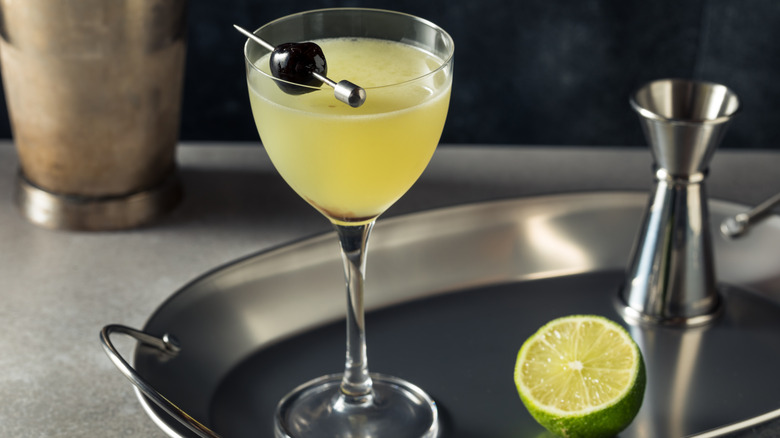
The Last Word is another old-school cocktail that has a pretty neat history. A pre-Prohibition-era drink, it had all but disappeared until a Seattle bartender rediscovered it in the 2000s. Traditional recipes call for equal parts gin, green Chartreuse, maraschino liqueur, and lime juice, and it's spawned a number of variations that have all been given their own proper names — like the Paper Plane and the Naked and Famous.
Samantha Diaz, the Director of Food & Beverage at The Westin Nashville, nominated The Last Word as a candidate for the rye treatment. "I am a huge fan of a Last Word and variations of this classic," she told us. "Replacing gin with a rye of choice gives the cocktail more depth and is still completely balanced. It surprises even the most discerning whiskey lovers."
You can even go one step further. Trade the lime juice for lemons, along with that rye whiskey swap, and you're actually making a cocktail called the Final Ward. A rye whiskey that's sitting at right around 100-proof is an excellent choice for this one as well, bringing together sweetness, spiciness, and citrus for a cocktail that's greater than the sum of its parts.
New York Sour
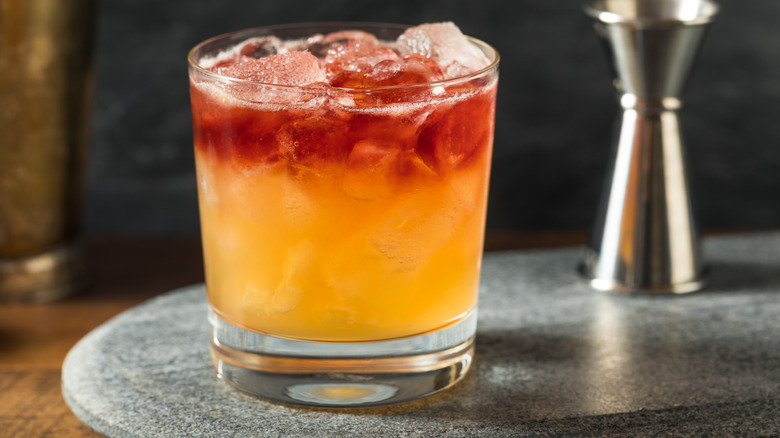
What's in a name? A lot, if you're talking about a New York Sour. While this cocktail is definitely in the sour family, it doesn't come from New York at all. It's been traced back to 1880s Chicago, and that's a very important lesson in taking things at face value. It's essentially a whiskey sour with a dash of red wine, which makes it not only visually appealing but also wildly versatile. Different types of wine will bring something different to the cocktail, and while that's a fun thing to experiment with, Chris Walster says that for the whiskey element, rye is the way to go.
"The wine adds fruit, tannin, and another layer of richness, so I like having a slightly drier, spicier whiskey underneath it," Walster says. "Rye stops the cocktail feeling too heavy and gives you a much more interesting contrast between the whiskey, lemon, and red wine."
And it makes perfect sense. Rye whiskey is known not only for its peppery spice but also for notes of baking spices. Anyone who's ever made mulled wine can tell you about the ingredients that make it special, including those warm-you-from-the-inside spices like cinnamon, allspice, nutmeg, and star anise. Many of the same flavors can come together in a New York Sour and make something that tastes as good as it looks.