

Duncan Hines, Pillsbury, Or Betty Crocker: Which Cake Mix Brand Came First?
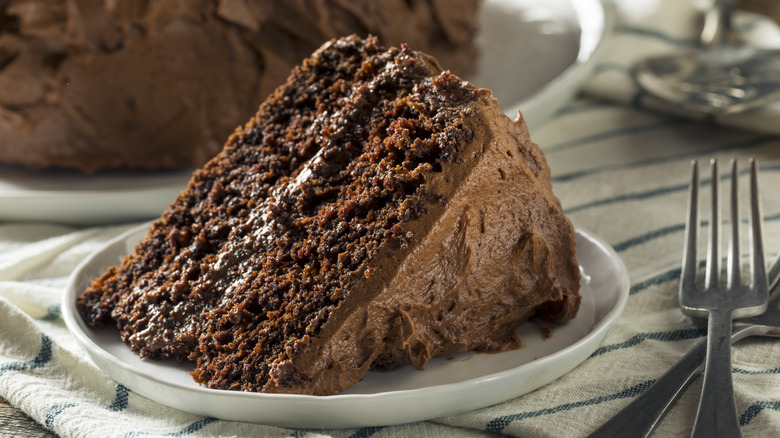
It may be hard to imagine a time when home chefs didn't have such a convenient, quick shortcut as boxed cake mix. However, if you look into the history of this culinary shortcut, you'll find that the first iteration of this packaged option wasn't conceived until the 1930s. Back then, a Pittsburgh company you've not likely heard of — P. Duff and Sons — patented a dehydrated gingerbread mix. Over the next 20 years, a wider variety of cake mixes were available to American shoppers from well-known companies like Duncan Hines, Pillsbury, and Betty Crocker. But which of these three was the first to join P. Duff and Sons in the boxed cake mix business?
Of these grocery staples, Betty Crocker was the first to introduce a line of cake mixes in 1947. The Betty Crocker brand was developed in 1921 by Washburn-Crosby when the company, which owned Gold Medal Flour, created a fictional character to answer questions from concerned home cooks. The company went on to sponsor cooking schools nationwide, and even established its own test kitchens in 1946. The following year, it entered the boxed cake business with the release of a Ginger cake mix, with the Devil's Food and Party Cake mixes following soon after in 1949.
Throughout the years, the brand introduced many new Betty Crocker cake mix flavors. Popular flavors like yellow cake, white cake, angel food, and chocolate soon became household staples. However, Pillsbury was hot on Betty Crocker's heels, and Duncan Hines followed shortly after.
Pillsbury introduced the first chocolate cake mix to stores in 1948
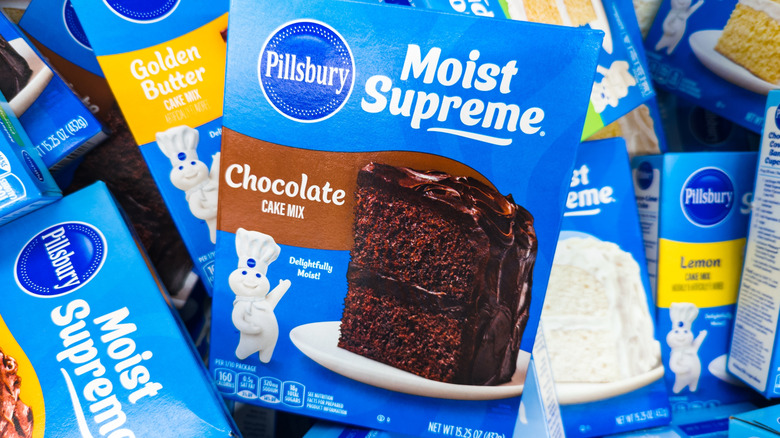
Around the same time Betty Crocker mixes hit grocery store shelves, over 200 other companies were following suit. The success of these mixes dramatically increased after World War II when companies applied the tricks learned while making dry food mixes for troops to consumer goods marketed to housewives. In 1948, Pillsbury was the first company to offer a chocolate cake mix to consumers. Its mix was notable for including powdered eggs, meaning home cooks wouldn't have to make sure they had fresh eggs on hand to bake a cake. This formula was similar to that patented by P. Duff and Sons, while Betty Crocker's mixes called for whole eggs or egg whites.
By 1954, Pillsbury boxed cake mix flavors included white, chocolate fudge, yellow, spice, and angel food cake. Its boxes directed home chefs to just add milk, as the mixes already contained eggs. "Water is all you add," noted the old vintage ads, including the angel food cake mix, which claimed to boast 13 egg whites already in the box. Starting at some point in the late '50s, Pillsbury ads no longer mentioned that the cake mixes included eggs, and customers were instructed to add whole eggs or egg whites to the mix. Today, the classic brand of boxed cake mixes beats out Duncan Hines in taste tests conducted by Tasting Table.
Duncan Hines perfected the process with cake mixes that tasted homemade
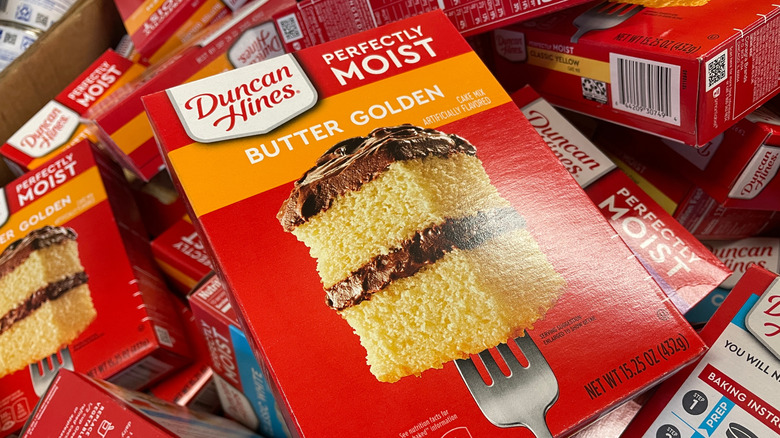
By the 1950s, boxed cake mix sales dropped dramatically. Market research conducted by a consultant named Ernest Dichter revealed that women felt that the mixes actually made baking too simple, and they felt lazy as a result. At the time, Duncan Hines was best known as a traveling salesman who had self-published restaurant guides for travelers. Hines was convinced by Roy Park, a marketing agent for a farm cooperative, to make the foray into the food business. Together, they founded Hines-Park Foods, and, with Nebraska Consolidated Mills food scientist Arlen Andre, developed a cake mix that produced truly homemade-tasting cake.
By 1951, the mix — made with real eggs rather than the powdered variety — was patented, and the company released it in July of that year in two flavors: Devil's Food and 3-Star, which was a vanilla cake mix for yellow, white, or spice cake. This innovation quickly put Duncan Hines at the forefront of grocery store cake mix sales. Just three weeks later, the company was responsible for nearly half of the sales market. Even now, Tasting Table ranks Duncan Hines as the best boxed chocolate cake mix, according to our taste tests.
Other companies also elected to make changes to box mixes to recapture the attention of home chefs. Cake mix advertisements directed homemakers to use frosting and other novelties to decorate their cakes and make them unique. Betty Crocker developed the Answer Cake in 1954, which was a boxed cake mix and frosting mix that came packaged with a cake pan. Now, home chefs can find countless tips for how to make a boxed cake mix taste like it came from a bakery.