

7 German Beer Garden Rules American Tourists Always Break Within Minutes
From spur-of-the-moment lunches to festive birthday parties, there are plenty of reasons to visit a German beer garden. It would be a shame, though, to let any tentativeness or misgivings about the cultural norms of beer gardens turn you away. Perhaps you're curious about the beer garden toasting rules that tourists often miss, or maybe you're bewildered by how to order food and drink in the self-service area. That's why we reached out to Ron Smith, Beer MBA Program founder and leader of beer tours across Europe, to compile a primer on what to expect from a traditional German beer garden.
"It is OK to be a tourist and not know how things work," he emphasized. "Just be respectful, willing to learn, and show the staff and locals that you want to follow their rules and customs." Smith introduced us to a handful of the most common beer garden rules, but because every beer garden is unique, you may still have to ask questions.
Before requesting a clarification, Smith recommended saying hello and inquiring if the other person speaks English. Finally, don't take their response too personally. "You may not get the smiley, bubbly exchange you get back in the U.S.," he said, noting that cultural differences affect tonality, "but they will help you get the answers you need to learn, do things their way, and have more fun."
Don't assume you can always eat your own food
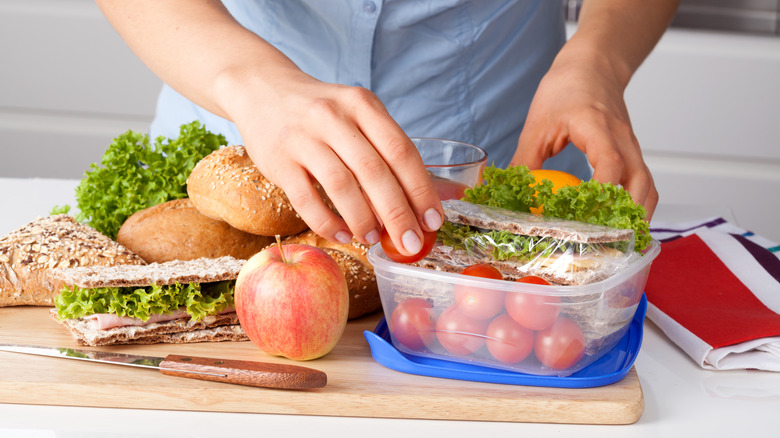
The ability to bring one's own food to beer gardens can be a relief for those who enjoy trying foreign brews, but aren't sure whether they will like German food. It's also reassuring for those who doubt their dietary requirements will be met by classic German dishes, which tend to be meat-heavy. However, there are nuances to the norm that must be observed.
"The beer garden culture is very old, and it was common for people to bring in their own food, but enjoy the brewery's beer. Later, as restaurants were added, this tradition was maintained, but only in certain areas," shared Ron Smith. So, how to tell the difference between sections where you can chow down on a homemade picnic versus those where you'll need to order off a set menu? Smith stressed that every beer garden is unique in the way it functions, so you should put your observational skills and context clues to use and ask questions if something is ambiguous.
Smith explained, "If an area has tablecloths or some other identifiable aspects like salt and pepper shakers or napkins, etc., these are areas where a server will take care of you, and you are not allowed to sit in these areas with your own food." On the other hand, you're typically allowed to eat your own food at self-service tables, where you're also likely to have the option to order food and beer from a window or cafeteria.
Know how to navigate the self-service area
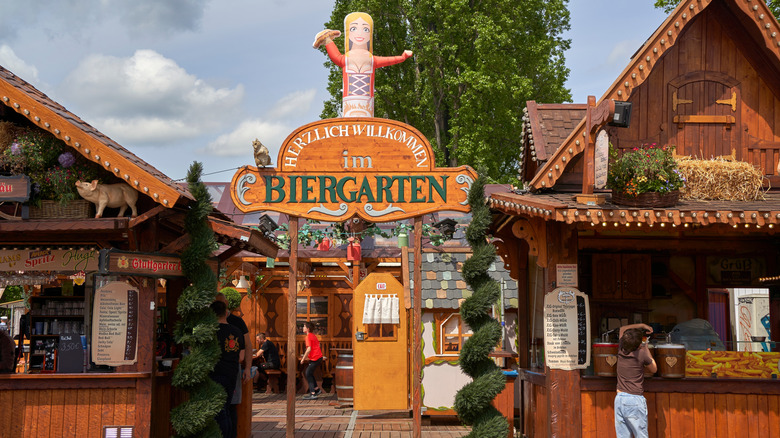
Unless you're sitting in the full-service area of a German beer garden, you'll need to take the initiative to get your own food and drink. Look for windows or walk-up stations where food is being served, Ron Smith explained. Then hang back for a moment and note what is being served at each station. One window might be serving salad, while another might be serving leberkäse, and yet another serving beer. During peak hours, it can be tough to initially understand the flow of traffic, but be patient, and the rules will become clear. Once you have your food, head to the cashier to make a payment.
Food at German beer gardens is served in individual portions, Smith shared, but those portions can be massive — so, start with less, and don't hesitate to share with those around you. On your way to ordering food, take note of the portion sizes on other people's plates. If available, take a tray to each station to carry what you order. That's especially important if you're running large orders back to family members or friends.
Again, you're frequently allowed to bring your own food to the self-service areas of German beer gardens. If you go that route, consider packing traditional brotzeit elements like breads, meats, and cheeses, and make sure to bring your own napkins, plates, and utensils.
Be prepared to pay a pfand

At some, but not all, German beer gardens, customers are expected to pay a pfand. This is a deposit for the glass from which you'll drink beer. A pfand is typically only required for regulation-sized, 1-liter glasses, noted Ron Smith. Such glasses hold a maß of beer. Half-liter glasses are also available at most beer gardens.
The pfand system is not uniform at all beer gardens, but whenever it is in place, you'll need to return your glass to be refunded your deposit. Oftentimes, you'll be handed a token along with a glass as a kind of receipt. Keep this token safe; otherwise, someone else might return it and get the money you are owed (by accident, we hope). "The token system keeps someone from just taking glasses off tables and being able to get someone's deposit money," Smith observed.
Depending on the beer garden, the pfand might cost as much as 5 euros, or it could just be 1 euro. For popular beer gardens, you might be able to ascertain the amount with prior research, and you won't need to pay the pfand again when going for a refill. Regardless, make sure you have enough cash on hand to pay for a potential pfand and your food and beverages; credit cards can slow the flow of customers and aren't always accepted.
Familiarize yourself with the cuisine
This may be an unwritten rule, but it's an important one, nonetheless. American tourists cannot rely on servers to explain dishes in perfect English, so it's crucial to familiarize yourself with German beer garden cuisine before ordering.
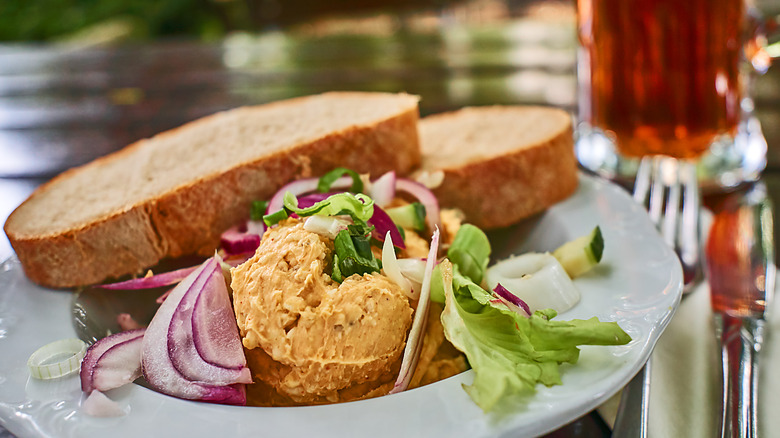
You shouldn't worry too much about whether you're eating German dishes the right or wrong way, advised Ron Smith. When in doubt, you can always watch whether other people are using their fingers or silverware, for instance. But it's more important that you know what these dishes are. The last thing you want is to order steckerlfisch — a specialty that involves skewering fish with their heads intact and then grilling them — and then not be able to eat it because it makes you queasy. Smith recommended using a translator app to better understand the menu options. There are certainly more universally approachable dishes at beer gardens. Pretzels, of course, immediately come to mind, and they can be eaten alongside obatzda, a spread made from butter, soft cheese, and spices. Kartoffelsalat, or potato salad, is another must-try Bavarian food often served in Munich and at beer gardens.
Finally, when it comes to beer, approach the counter knowing what kind you want. In other words, ask for a radler or a helles, not just a generic "beer." There are many, many types of beer in Germany, each one suited for a different palate. "Beer gardens are in great beer places that respect beer, so don't waste it!" Smith emphasized.
Drink responsibly

We hope that you don't break this rule within minutes, and we certainly hope that you don't break it all. If you're visiting a German beer garden on vacation, you may want nothing more than to cut loose and enjoy yourself, Ron Smith conceded. And if you have a designated driver or are using public transportation, nobody is going to stop you from clinking a few glasses.
That said, you should always respect your limits and keep tabs on how much you're drinking. "The key is always to drink slowly and drink lots of water," Smith advised. He also noted that non-alcoholic beer (or alkoholfrei bier) and reduced-alcohol beer are widely available across Germany and Europe, and they've come a long way in terms of taste. Smith particularly recommended trying a non-alcoholic weissbier (wheat beer).
You could also order a radler or russ for lower-alcohol options. A radler, Smith explained, is a refreshing beverage typically made by diluting helles beer with limonade — despite the similar spelling, the latter ingredient isn't exactly lemonade, but more akin to a carbonated drink like Sprite (though the brand may vary). Russ is made in the same way but employs wheat beer instead of helles. These sweeter drinks may even please those who don't typically enjoy beer. If you feel like experimenting beforehand, radlers are easily available in America, too; check out our ranking of nearly a dozen radlers and shandies for inspiration.
Understand the proper etiquette for making a toast
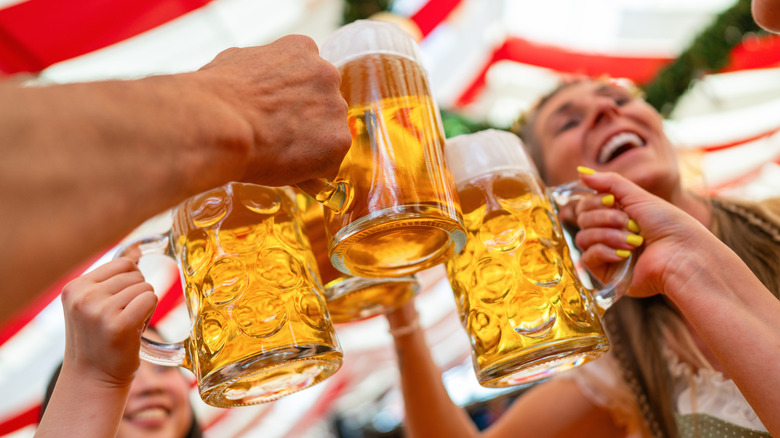
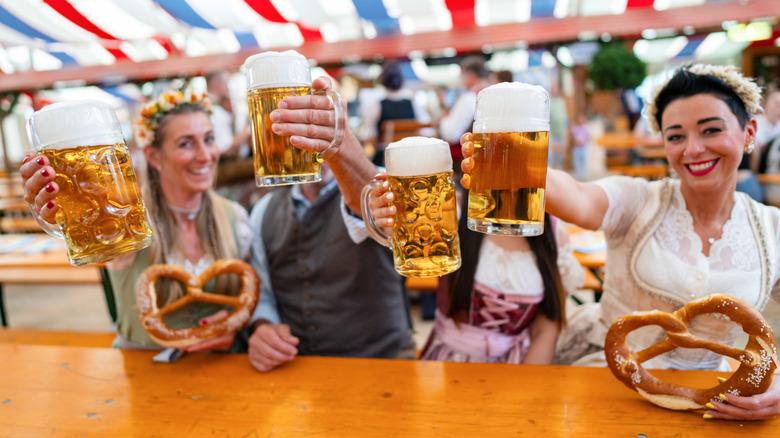
Especially when you're at a beer garden in Bavaria, it's crucial to clink glasses, make eye contact, and say "Prost!" whenever you're making a toast, shared Ron Smith. It's said that if you don't make eye contact, you will be subjected to seven years of bad luck in bed (very European, we know). Still, Smith urged readers to not stare or make it creepy; quick eye contact and a smile is enough to fulfill the tradition.
When outside Bavaria, you may be expected to hit the table before or after taking a sip. Even then, eye contact is paramount, Smith stressed. Meeting another person's gaze is not only a matter of respecting local customs, but it can help forge personal connections with friends, family members, and even strangers. Expect to make multiple toasts throughout your stay in the beer garden. Each time you say "Prost!" is a chance to add conviviality to the meal. Make a toast before taking your first sip of beer, and join in each time you hear the words "ein prosit der gemütlichkeit" sung over loudspeakers at a festival.
There are over a dozen different kinds of beer glasses, so if folks are drinking from delicate glasses like those used to serve wheat beer and kölsch, it's alright to bump the heels of the glasses instead, Smith shared. Finally, don't clink a glass of water, though you can still raise it in acknowledgement and say "prost" yourself.
Don't sit at a reserved table
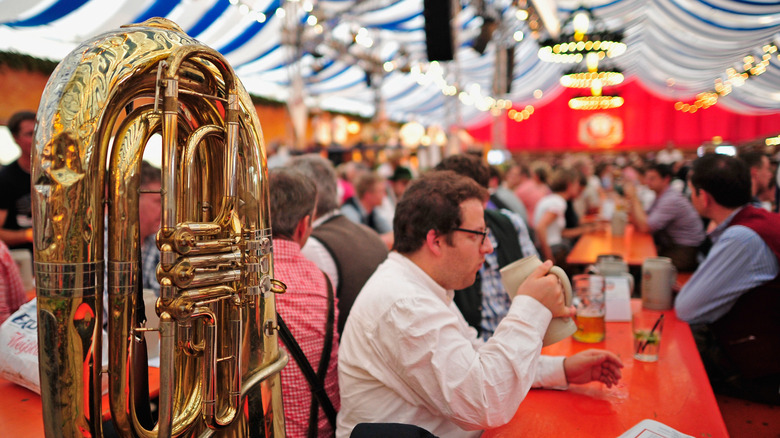
Each beer garden is unique in the way it operates, but it's still a good idea to understand the general protocols around reservation systems. Reserving a table in the full-service section of a beer garden is typically feasible, Ron Smith explained, but the same can't be said for self-service areas.
You'll often find stammtisch tables — perhaps marked with stammtisch signs — in German beer gardens and restaurants. Just like Ted, Marshall, Lily, Barney, and Robin always sat at the same booth in "How I Met Your Mother," beer garden regulars rest easy in the knowledge that they will always have a familiar seat when they visit. "Never sit at these tables, even if completely open, unless you are invited to join," advised Smith. If you do receive an invitation, consider it an honor. Prominent figures in the local community often sit here, too.
When other tables are occupied, but have a few places open, feel free to take a seat. There's no strict rule that you request to join, but asking before doing so is always a nice formality, Smith said. After all, they might belong to folks who have just gone to get food or drinks.