

4 Disadvantages Of Using A Rice Cooker
We may receive a commission on purchases made from links.
Contemplating a rice cooker? Then it's worthwhile to not only consider the positives, but also the disadvantages of using one. Sure, they can make cooking rice a mostly hands-off experience while you attend to other elements of a meal. And they make perfect rice every time, right? Well, not always. There are several common rice cooker mistakes to avoid, from failing to use the right water-to-rice ratio to using the wrong settings, so they're not exactly fool proof. Furthermore, not all cookers are created equally, which is something else to consider. Some basic models are best for whipping up perfectly textured basmati, but if you want an appliance that can make bakery-soft cinnamon rolls or you want to make quinoa in a rice cooker for the fluffiest results, you'll need to research whether your model can accomplish those extras with ease.
Also consider things like how much you plan to use this counter-top hog, what price you're willing to pay for jasmine perfection, and that it may ultimately be more work than you anticipated. And once you've considered the disadvantages of a rice cooker, you'll be better prepared to decide if it's for you. After all, an informed decision is a confident decision.
A rice cooker takes up space
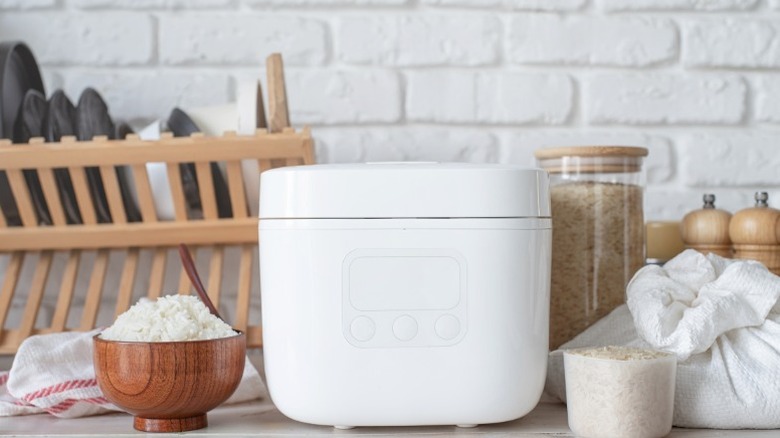
The first thing to consider with a rice cooker is how often it will be used, which might sway your decision to dedicate the kitchen real estate to the device. If it's something you plan to use weekly, if not daily, then it probably deserves a space in your cupboard or on the countertop. If it's not an item that would be used all the time, is it worth taking up that much space, when you can do the same job in a pot that you likely already own? Space-challenged people may consider this a downside.
How much space are we talking about, exactly? That depends on your needs. There are petite versions of rice cookers, usually a 3-cup capacity, that are designed for one to two people. These compact models are just slightly bigger than the footprint of A4 paper. The well-reviewed Zojirushi Micom 3-cup Rice Cooker is 11.8 inches deep by 9.1 inches wide by 7.5 inches tall. A 5.5-cup capacity cooker, often the most popular as it suits three to five people, takes up a bit more space. For example, the Tiger Micom 5.5-cup Rice Cooker is 13.9 inches deep, 10.6 inches wide, and 8.4 inches in height. The 10-cup model of the same cooker measures 15.1 inches deep, 11.9 inches wide, and 10 inches tall. You might not be prepared to give up that much space for an item that may only be used to cook one thing, and sparingly at that.
The price of a rice cooker is something to consider

In our roundup of the best rice cookers, according to online reviews, we looked at a variety of appliances that run the gamut on price. Want a state-of-the-art cooker with AI technology that claims to make perfect rice every time? You can spend over $700 on such a rice cooker at the time of writing. Once again, this may be worth it, or it may be a disadvantage depending on what you're using it for. If it's just to cook rice, it might not be worth the investment. After all, you probably haven't bought an appliance solely devoted to cooking potatoes. But if you plan to use the rice cooker regularly and for more than just rice (like those aforementioned cinnamon rolls, or soup, or heating leftovers), that price may actually be good value.
If your goal is to use an appliance to cook many things, it might be worthwhile exploring a multi-cooker such as a Thermomix or an Instant Pot Multi Cooker that has more specific cooking functions beyond just rice. That being said, you can nab a compact well-reviewed rice cooker, like the IMUSA 1.5 Cup Electric Ceramic Rice Cooker, for $20, so it's all about personal preferences and if you'll use it often enough to justify the price, whether it's steep or cheap.
You have to make adjustments when using a rice cooker
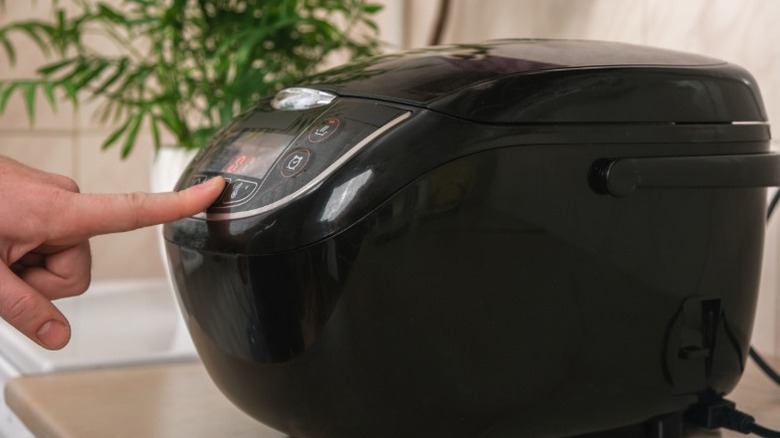
Sure, some rice cookers are super straightforward: You add rice and water, push a button, and you're done. But even with basic models, there are actually a number of things to keep in mind when using a rice cooker, which can be overwhelming. For example, if your rice never turns out quite right, it could be your city's elevation, which can impact your rice cooker's final product because lower air pressure means that water boils at a lower temperature.
The type of rice you're cooking may also mean that you'll have to make adjustments. Many rice cookers are programmed for basic medium- and long-grain white rice. Your cooker may be up to the task of cooking sushi rice or buckwheat groats, but that may require fiddling with different settings and water amounts. In some cases, more basic models won't be able to cook various types of rice at all. It's prudent to research the rice cooker you're considering and see what customer reviews say for cooking different varieties of rice. And be prepared for a bit of trial and error as you test the machine to get your rice just right.
Now, if you're creating a rice dish with spices, sauteed onions, and sliced almonds, you might have to experiment with when and how to add the extras, which can also be overwhelming. While you can make more complex rice recipes, such as biryani, with basic rice cooker models, the amount of adjustments required often means undertaking the same amount of work you'd do if you didn't have the appliance. The point is, depending on where you live, the rice you're using, and the recipes you're using, a rice cooker may limit you and cause unforeseen, stressful complications.
A rice cooker may not save time in the long run
Many people like a rice cooker because it feels more hands-off — you simply add the rice and water and about 40 minutes later, it's ready to serve. That being said, stovetop rice is also pretty hands-off as well, but takes half the time. Some folks also appreciate that you can set a timer in advance, such as in the morning before heading to work and the rice cooks and stays warm until ready to serve. But this is where research is key: If you want a timer, make sure the rice cooker you're considering has one; they aren't a standard feature on all devices.
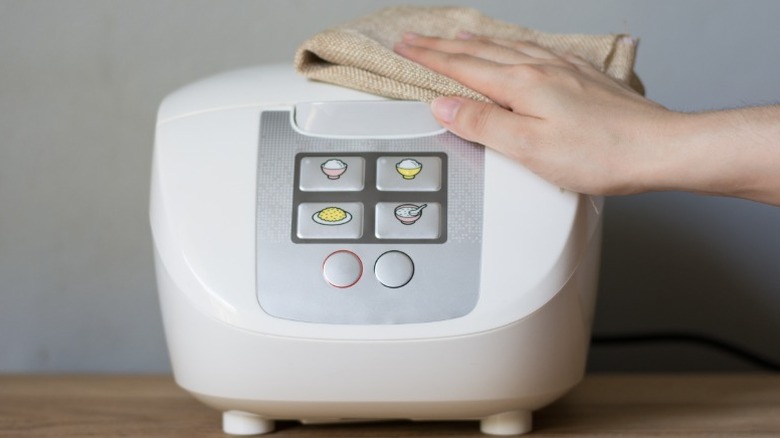
Also, rice cooker bowls can be notorious for burning the bottom of the rice, which you then have to take the time to soak and scrub. Sure, the same can happen with a pot on the stove, but that can be a bit more straightforward when it comes to cleaning: Wash it in the sink or dishwasher and you're done. With a rice cooker, you also have to clean the outside of the appliance, which is one more time-consuming to-do you may not want on your list.
Because of these disadvantages, you may want to think twice before you devote the time, resources, and countertop real-estate to a rice cooker. But if you find the right cooker for your needs and intend to use it frequently, then it may be a worthwhile addition to your appliance armory.