

These Grocery Store Tomatoes Are Bred For Shipping, Not Flavor
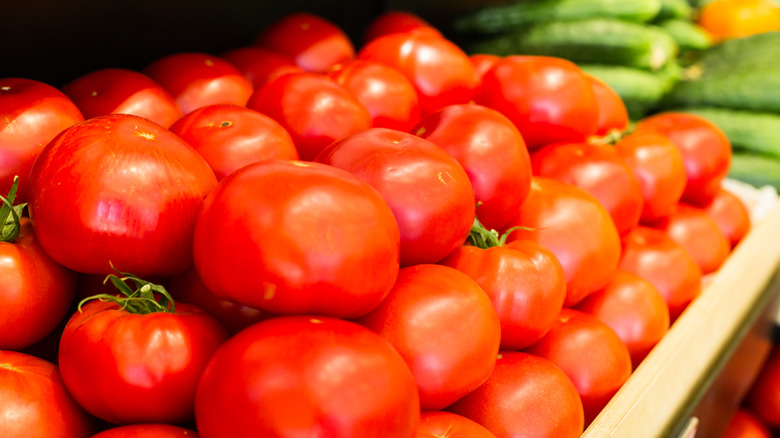
A flavorful, juicy tomato is a thing of beauty, requiring little more than a pinch of salt to taste delicious. That's what we expect when we see the mounds of perfectly red, plump-looking tomatoes at the supermarket, yet more often than not, they disappoint the minute we take them home and slice into a bland, barely pink fruit. That's because many of the tomatoes sold at the grocery store are commercial varieties bred for higher yields, appearance, firmness, and shelf life, rather than for their flavor. This includes most tomato varieties, from beefsteak to Roma and yes, even those labeled "vine-ripe," which are anything but that.
Here's the harsh reality: Many commercial tomatoes sold in today's grocery stores are harvested with shipping and handling in mind, so they can make the journey in boxes and crates and still look perfect when they arrive at the supermarket. Rather than letting them ripen on the plant, commercial growers pick tomatoes at what's known as the mature green stage, when they are fully grown but still completely green and firm. Once they're boxed, these tomatoes are treated with ethylene gas — which certain fruits release naturally as they ripen — to mimic ripening, causing them to turn red and even soften slightly. But when tomatoes are picked this early, they don't develop the same sugars and chemical compounds that give them the flavor and aroma developed when left to mature naturally. That's why your bland, watery grocery tomatoes will never come close to a homegrown tomato picked at its peak of ripeness and warmed by the sun.
Cherry and heirloom tomatoes will have better flavor than larger supermarket tomatoes
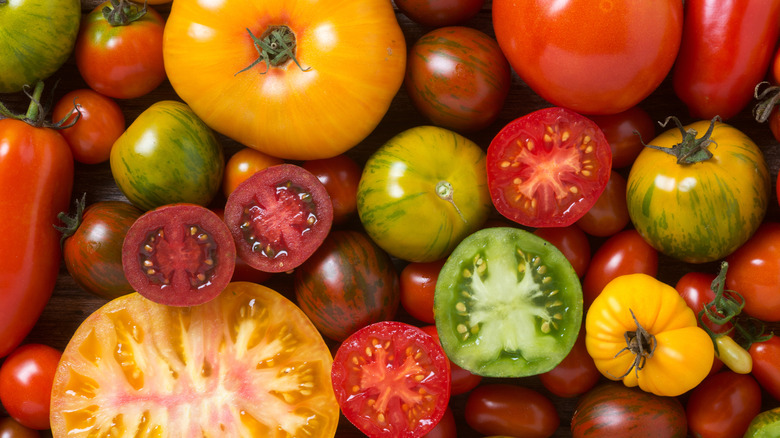
While this affects many types of tomatoes at the grocery store, there are a couple of exceptions that tend to have more flavor: cherry and heirloom tomatoes. Cherry tomatoes are generally much more flavorful than their larger counterparts, even those from the grocery store. Because they are smaller, they have a higher concentration of sugars and acids, which constitute their sweetness, acidity, and intensity of flavor. Their size also makes them less likely to be damaged during transport, so commercial growers are able to leave them on the vine longer to develop flavor naturally.
Heirloom tomatoes are another great alternative. Rather than being bred for high yields, these varieties were selected and preserved for their flavor by generations of farmers and gardeners. Their unusual colors, shapes, and sizes are signs of the chemical and structural composition that make them taste better, so they are not only attractive — they are the kind of tomato you should always buy at the farmers markets. Thanks to their growing popularity, some grocery stores might carry a small quantity of heirloom tomatoes during the summer. If you find them, it's definitely worth paying the higher price they carry when you need a tomato that's actually full of flavor.
Unless you're growing tomatoes yourself — garden-grown tomatoes are cheaper than store-bought ones these days anyway — your best bet is to buy cherry tomatoes to use in your recipes. They are versatile enough, and you can almost guarantee they will have much better flavor than those picture-perfect but flavorless larger ones.