

Why You Should Always Buy These Tomatoes At The Farmers Market
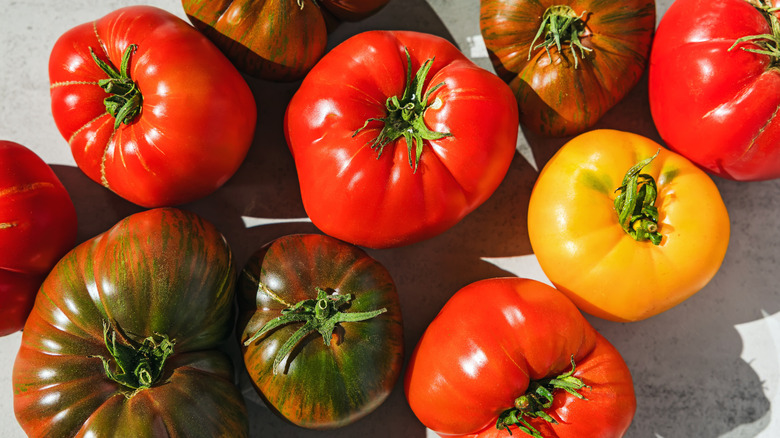
When shopping at your local farmers market, the pull toward the shiny food trucks, baked goods, and other delicacies may feel too strong to ignore. But in reality, these markets wouldn't exist without the stars of the show: produce and the farmers who grow it. You'll find so many fruit and vegeatable options at the market, with high quality and freshness that big box stores can't replicate. This includes juicy heirloom tomatoes — a common market staple in late summer and early fall.
Most chefs will tell you to skip heirloom tomatoes at the grocery store and source them from local farmers or stands instead. Why is that? It's all in the way these tomatoes are grown and the seeds that comprise them. Heirloom tomatoes grow via open pollination, meaning they're able to reproduce themselves from seed. They're grown from seeds passed down from season to season, often from the same plants and farmers each time. This "purebred" status makes their taste, unique shape, and quality much better than most hybrid varieties you'll find at the store.
As the name suggests, heirloom tomatoes are a farming tradition — most varieties have existed for at least 50 years. Because they're so special, they're a little more expensive, but it's worth it for the brighter taste, juicier flavor, and thin delicate skin that cuts perfectly for sandwiches, salads, and any summer side dish.
When they're worth buying
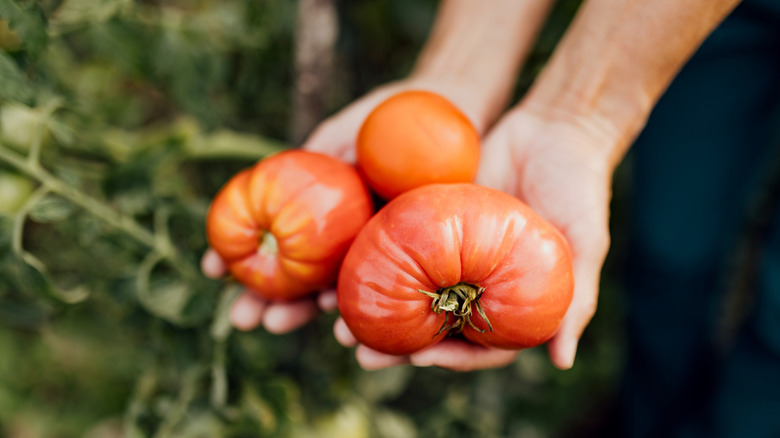
Heirloom tomatoes typically show up at farmers markets in late July and last until October, depending on where you live. They thrive in full sun and slightly warmer temperatures, making them an ideal summer crop. Unlike store-bought tomatoes, which are bred to last longer on shelves, withstand mass transport, and look aesthetically pleasing, heirlooms are bred for optimal texture and flavor. In other words, they won't last as long in your kitchen and their blemishes and soft, split skin mean they're at peak deliciousness.
Plan to use your heirloom tomatoes within one to two days of buying them. Go to the market with specific recipes in mind, like this heirloom tomato and ricotta tart, or simply eat them sliced up with a drizzle of olive oil and some sea salt. No matter how you choose to enjoy these beauties, keep them stored in a cool, dry spot on the countertop until fully ripened. And if you've already chopped them up? Store them in the fridge until you're ready to eat.