

Should Fruit Trees Be Fertilized In The Fall? Here's What To Know For The Best Harvests
We may receive a commission on purchases made from links.
Fruit trees generously give shade, aesthetic beauty, and (with luck) a flavorful harvest. Even areas with colder climates can still enjoy the benefits of hardier apple, pear, peach, cherry, and plum trees. But, as the nights get longer and cooler, when those leaves begin changing color and the fruit stops growing, it's more important than ever to make sure your tree's nutritional needs are still being met. Enter fertilizer, which enriches both the quality and quantity of fruit produced. Discolored or scant leaves can be a visual indicator of nutrient deficiency, as can failure to grow roughly eight to 15 inches taller than the previous year. Still, too much, too little, or ill-timed fertilizer application can do more harm than good. Home gardeners should take their cue when the leaves turn: One of the most impactful times to fertilize a fruit tree is during the mid to late fall.
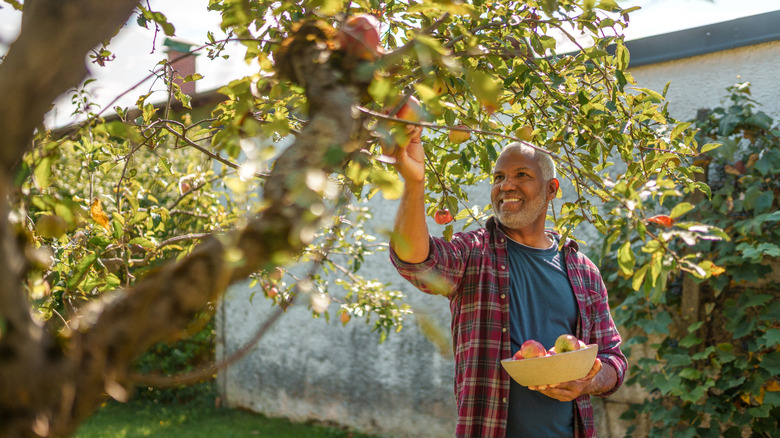
When your yard's fruit trees come out of dormancy in the springtime, that energetic response requires them to tap into the nutrient reserves they've stored in their trunks and roots over the winter. That period of dormancy begins in autumn — and this gradual slowing-down time is the ideal window for loading up those trees with the nutrients they'll need to survive the winter and blossom again come spring. It can also help fruit trees remain unstressed by weather and resistant to pesky insects and arboreal diseases. For the best yield, apply fertilizer after harvesting the last batch of fruit, but before the leaves fall from the tree.
Fertilize fruit trees after the last harvest and before the leaves drop
During the fall season, the best fertilizer to use on fruit trees is a mild one with the micronutrients boron, manganese, zinc, and iron. This fertilizer can be found as a water-soluble solution, such as this organic, plant-based offering by MARPHYL brand (currently $14.96 on Amazon). To use it, simply dilute the solution in water according to the package directions and spray it over the tree. Pro tip: Be sure to pull up any weeds surrounding your fruit tree before applying the fertilizer; they'll leach up the nutrients.
To really set your fruit trees up for success, fertilize them again in early spring, four to six weeks before the first bloom is anticipated or roughly a week before the last frost date. As they anticipate budding, they'll need a higher dose of the macronutrients nitrogen, phosphorus, and potassium. Organic granular fertilizers with an NPK ratio of 10-10-10 (like this one by Gardenwise) are the best fit for the job. To determine how much to use, measure the diameter of the tree's trunk. The sweet spot is one pound of fertilizer per inch of diameter. Simply apply it in a wide ring 12 inches away from the base of your tree (any closer can risk trunk rot), making sure to rake back any mulch that may be covering the soil. With the right nutrients, your post-harvest, autumnal trees can bear healthy fruit again when the next growing season arrives.