

What Too Much Fertilizer Does To Vegetable Gardens, And How To Fix It
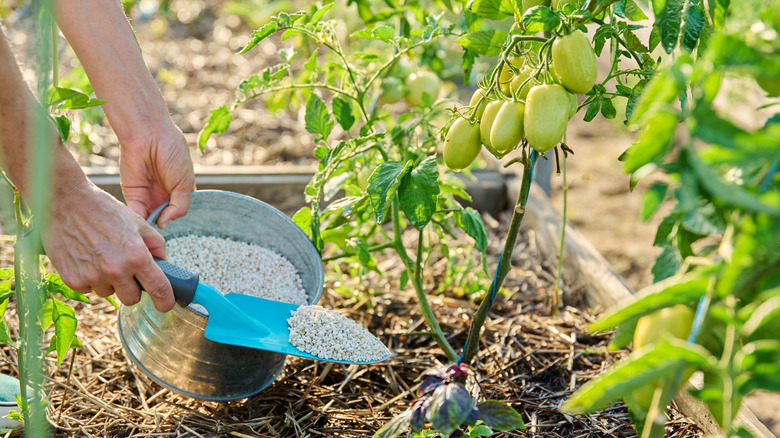
When we plant vegetable gardens, we hope to see a healthy bunch of plants, thriving and producing all kinds of delicious veggies. We weed, prune, water, and fertilize according to schedule and excitedly wait to harvest. But sometimes, gardeners get impatient and add more fertilizer than recommended in hopes of boosting the plants' productivity, which is a big vegetable gardening mistake. Unknowingly, they're causing more damage than good. If you apply fertilizer too often or in a higher concentration than is recommended, you run the risk of overfertilizing. This can lead to disastrous consequences rather than a more bountiful harvest.
At first, you may not think anything is wrong. The plants appear healthy, with lush and abundant leaves. Then, you'll notice your tomato plants are big and bushy, but very few tomatoes are setting. The same is happening to your chile plants, squashes, cucumbers, and other fruit-bearing vegetables, as the blooms keep dropping off the plant.
Using more fertilizer than recommended leads to a nutrient imbalance that interferes with the plant's development. You'll notice stunted growth, and the leaf edges may turn yellow and curl or look brown and scorched. The plants may begin wilting due to root damage. In extreme cases, the plants may even die. It's not just the plants that suffer either; the accumulation of salts also affects the soil, upsetting its chemical balance and destroying microbial populations.
How to fix the effects of overfertilization in the garden
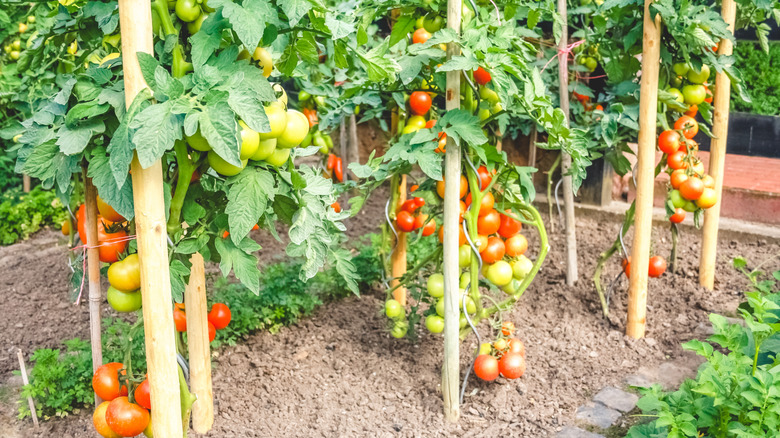
You can still save your plants after overfertilizing them, as long as you act quickly. First, stop fertilizing immediately and flush the soil with water to remove excess salts from the roots of the plants. A long, deep watering is the best approach. Use clean, sharp tools to cut away dead and severely burned leaves and stems, as they will not recover and can encourage fungal diseases instead. Removing this dead tissue will direct the plant's energy toward healthy growth and recovery. Provide shade for plants that are severely affected, as light can increase the need for water but the damaged roots might not be able to absorb it. And you will have to slowly start rebuilding the soil. You may also need to repot container plants with fresh soil after flushing the roots. Adding compost regularly — which you can make at home — will help reestablish the microbiome and the soil slowly be able to offer nutrients to plants.
Going forward, you should avoid overfertilizing in the first place. When using fertilizers in the vegetable garden, especially water-soluble synthetic fertilizers, following the directions on the label is crucial to prevent overfertilization. This is true both for in-ground and potted gardens. Testing the soil should help you avoid overfertilizing, too.