

How Often You Really Need To Fertilize Your Indoor Herb Garden
We may receive a commission on purchases made from links.
Growing herbs indoors helps protect those delicate plants from exposure to harsh weather conditions, facilitating year-round growing in climates with extreme winters. Indoor cultivation allows for a controlled environment with consistent temperature and sunlight exposure, not to mention protection from harmful garden pests. Beyond sunlight and water, one of the most important factors to indoor herb-growing success is fertilization. Fertilizing an indoor herb garden helps supplement the soil in the containers with the nutrients that plants grown outside would be able to soak up from the earth. As such, indoor herb gardens require reapplication of fertilizer more frequently than outdoor herb gardens. Still, too much fertilizer is bad for any edible garden. So, how often is the right amount?
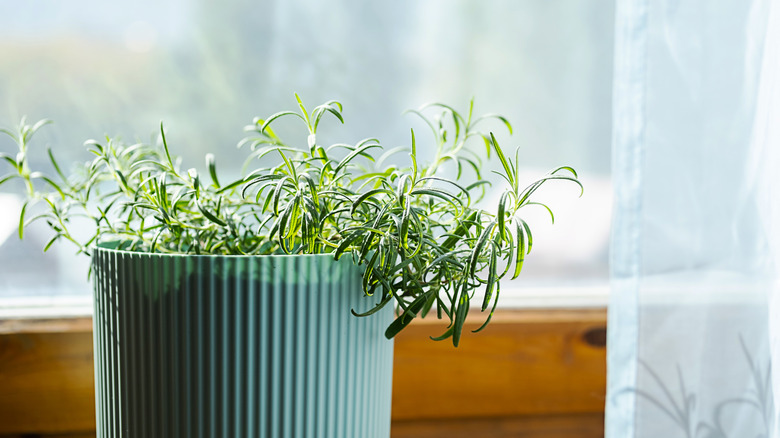
For an optimal yield, mist your indoor herb plants with a low dose of liquid fertilizer once every two weeks. Pro tip: The best time to fertilize your indoor herbs is right after taking a sizable harvest from the plant, when the plant is at its weakest. As a general rule, herbs with large, thin leaves such as basil, cilantro, chervil, and dill benefit from more fertilizer than herbs with small, needle-like leaves such as rosemary, lavender, oregano, and thyme. Tailoring your maintenance approach toward your plants' unique needs can create an especially lush garden — which also makes an aromatic and colorful addition to any kitchen space, and it's a cost-effective way to keep versatile herbs stocked on-hand while cooking.
Mist those containers with a water-solubile liquid fertilizer every two weeks
When growing anything you plan to eat, it's important to steer clear of chemical fertilizers. Many organic fertilizers might work fabulously for an outdoor garden, but their unpleasant, decomposing aroma isn't such a good fit for bringing indoors. Compared to fruits and veggies, herbs require a lighter touch when it comes to fertilization. The best fit for the job is a liquid feed made from kelp or seaweed extracts, which are far less pungent than other organic fertilizers and still packed with trace minerals and micronutrients. This seaweed and kelp liquid fertilizer by Bloom City brand, for instance, currently runs for $19.99 per gallon jug on Amazon — enough to whip up 700 gallons of organic feedwater. To use it, simply dilute the liquid feed according to the manufacturer's directions printed on the product packaging and gently mist it over your herb plants.
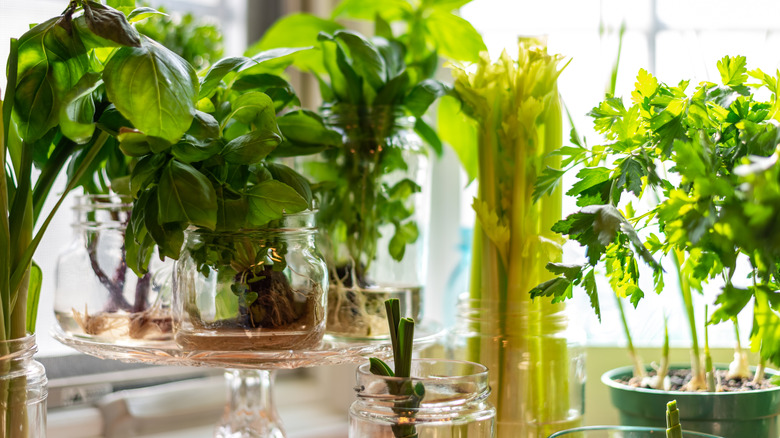
For even more fertilization power, home gardeners can also fortify the soil with slow-release enrichment additives. Alfalfa pellets (the same ones used to feed rabbits and guinea pigs) and rock phosphate are both ideal. Thoroughly mix 'em into the soil before planting your herbs, and they'll continue to work for roughly six months. Word to the wise: Some types of herbs are better suited to the conditions of indoor container gardening than others. Basil, chives, and cilantro all make terrific candidates. Pop them in a sunny location like a south-facing windowsill and be sure to rotate the pots every so often to ensure even sunlight exposure.