

Bottle Vs Can: The Cliche Beer Myth We Need To Bury For Good
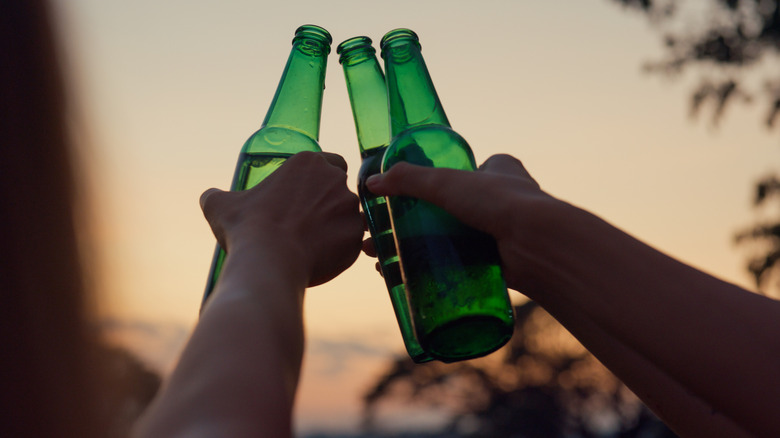
I scream, you scream, we all scream for Miller Lite in a can... or do we? It is the opinion of this career-bartender-turned-writer, for instance, that Genesee Cream Ale could be sipped out of a shoe and still deliver. Meanwhile, not even a glass bottle can make Busch Light taste good. Rolling Rock is delightful in a bottle but undrinkable in a can, yet I would never choose a bottle of PBR over a can. So, what's the difference? Is there any merit to this packaging prejudice?
One of the biggest beer myths is that bottles are always better than cans. This widespread myth is perhaps perpetuated by the fact that many budget-friendly, American-style lagers like Coors Light and Natural Ice are customarily sold in cans. Indeed, like budget beers, cans are the superior option in a utilitarian sense. Pigmented brown glass bottles filter light more effectively than green, blue, or clear bottles, but the best way to prevent light leak is opting for a can. Cans also keep more air out.
Packaging determines how much light, oxygen, and heat are able to access the beer within. These factors break down the delicate, carefully-crafted compounds that determine taste, body, and aroma. The elongated neck shape of a bottle provides opportunity for oxidation to build, while the ultra-compact, economical cavity of the can more effectively keeps air out. Plus, cans are a far more portable and less-breakable candidate than glass bottles.
The case for a case of canned beer over bottled
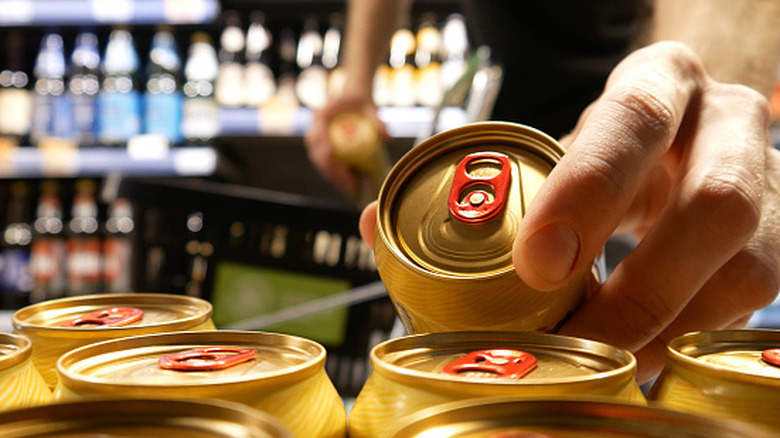
One type of packaging isn't necessarily better at preserving flavor than the other. Beer is generally made from water, ethanol alcohol, hops, yeast, and malt — a highly nuanced mixture that determines a beer's unique profile. Since each of these elements has a unique rate of metabolic variation, different brews break down at different rates and are more susceptible to different damaging factors like light leak or temperature fluctuation.
A 2023 study published in ACS Food & Science Technology tested IPAs and amber ales housed in both bottles and cans. The beers were held at identical storage conditions for alternating periods of 30 days chilled, then at room temperature for 150 days. The samples were tested biweekly for six months. The results? Bottled amber ale varied pretty drastically from canned amber ale over time. But, when it came to IPAs, bottling versus canning didn't make nearly as much of a difference.
Elsewhere in the spirits world, screw-top wine bottles catch a similarly bad rap as housing a lower-quality product. But, in reality, that resealable screw-top offers a superior oxygen barrier compared to a traditional corked bottle. Unless you plan to use up the bottle in a single sitting, that dogged-upon screw-top is actually the way to go. Ultimately, the great can-versus-bottle debate largely comes down to individual predilection.
If you strongly favor a particular brew, chances are you'll dig it regardless of its receptacle material. Ask a self-proclaimed Guinness fan: Surely they have a preference between "the black stuff" out of the bottle versus out of the can, and there's a sporting chance that their preference is a strong one. The brew inside remains Guinness either way.