

9 Forgotten Classic Victorian Era Desserts You'll Rarely See Today
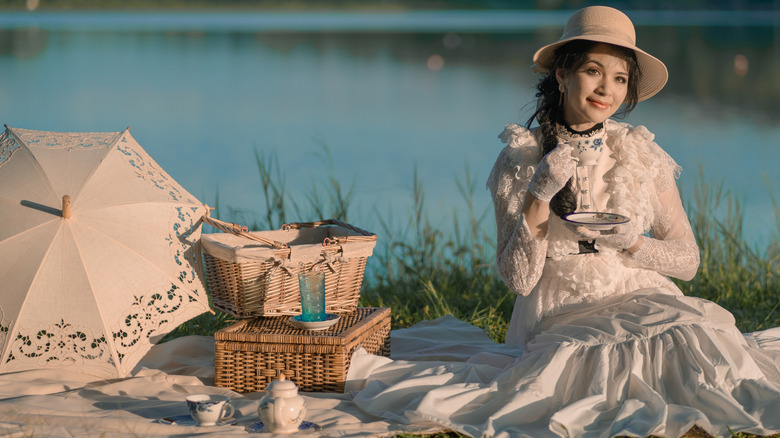
The Victorian era is a fascinating time of industry, innovation, and weird history. It's an era of extremes: Cucumber sandwiches became the height of an elegant high tea, but on the flip side of things, the Victorians were also notorious for adding a poisonous acid to milk to cover up the fact that said milk was occasionally deadly on its own. It was a strange time, for sure, and somewhere in the middle of all that were desserts — many of which have disappeared into the mists of time.
Is that a good thing? Possibly, in some cases ... but possibly, it's just about time that some need to see a renaissance. You're likely familiar with some of the period's iconic desserts. Queen Victoria herself was said to be so fond of sponge cake that a specific layered cake sandwiching jam and whipped cream eventually shared her name. Meanwhile, the Battenberg cake was created for one of the many headline-making royal weddings of the time. We're going to look at some of the most obscure desserts, though, some of which have disappeared so completely that we could only find a few references to their mere existence.
There's some food for thought here, too. The Victorian era wasn't that long ago, in the grand scheme of history. The fact that so much has been forgotten has to make you wonder what else has been lost — and that's something to ponder as we talk about puddings, candies, and ice creams that deserve a revisit.
Nesselrode pudding
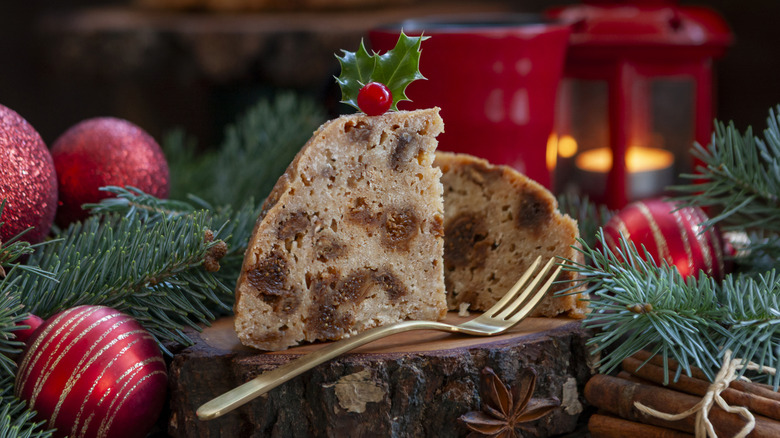
Christmas pudding might be falling out of favor with modern-day Britain, but back in the Victorian era, people were all about their puddings. That included the Nesselrode pudding, and given that the traditional ingredients include chestnuts, you might correctly assume that this was a Christmastime delight. First things first: Victorian-era pudding isn't like the pudding we think of today, and this dessert was essentially a frozen custard prepped in a mold. Ingredients varied, with recipes calling for things like raisins, currants, sultanas, candied orange peel, dried cherries, brandy or cognac for soaking those fruits, and — of course — the chestnuts.
Working with chestnuts to roast, prep, peel, and puree them is a time-consuming process, so it's easy to see how this would have been a stunning centerpiece of one of the most important meals of the year. The chestnut-and-fruit custard was mixed with a meringue to make something wonderfully light and airy, and after the dessert was allowed to freeze, it was served with custard sauce and whipped cream.
As for the name, there really was a Nesselrode. We're talking about Karl Vasilyevich, Count Nesselrode, a German noble who became a Russian diplomat known for his failed attempts at stopping conflicts between Russia and France, as well as the Crimean War. He was staying with Tsar Alexander I when the tsar's chef, Antonin Carême, invented the dessert for their esteemed guest. It spread across Europe as a special occasion sort of dessert that was, in fact, fit for royalty.
Lady Betty's Delight
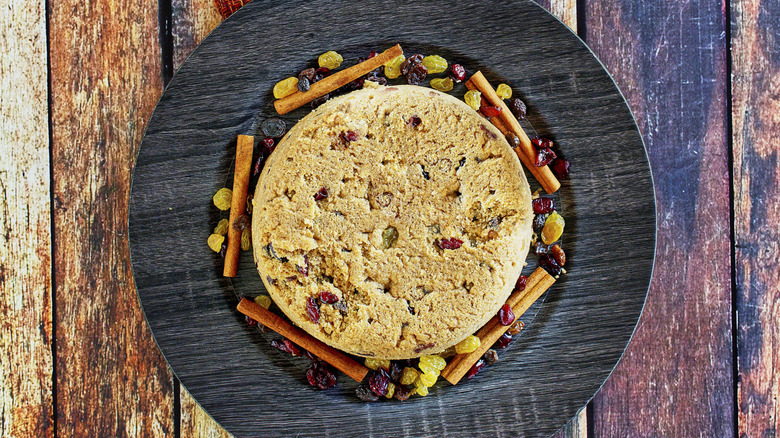
This one's really pretty neat, because we could find exactly one reference to it — but first, a disclaimer. This has nothing to do with the Betty, which combines fruit and breadcrumbs in a way that makes it a sort of pie-adjacent dessert. This one has been preserved by English Heritage, and according to them, it originally came from Annie Griffiths' 1864 cookbook, "Cre-fydd's Family Fare." As was typical of a pudding, this one was molded, left to sit, then turned out onto a plate and served with a sauce. So, what makes this one a standout?
Surprisingly, coconuts and coconut water are key ingredients, and while that might sound a little strange, it wasn't entirely uncommon. Coconuts were a product of British colonies that had been established across the globe, from Southeast Asia to the Caribbean, and the Victorians even had access to shredded coconut. Lady Betty's Delight called for a few more things, including currants, lemon, nutmeg, bread, custard, and — we know this is where we're going to lose some people — beef bone marrow. Bone marrow was a traditional ingredient in puddings for a long time, adding both flavor and texture to the dessert.
Actually, making the pudding was pretty easy, as the ingredients, starting with the fruit and bread, were simply and repeatedly layered into a mold. Custard bound the whole thing together, and after a few hours of boiling, you'd have your finished dessert.
Junket
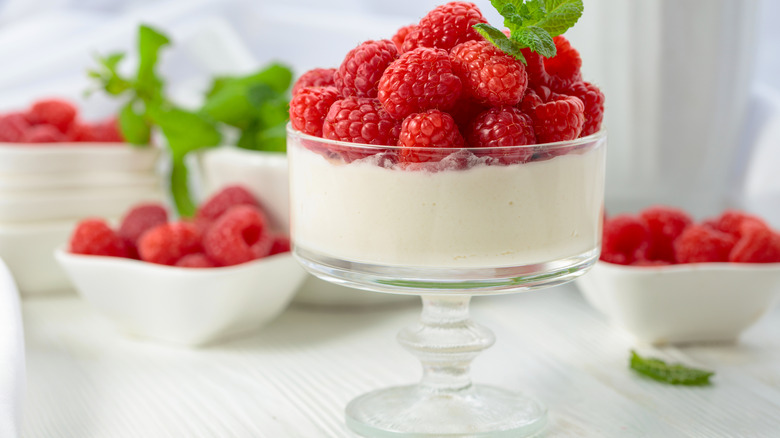
Junket is perhaps one of the most strangely named dishes we've ever come across, and there's an equally strange reason for the name. The dessert itself has been described as something akin to a panna cotta, that delightfully creamy Italian dessert that has become a global favorite. It's also been compared to something that's perhaps less familiar but equally famous — curds and whey. That's what nursery rhyme superstar Little Miss Muffet was eating when she was scared by a spider, and it's essentially milk that's curdled and then sweetened. All that brings us back around to junket, which dates back to the mid-1600s but was particularly popular on the Isle of Wight during the 19th century.
The Isle of Wight was renowned for its dairy industry, and junket recipes are pretty straightforward: It's basically warm milk mixed with rennet and sugar. Some recipes call for vanilla brandy or rosewater, and the mixture is left to set. It can then be topped with fruit (fresh or candied) or a dollop of whipped cream.
Now, let's get specific. Rennet is the enzyme that kick-starts the process that turns milk into cheese, and although it's traditionally sourced from calf stomachs, there are vegetarian options. (Today, most are lab-made.) Some recipes even refer to rennet as "junket tablets," and this one hung around for a while. Even into the middle of 20th-century America, it was advertised as a great way for families to get their daily dairy, but it's largely unknown today.
Victoria pudding
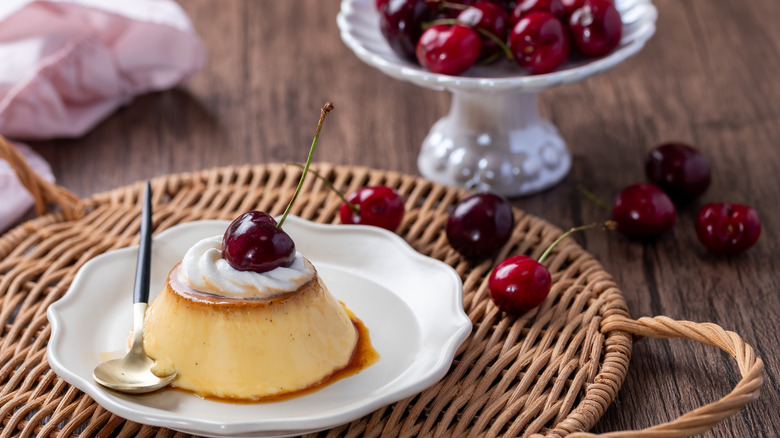
Queen Victoria was a big deal, and she gave her name to much more than the era she ruled. While the queen almost certainly never ate the famous Brown Windsor soup that's so famously associated with her, it's well-documented that her sweet tooth kept royal bakers pretty busy. It only makes sense that she'd give her name to a wonderfully sweet pudding, too, and that's Victoria pudding.
The base of this one is a vanilla custard, but it gets a serious upgrade with the addition of bananas, oranges, lemon, pineapple, orange-flower water, vanilla, and brandy. The mixture is frozen, along with whipped cream and caster sugar, which keeps it at a firm but light consistency. That — as we're seeing is common in Victorian era desserts — is prepped in a mold, then served with a fruit compote.
Delightful, right? We also have to add that bananas would have been a huge deal in the Victoria era. Although they first showed up in London in 1633, they were still a pretty rare delicacy that many people went their entire lives without seeing, much less eating. Victoria pudding stayed around for a while after Queen Victoria's death in 1901, as it was featured on first- and second-class menus served — respectively — on board the ill-fated Titanic in 1912, and the equally ill-fated Lusitania in 1915.
Snow pudding
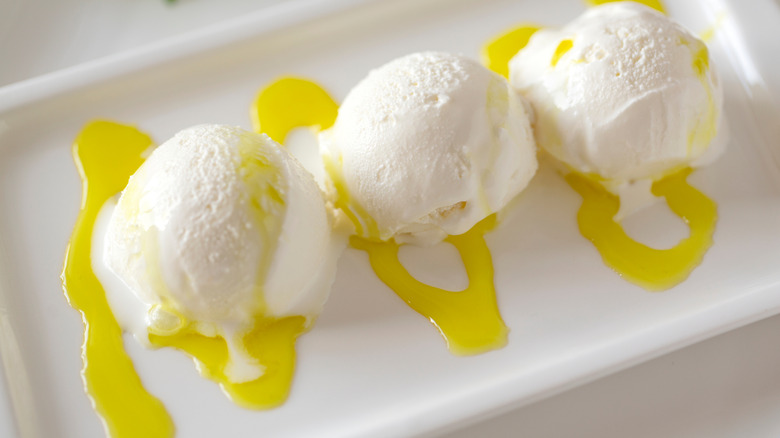
We're going to hop over to the U.S. for this one, and yes, it's a pudding — but not necessarily in the British sense of the word. However, there are some notable similarities. Many Victorian era desserts shared a name with royalty or were first made for the highest of the high in society's upper crust, and snow pudding goes back to the White House. A notable appearance was in a public cookbook from 1887, but "The White House Cook Book" is so much more than its name implies — and it even includes recipes for cold cream, lip balm, shampoo, and hair dye.
Snow pudding is something you might think of as a slightly jiggly, light-and-fluffy dessert that is served with custard. The ingredients are simple, pretty straightforward, and give you an idea of the flavors and texture you could expect. Lemon, sugar, and egg whites are combined with boiling gelatin, then allowed to sit before serving.
Recipes that slightly tweaked the idea remained in vogue through the late 19th century, and you might find some that call for adding the frothy fluff to the top of the custard or adding in some fresh fruit. So, the next time you're looking for an easy, impressive, and lightly sweet finish to a meal that calls for something just a little special, you might look to the end of the 19th century.
Sugar plums
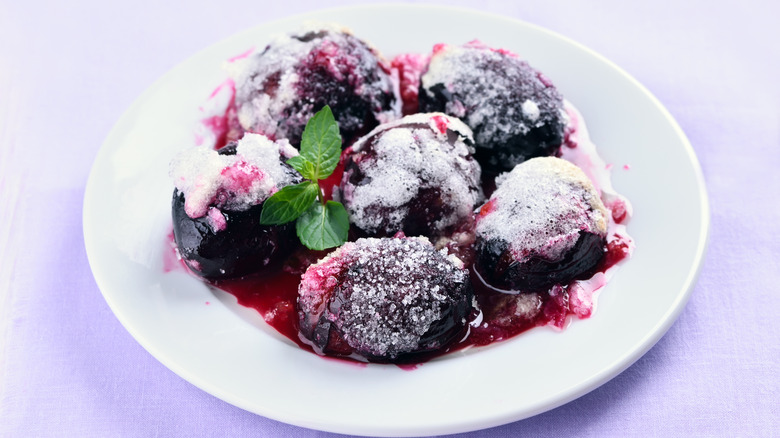
The Victorian era wasn't all about pudding, and there was no shortage of sugary sweet candies, as well. (Some traditions remain: The Victorians were the ones who started the tradition of heart-shaped boxes for chocolates.) Sugar — well, hopefully it was sugar — was also used in a candy that most of us have heard of these days but have rarely tasted. "A Visit from St. Nicholas" famously tells the story of children who fall asleep dreaming of sugar plums, and these were a very real holiday treat. They were initially made by coating plums in sugar, baking them, and repeating the process so many times that making these would take days.
The idea actually goes back at least to the 1600s, when sugar was used as a preservative for delicate fruits. Other recipes and descriptions of sugar plums took on much the same idea, but these swapped out the plums for other types of fruit or even nuts. The laborious process of making these meant that they were pretty pricey, and it makes sense that they were reserved for special occasions like Christmas.
By the end of the Victorian era, the manufacturing of sugar plums was industrialized, and the concept of a hard center wrapped in sugar expanded into all kinds of things. That all happened pretty quickly, and interestingly, the fact that they took so much time to make means that there are almost no surviving recipes that would have been used by home cooks of the era.
Osborne pudding
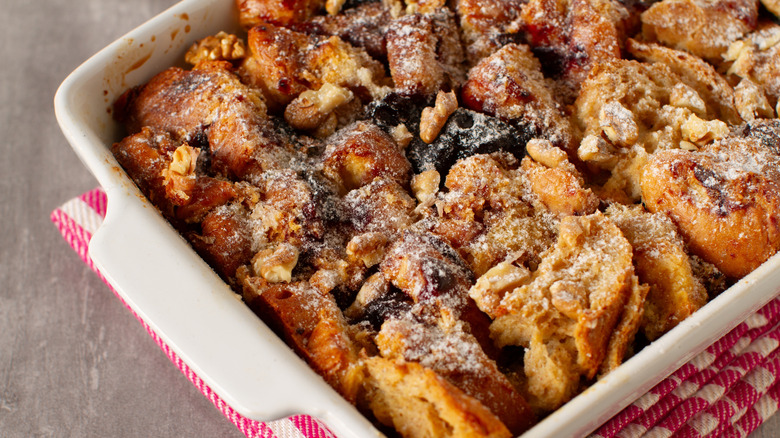
That's right, folks, it's another pudding! This one took a little bit of a deep dive, and it kind of starts with Queen Victoria's wish for a home (i.e., palace) to get away from it all. That need led to the purchase of Osborne House, an estate on the Isle of Wight that came complete with a private beach, terraced gardens, and a Swiss cottage. (You can visit today, as it's managed by English Heritage.) Afternoon tea was a big deal at Osborne House, and it seems likely that Osborne pudding at least takes its name from the house.
Some sources suggest that it was a family favorite at the house, and while official records are iffy, it certainly makes sense. We do know that it was a variation of bread-and-butter pudding — which was one of Princess Diana's favorite desserts — that added orange marmalade and was served with either cream or ice cream. You'll find some recipes out there that call for brioche or white bread, but this Victorian era treat swapped in brown bread.
Why did this one fall off the dessert radar? We're not sure, because we can see how the combination of the extra-flavorful brown bread and sweet orange marmalade would be an incredible upgrade to the standard bread pudding. Add in the buttery marmalade-and-Grand Marnier glaze that some recipes call for, and it's a favorite worth revisiting.
Amber pudding
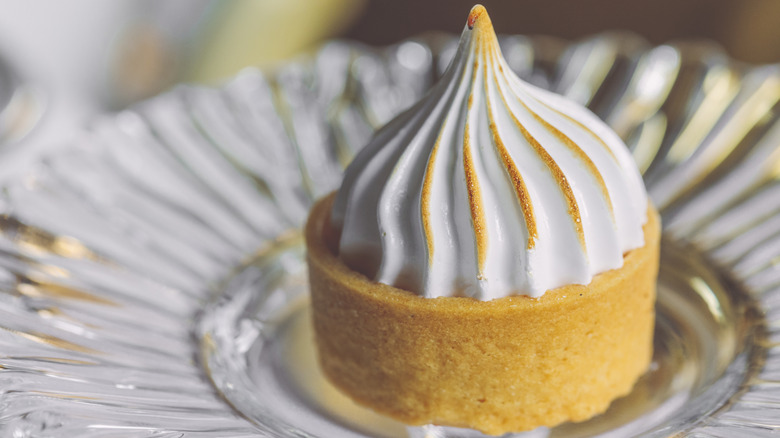
Here's a brilliant example of how things change. Go back to the late 17th century, and you'll find that amber pudding refers to sausages made by stuffing pig intestines with things like breadcrumbs and ambergris. However, we're talking about the Victorian era, and by then, amber pudding had come to mean a sweet, pie-like dessert with some meringue vibes going on.
Recipes vary, and some describe a sweet dessert made with equal amounts of sugar and melted butter that got combined with egg yolks, then seasoned with a dash of nutmeg and baked in a puff pastry crust. Other recipes — with similar outcomes — call for lemon and corn starch, but the eggy sweetness remains the same.
There's a "however" here, though. Even within the Victorian era, exactly what you would get was something of a toss-up. Those previous recipes came from "The Cook and Housewife's Manual" of 1829 and "The New Galt Cook Book" of 1898. (And yes, we know 1829 is a touch outside the Victorian era, but we're sticking it in here anyway.) Another version comes from 1880s-era Audley End cook Avis Crocombe, and it's a more traditional British pudding made from suet, orange marmalade, breadcrumbs, and eggs. Everything's mixed, boiled for several hours, and then served with something like a wine sauce or cream. This suet-based version may have been what servants and the lower class would have had, while the pastry-and-sugar version was the fancier of amber puddings.
Penny licks and funky ice cream flavors
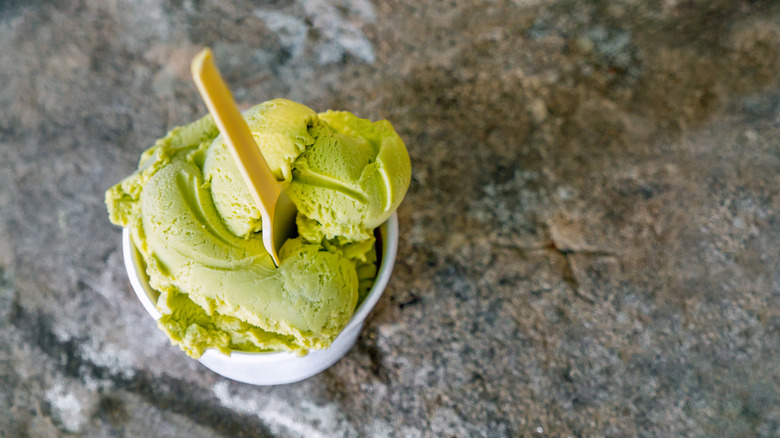
Ice cream has been around for centuries, and the Victorians loved it so much that they turned the creation of over-the-top ice cream desserts into a massive trend. It had become so widely available by the Victorian era that it was often sold by street vendors, and here's where the problem came in.
Many vendors were selling penny licks, and those were scoops of ice cream served in little glass cups that were licked clean, handed back, then refilled for the next customer. See the problem? Sometimes they were washed first, but that was usually with water from sources like the Thames — and it wasn't so much a river at the time as it was the city's open sewer. Penny licks were ultimately connected to the spread of diseases like cholera, and they were made illegal in 1898.
Today's ice cream lineup contains all kinds of iconic ice cream flavors, but the Victorian era had its own ideas about what made a great flavor. In 1885's "The Book of Ices," you'll find recipes for flavors including — and certainly not limited to — chestnut, rhubarb, rice, cranberry, grape, rose water, jasmine, and white wine. Other sources call out even stranger Georgian and Victorian era flavors, including brown bread, Parmesan, spinach, and even a chicken pâté, made with Worcestershire sauce, anchovies, and gravy. (We're legitimately sorry for that last one, but honestly? If we had to read about it, so do you. You're welcome!)