

8 Best German Beers Available In The US
German beer has a reputation for being a bit more serious than its American counterpart. Beer from Germany tastes different than brews made in the U.S., with a slight bitterness and wheat-forward flavor, and it can be difficult to know which drink to start with. This can make it feel intimidating to those who want to try dipping their toe into something new, but in reality, every experienced beer drinker started somewhere. There are centuries-old brewing traditions, highly specific styles, and advanced flavor profiles that seem more complex than anything brewed in America. But some German beers are extremely popular in the States, and some may even have a few similarities with the brews you're already drinking.
Craft beer drinkers really know their stuff, and I've looked across several platforms to find out which German beers are most popular in the U.S. I've also shared my own experience with these brews, where applicable. This can give the new drinker a jumping-off point, and the experienced drinker something new to try. Whether you're curious about Weihenstephaner, Ayinger, or Paulaner, here's what you can expect from the best German beers you can find stateside, especially if your usual beer comes from an American tap.
Weihenstephaner Hefeweissbier
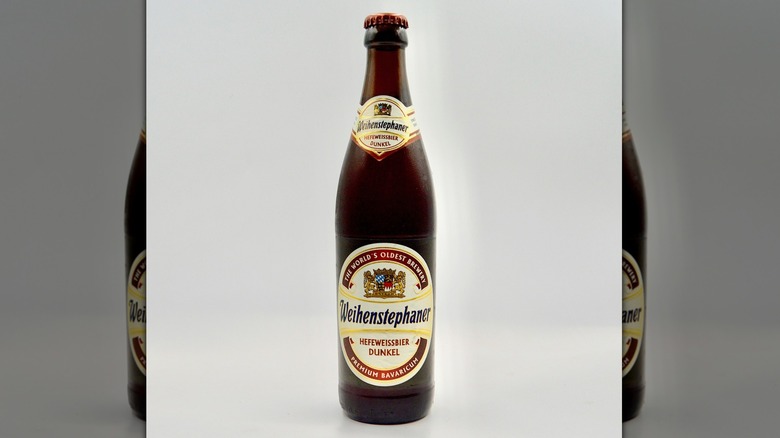
If you're just looking to begin your journey with German beer, any person worth their salt will probably tell you to start with Weihenstephaner Hefeweissbier. Weihenstephaner is one of the most, if not the most, popular German beer brands in the U.S. for its flavor and light-bodied beers. This beer comes from the Bavarian State Brewery Weihenstephan, which is the oldest continuously operating brewery in the world, going back to the 11th century. The brewery's flagship brew — Weihenstephaner Hefeweissbier — has become one of the best-known examples of a hefeweizen, which is an iconic Oktoberfest style. It's clove-heavy, a bit fruity, and definitively a wheat beer.
If you like Blue Moon, as I do, this beer is perfect for you. It has a bit more depth, but has the same light, citrusy taste. Banana is the tasting note that comes up over and over again with hefeweizen fans, although — despite hearing it repeatedly — I have never been particularly good at finding it. Weihenstephaner Hefeweissbier is incredibly smooth and easy to drink; consider this your gateway beer into the world of German brews.
Rothaus Tannenzäpfle
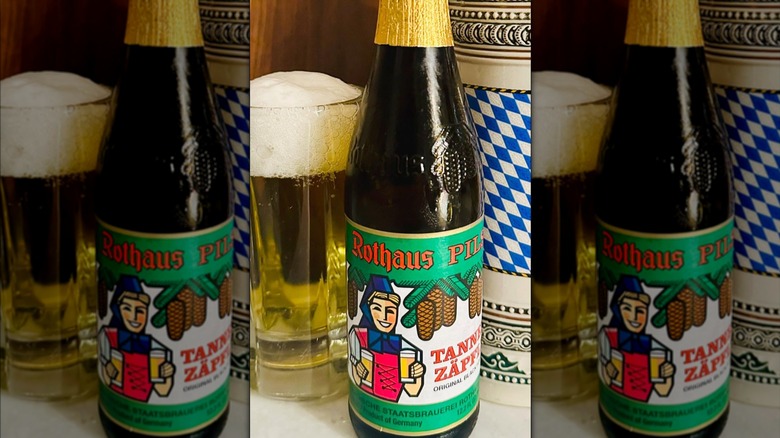
Rothaus Tannenzäpfle is a great example of why German pilsners have such a devoted following in the United States. The Badische Staatsbrauerei Rothaus brewery was founded by Fürstabt Martin Gerbert II in 1791 in the Black Forest area of Germany. An incredibly accomplished man, Gerbert was a local politician, professor, and musician, who unfortunately passed away only a couple years after the brewery's founding. Over a century later, the Tannenzäpfle would become its signature beverage after it launched in 1956.
This German beer is slightly on the bitter side with a heavy maltiness, and you'll catch some grassy notes in there, as well. Rothaus Tannenzäpfle is perfect for casual food like pizza or burgers, and it's the cherry on top of a night spent grilling or barbecuing. I'd recommend this one if you're a Samuel Adams Boston Lager drinker. They're both classic lagers and are hoppy, malty, all your classic beer words. Craft beer drinkers love this German beer because of its simplicity; there's not much to dissect about the flavor. It's just a bit herbal, a bit bitter, and it won't overwhelm your palate.
Aecht Schlenkerla Rauchbier Märzen
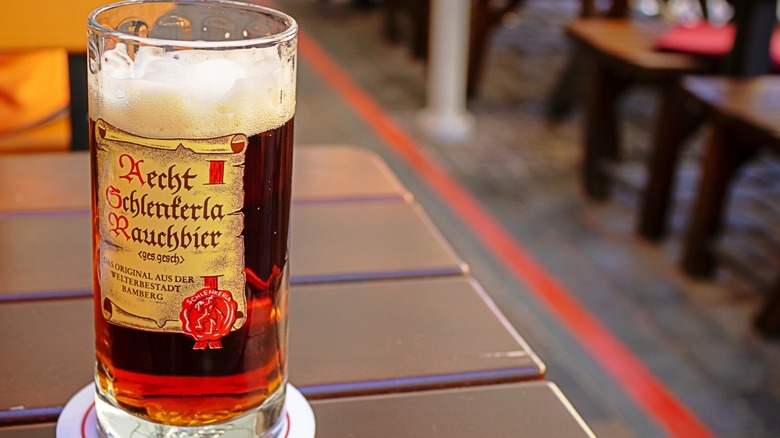
Rauchbier — or smoked beer — can feel intimidating at first, but this savory brew is very popular among craft drinkers. Bamberg, Germany, is a city that's famous for smoked beer. Schlenkerla specializes in this type of brew, drying the malt over burning beechwood to give its Aecht Schlenkerla Rauchbier Märzen that campfire-esque flavor. The resulting beer is dark red-brown and so reminiscent of a barbecue that it may seem off-putting at first. But there is some sweetness underneath the fiery notes that makes it a bit more complex.
If you've tried a plethora of light brews or bitter IPAs and haven't found something you like, smoked beer may be the path you need to go down. Plus, this German beer is truly unusual compared to American brews, so if that sense of uniqueness appeals to you, you'll likely enjoy it. Schlenkerla is a widely popular brand, but rauchbier in general is pretty easy to find if you can't locate a bottle from that specific brewery. If you're looking to branch out, this one is interesting and unique enough to at least try.
Ayinger Celebrator
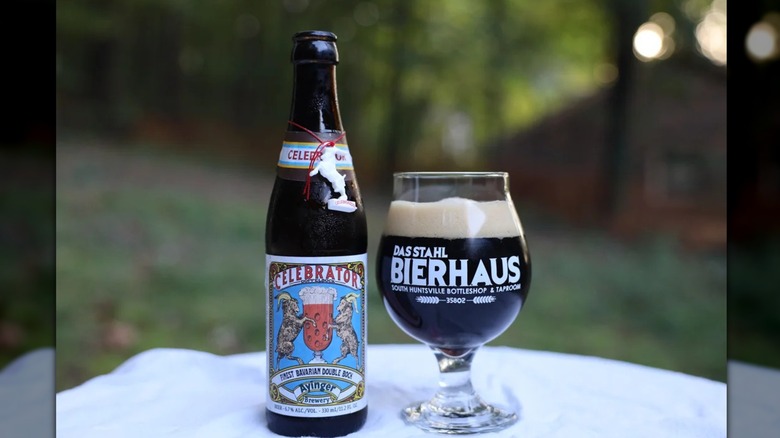
Ayinger Celebrator is another crowd favorite. German beer lovers enjoy almost everything Ayinger makes – I'm partial to its Oktober Fest-Märzen, which I'll cover below — and this brew is no exception. Celebrator is one of the brewery's best-known beers, and it has earned a strong reputation among American beer enthusiasts, often ranking high among other German beers stateside.
Ayinger Celebrator is a rich, dark doppelbock, so it's not the beer to reach for when you want something light or mild. The flavor is strong here, but there isn't an edge to it, as you might expect from this style of German beer. This malt-heavy drink shows that just because there's a high malt content doesn't mean the beer has to turn out bitter. Tasting notes here include fruit, chocolate, and toasted caramel. This is definitely a beer that feels like a meal, and it's totally different from the lighter lagers popular with American drinkers. It's not a light, crisp summer beer by any means; this is definitely a heartier cold-weather drink.
Schneider Weisse Festweisse
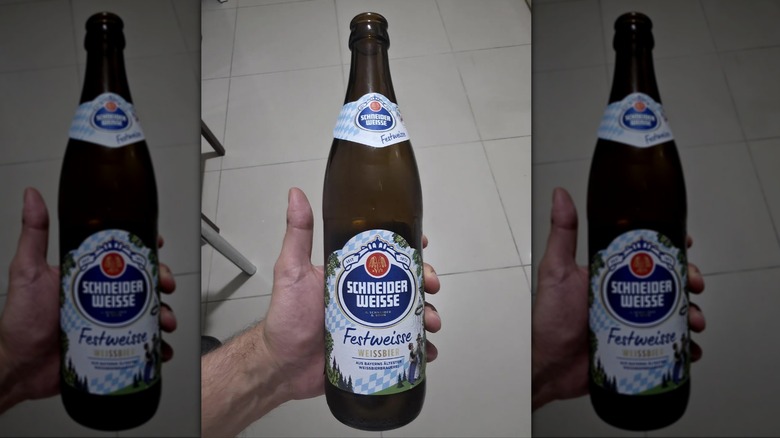
This festive beer is brewed from a traditional Oktoberfest recipe that dates back to 1916. Georg Schneider leased the Weisse Bräuhaus in the mid-19th century and later began brewing wheat beer there with his son in 1872. Schneider Weisse Festweisse is designed specifically for the kind of celebratory drinking associated with German beer festivals like Oktoberfest, with its golden color and yeasty flavor. The beer has a bright citrusy quality that makes it refreshing and results in it ranking fairly well among Oktoberfest beers.
Oktoberfest beers can sometimes be thought of as heavy, malt-forward, or especially dark, but this one contradicts that idea. Schneider Weisse Festweisse's flavor definitely comes across as fruity. Here is another beverage that folks say leaves heavy banana notes on the tongue. I've only tried this particular brew once, but in my experience, it didn't seem to be specifically banana-forward, so I'll have to be on the lookout for that flavor next time.
Either way, Schneider Weisse Festweisse is drinkable and easy to enjoy with a wide array of foods, from light fish dishes to heavy ones like a classic German sausage. I think this would be a great addition to traditional festival food, whether that be in Germany or stateside.
Augustiner Edelstoff
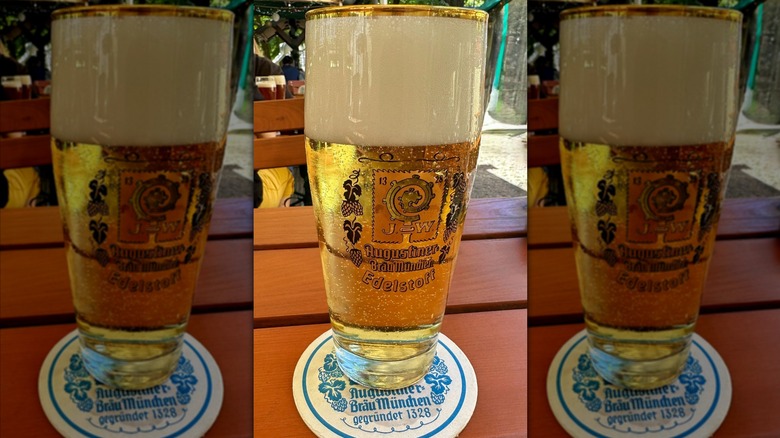
Augustiner-Bräu is one of Munich's oldest breweries, founded in 1328. When Augustinian monks started to brew beer at their monastery, they were unknowingly setting the stones for what would become one of the most popular German brews in the world. It's also now a staple at many traditional German restaurants in the area. Augustiner Edelstoff is a lager with a smooth malt character, subtle sweetness, and slight hoppy bitterness.
German natives sometimes recommend Augustiner Edelstoff as one of the best imported beers to try, and that's an opinion worth trusting. Some people think Edelstoff, which is exclusive to Augustiner-Bräu, is similar to a helles, a popular Bavarian brewing style — but these brews can differ. For example, Augustiner Edelstoff's 5.6% ABV is usually slightly higher than that of a helles, and the taste of the latter can vary widely based on the brewery.
Augustiner Edelstoff can be a bit harder to find in the U.S. than some others on this list, but this only adds to the appeal for those who are serious about German beer. Experienced drinkers often like to start and end their nights with Augustiner Edelstoff; it packs enough of a punch to get your night going, and it's interesting enough to drink a few.
Paulaner Hefe-Weizen
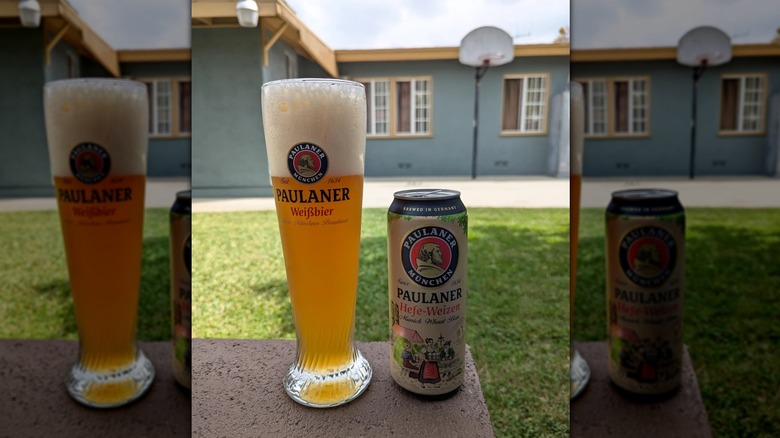
The Paulaner legacy began in the early 1600s, with the brewery's roots lying with the Neudeck monks in Munich. Today, the brewery is associated with classic Bavarian styles, such as its Paulaner Hefe-Weizen — a citrusy, clove-heavy, wheat beer. Like other traditional hefeweizens, this beer is light in color and has a cloudy look. The familiar taste has bright orange notes along with other fruit flavors. The beer is refreshing rather than heavy, helping it pair well with fish and other light fare.
Paulaner Hefe-Weizen is a solid choice when you want something simple. It tastes a lot like some American beers you've probably already enjoyed — again, kind of reminiscent of Blue Moon. The combination of spicy cloves and fruity citrus makes for a classic flavor that isn't too jarring. This beer is also associated with Oktoberfest culture, which helps its American popularity. So, this is another good beginner option for someone starting their German beer journey.
Ayinger Oktober Fest-Märzen
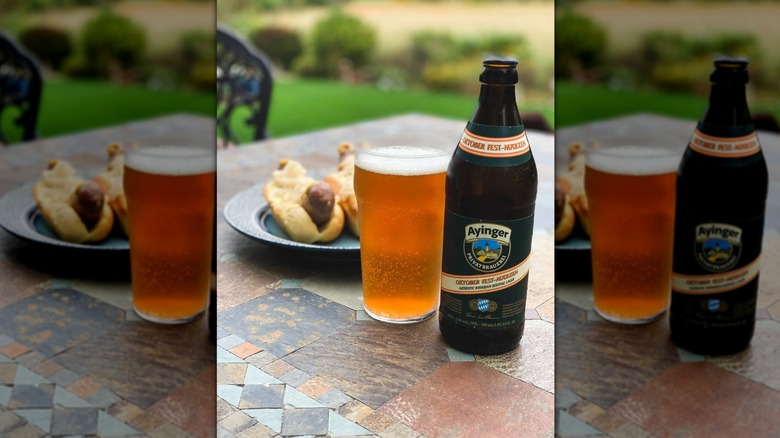
Ayinger Oktober Fest-Märzen is my personal favorite of the German beers on this list, although I may be a bit biased, because it was the first truly German beer I tried. Ayinger Brewery was founded in Aying, Bavaria, in 1878, and its Oktober Fest-Märzen is one of its cornerstones. The beer is, of course, associated with German festival culture, though it is a bit lighter than many Oktoberfest brews. Flavor notes here include toasted grain and caramel. It definitely isn't overly sweet and leans a bit bitter, but the caramel notes add a fullness that makes it more drinkable than some other, more bitter beers.
The malt is the star of this beer, and I'm a fan, because the flavor is a bit more interesting than some other Oktoberfest brews I've tried. When people get into German beer, the impulse is to jump right into heavy Oktoberfests, but this is a gentler take on a classic German recipe. It's tough to replicate a true German Oktoberfest beer, but I think Samuel Adams Octoberfest is a good parallel for this German beer.
Methodology
To compile a list of the most popular German beers in the United States, I looked at a variety of sources across the Internet, from more focused sites like Beer Advocate, to more common Reddit and Quora forums. Scouring these different sources and online forums not only helped me find information on the more concrete side of things, such as tasting notes and brewery history, but they also helped me learn what beer drinkers are really interested in.
I examined the way beer drinkers discussed the flavors of each brew and why they like it, and I also added in my own experience with these drinks, if applicable. To make the piece more approachable to someone who may want to get into German beers, I tried to make note of American beers that may be comparable to certain brands and styles.