

Why Skippy Natural Can't Legally Be Called Peanut Butter
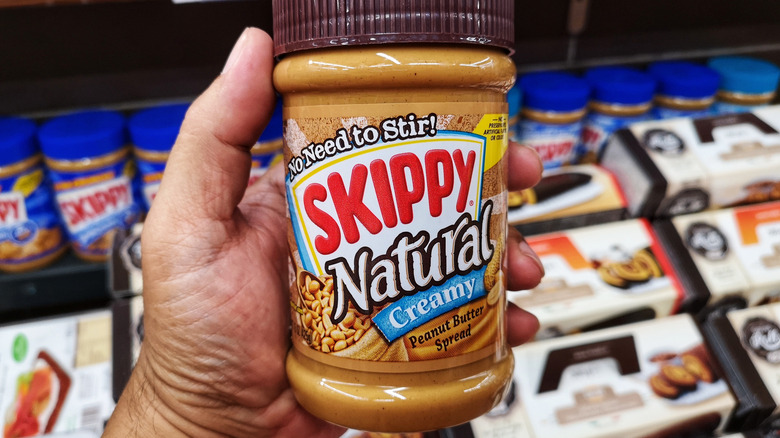
When it comes to interpreting food labels, fine print can actually be more important than we think. Subtle word choice can often conceal a significant difference in meaning, while average consumers usually take these labeling conventions for granted. Peanut butter is a spread, so the label "peanut butter spread" is the same thing, right? Well, not really. With products like Skippy's Natural Peanut Butter Spread, the word "spread" actually flags that what's inside can't legally be labelled as peanut butter. The FDA requires that any peanut butter products consisting of less than 90% peanuts, usually to make room for stabilizers and seasonings, must be called a spread. Skippy Natural contains palm oil, which, as it's not a permitted hydrogenated vegetable oil, also disqualifies it from being labelled as just peanut butter. Skippy doesn't openly disclose what's the percentage of peanuts in its Natural Peanut Butter Spread, but the inclusion of palm oil is enough to dictate this label requirement.
The word "natural" almost acts as a counterweight to the word "spread", but this doesn't reveal much about the quantity of peanuts and palm oil in the jar, given that the latter is not artificial. Palm oil in the peanut butter spread works as a stabilizer, preventing the peanut oil from creating an oily layer at the top of the jar. It's also the reason why you don't have to stir this peanut butter.
This law has been in place for some time, balancing quality and consumer preference
In 1961, the FDA first proposed the rule dictating a minimum of 90% peanuts in any product labeled as peanut butter. This was after it was revealed that some peanut butter brands had reduced the peanut content by up to 20% by introducing non-peanut oils. The initial proposal sought a 95% minimum peanut level, but because consumers preferred peanut butters that spread easily and were sweetened, the regulatory minimum peanut content landed on 90%. When this happened, the FDA received pushback from Skippy, as well as Jif and Peter Pan — all three brands appear on our roundup of the unhealthiest peanut butter brands. Ultimately, the spreadability, stability, and flavor preference for consumers is what dictates the makeup of Skippy Natural today, regardless of the words on the label.
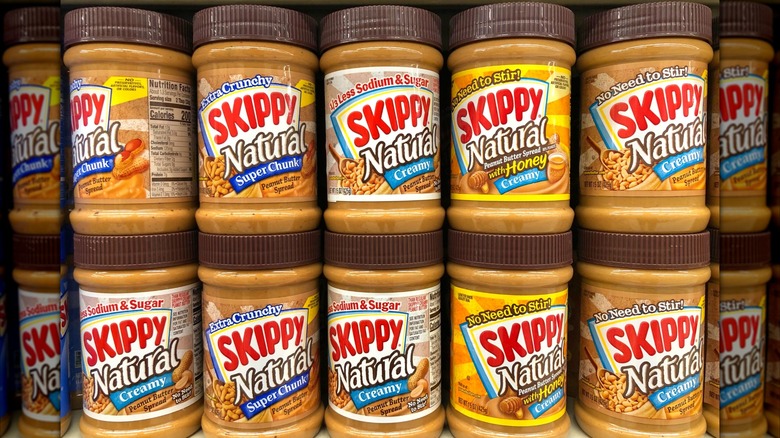
While Skippy Natural is branded as a peanut butter spread, other products in Skippy's line are labelled as peanut butters, indicating they meet the peanut content threshold and don't contain palm oil. Skippy's Creamy Peanut Butter and Super Chunk Peanut Butter both contain the permitted hydrogenated vegetable oil, evidently within the legal limit, although these two products don't come recommended. Regardless of the brand, high sodium, sugar, and exceeding levels of hydrogenated vegetable oils are some other red flags to watch out for in peanut butter brands you find on the shelves.