

The Most Important Thing To Look For When Buying Cooking Oil, According To An Expert
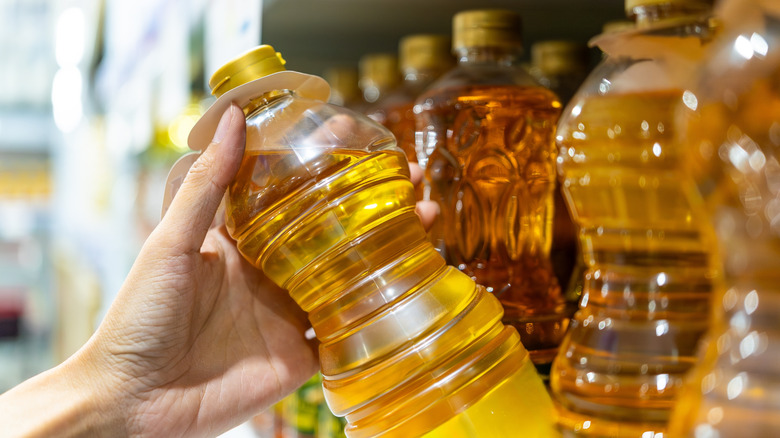
Stroll to the cooking oil section at the grocery store, and you'll find yourself overwhelmed with choice. Countless brands, various oils, many price ranges; how can a casual consumer know what to look for? Tasting Table asked an expert: chef John Politte, founder and host of "It's Only Food." He said, "For me it is the amount of saturated fat in the oil, and how processed the oil is. I want my oil to be pure, minimally processed, and not mixed with other refined seed oil that may be stripped of all the nutrients."
Healthy fats play an important role in the new U.S. food pyramid, so quality cooking oil definitely has a place in balanced nutrition. However, people tend to overlook the fact that different culinary techniques may call for different types of oils. This is why Politte said, "When shopping for oil, I purchase it for my needs. If I am not going to be using oil for anything but, say, stir-frying, I ... get a bottle that may be a bit more expensive, and smaller." Alternatively, if you're planning to fry a lot of food, a larger and more cost-effective option could be more appropriate. Just be mindful that buying cooking oil in bulk is not the best idea.
Quality cooking oil is healthier and more shelf-stable
On what he avoids when shopping for cooking oil, Johne Politte cited "overprocessed and inexpensive store-brand vegetable oils." While there are certainly some exceptions, "Most of these types of oil are loaded with saturated fat and chemical preservatives," he said.
Saturated fats can increase your risk of heart disease, so they're worth paying attention to. Thankfully, the amount of saturated fat is declared in the nutritional information on the back of the oil bottle, so you can make an informed decision. The American Heart Association recommends opting for oils with less than 4 grams of saturated fat per serving.
Politte also pointed out that, in oils of poor quality, "the tendency of the oils to oxidize and go rancid increases, along with the danger of increasing inflammation in the body from heavily processed fats in the oil." You can usually recognize rancid oil by doing a quick smell or taste test, but in a rush you might not notice something is wrong until it's too late and you've accidentally eaten rancid oil.
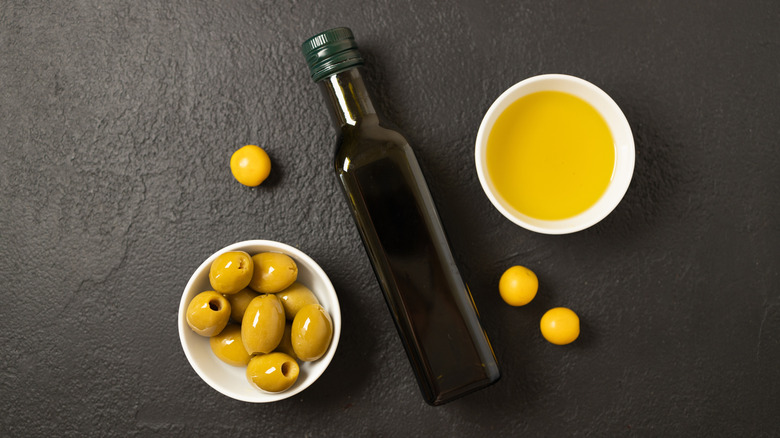
Appropriate storage plays a role in the oil's longevity. "I buy a bottle that is glass and has a tint on it that blocks the sunlight and lighting, which damages the integrity of the oil," the expert told Tasting Table. That's another reason why it's a major mistake to store cooking oil above the stove.