

Forget Peaches — This Other Stone Fruit Tree Is Just As Plentiful And Easy To Grow
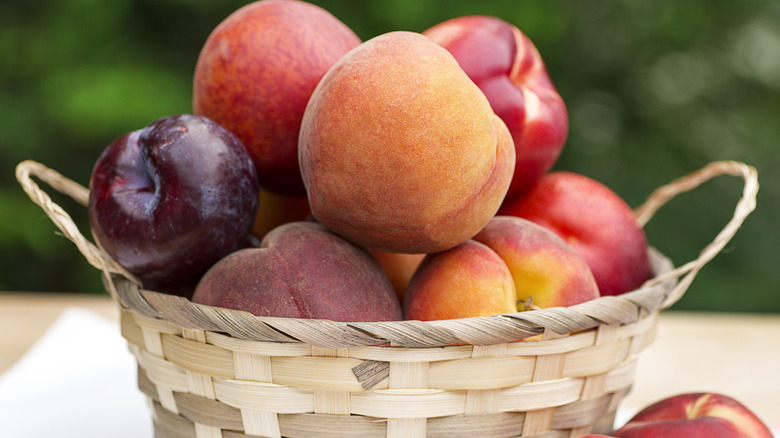
Peach trees are a popular option for home gardeners who wish to grow their own fruit. Aside from the allure of supplying fresh juicy peaches in the summer, these trees are relatively easy to grow, providing an attractive flower display in spring which attracts pollinators to the garden. But what if there was another stone fruit that's even easier to grow, adaptable to various growing conditions, and just as beautiful in the garden? Enter the lovely plum.
Aside from ticking all those boxes, plum trees produce bountiful fruit in a wide variety of colors, from green and yellow to red and purple, each with a unique flavor. There are over 100 varieties of plums, and while some are native to the Americas (Prunus americana), European (P. domestica) or Japanese (P. salicina and hybrids) plums are better for fruit production in home gardens.
Choosing the right variety of plum tree will depend on your location and climate, so check important things like how big it will grow, how much sunlight it will need, and how many chill hours — the time in which the tree is exposed to temperatures between 32 and 45 degrees Farhenheit — are necessary for developing fruit properly. You should also consider the final product. Some plums are great for eating fresh, others are best for cooking, and some are good for both. Aside from the plums we know and love, you can also look for their lesser-known cousins: damsons and gages. Once you pick the right tree for your situation, you'll be able to harvest juicy plums with very little effort.
How to grow plum trees and use your harvests
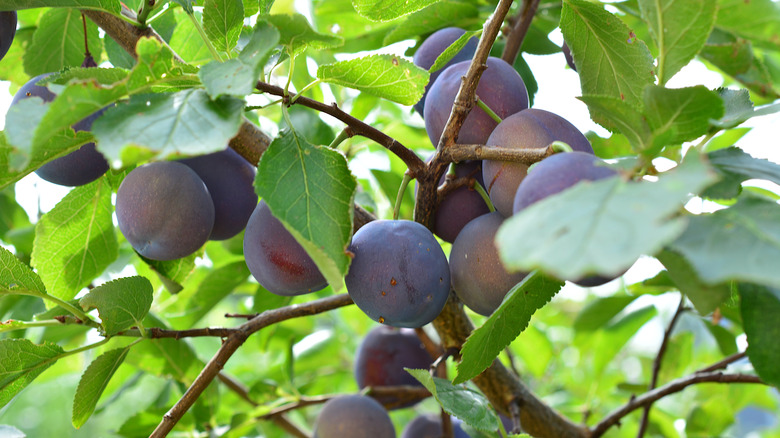
Plums don't require a lot of fuss to grow well once you find the right spot. They thrive in full sun, and will need six to eight hours of direct sunlight every day to ensure a good crop. They prefer well-draining soil, as a soggy, heavy clay type will affect their development. You should also consider their size. Standard plum trees grow up to 16 to 20 feet in height, semi-dwarf ones usually reach about 14 feet, while dwarf plums, which are grafted into dwarf rootstock, grow between 8 and 12 feet high.
Some plum trees are self-fertile, so you won't need to plant more than one to produce fruit if you have little space. However, if you have a larger garden, planting more than one will improve pollination and fruit yield, especially if you plant different cultivars for cross-pollination. You can also grow the pretty herb under fruit trees to attract pollinators and ensure a good plum harvest.
Another cool idea for smaller spaces: train the trees into a fan shape against a sunny fence or wall! Pruning is helpful in any case, to remove branches that are too small to sustain the fruit. Young trees are best pruned in early spring, but only prune and established trees in the middle of summer, when the weather is dry, to prevent fungal and bacterial diseases.
If you find yourself (hopefully) inundated in plums, there are lots of great uses for them. Making jam or preserves in a no-brainer, but consider this amazing plum upside-down cake too. And don't limit yourself to sweet dishes — plums fit wonderfully in savory recipes, adding a fruity umami to a pot roast or starring in this sheet pan cinnamon chicken and plums.