

For A Winter-Spanning Harvest, Plant This Self-Seeding Vegetable In September
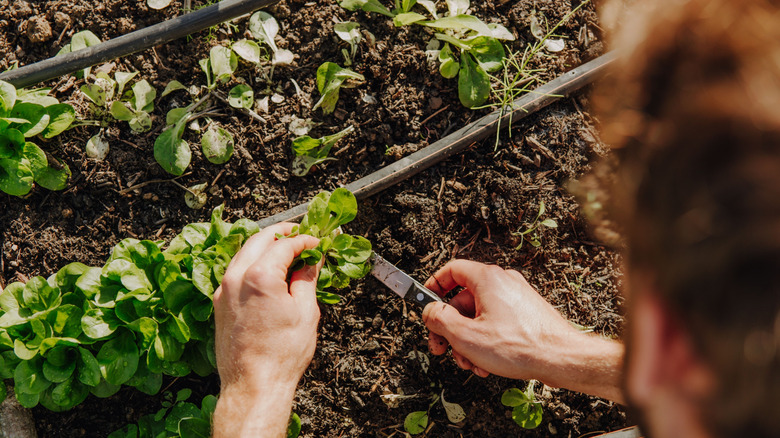
While many of us relish the arrival of autumn's cooler days, gardeners often feel sad that their warm-weather plants will die as winter grows near. Contrary to what you might assume, you don't have to stick to vegetables you can grow indoors during winter. There are many hardy crops that thrive in the cold, including mâche, a wonderfully tasty leafy green. This self-seeding veggie can be planted in late September and harvested all winter long.
Mâche (Valerianella locusta) is also known as corn salad, field salad, or lamb's lettuce, and can stay fresh and juicy even in single-digit temperatures. It's easy to maintain, can thrive in any type of soil, and the leaves have a slightly sweet, nutty flavor. Mâche is not a perennial, but self-sows effectively, meaning you only have to plant it by hand once. After that, the plants scatter their seeds before they die and regrow on their own the next year. This slow-growing veggie typically reaches maturity after 50 to 70 days, which means it'll be available well into the cold months when you'll be missing salads the most.
Mâche doesn't do well at temperatures above 70 degrees Fahrenheit, so plant the seeds in cool soil between 41 to 68 degrees. If your garden has room, sow mâche across a large area so you have plenty to harvest throughout winter. Sow the seeds in a full sun zone with three inches between each plant. From there, mâche only needs time and minimal attention to thrive.
How to care for, harvest, and use home-grown mâche
Mâche can survive in many types of soil, but the dirt should ideally be loose, well-draining, moist (but not waterlogged), and slightly acidic to neutral – this veggie doesn't do well in environments with a pH above 7 or below 6.5. Ignoring soil conditions is a major vegetable gardening mistake, so do a pH test on your garden first and maintain the moisture levels throughout the winter.
You don't really need to fertilize mâche for a good harvest, and this amazingly hardy crop can withstand temperatures down to 5 degrees. If winter nights dip below zero near you, you can place the plants inside a protective cold frame or use individual cloches.
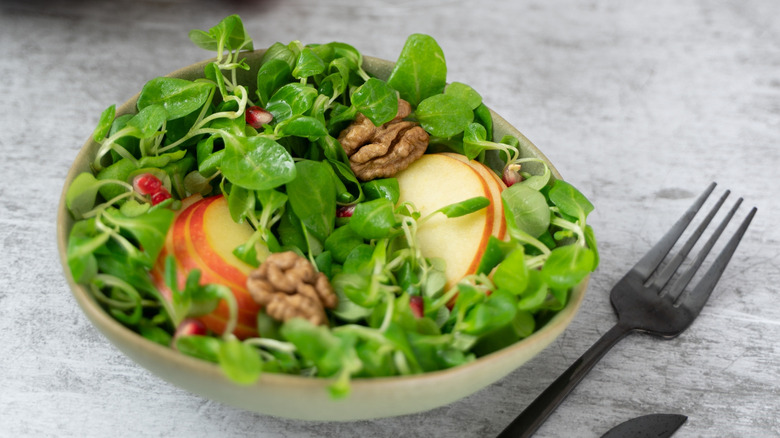
Once your mâche rosettes (aka heads) are a couple inches across, harvest by cutting them off at the base or picking individual leaves. Mâche needs to be washed thoroughly because the leaves tend to trap dirt, but afterward this green is absolutely perfect for salads. It can be used similarly to spinach or arugula and pairs well with light vinaigrettes, creamy yogurt dressings, or a little walnut or olive oil to let the nutty taste shine. Recipes often pair mâche with fruit, including pears, apples, and oranges; veggies, like fennel and beets; and thin shavings of cheese. Try swapping it into our spinach salad with roasted fennel and grapefruit for a refreshing yet hearty winter salad.