

The Rule To Know Before You Order Wine At A Restaurant Again
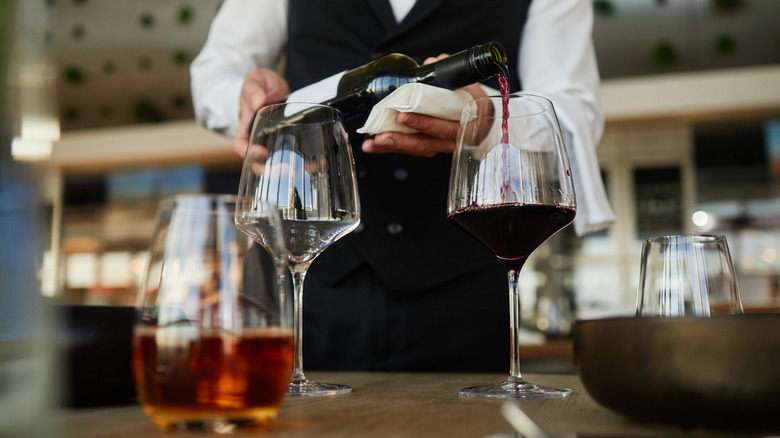
When enjoying a proper dinner, a solid wine pairing can elevate the flavor experience of both the wine and food. These elements should work in harmony to create a cohesive meal from start to finish — which is why, before you order a whole bottle at a restaurant, it's crucial to first choose the courses you're planning to enjoy (from appetizer through entree). Take it from this career-bartender-turned-writer: A wine that clashes with your meal can snub out an eager appetite like the candle flame on your dining table.
Ultimately, selecting one wine that can "do it all" — complementing every dish in a multi-course meal — is a fairly tall order. This is why many structured prix fixe meals typically come with a different wine pairing built into every course. However, in the quest to choose one bottle that works from course one to dessert, it can be helpful to lean into contrasting pairings. An off-dry pinot grigio can artfully juxtapose a plate of salty cured charcuterie meats. Meanwhile, that same off-dry pinot grigio complements an entree course of briny linguine with clam sauce, carrying cohesively throughout the entire meal.
Chardonnay complements an entree of lobster or herbed chicken breast. Here, it's wise to open with an appetizer like spinach and artichoke dip, Caesar salad, or shrimp cocktail. Craving something red? Reds with moderate tannins, like savory Sangiovese or flinty pinot noir, would complement umami-forward, earthy entrees like mushroom risotto, grilled winter vegetables, and tomato-based pasta dishes like bolognese. To open the meal, Sangiovese or pinot noir does well alongside a rich, fatty appetizer like burrata and crostini or steak tartare.
Pick your appetizer and entree before selecting a bottle of wine

Working in tandem, your wine and food choices should create a transformative interaction across the palate. To make that happen, a general rule is to match the weight of the wine to the weight of the dish. A heavier meal like braised short rib or duck confit, for instance, will require an equally heavy, full-bodied wine to stand up to its boldness. In this case, woody cabernet sauvignon or velvety, plum-forward merlot make ideal accompaniments. Their dryness and firm tannic structures cut through the richness of meat. Conversely, a lighter meal like blackened whole branzino would be overpowered by these fuller-bodied wines. Instead, a lighter, more acidic offering like zippy, vegetal sauvignon blanc makes a better, brighter, balanced fit. If you were chowing down on an oilier fish, however, a dry rosé would slice through the entree's fattiness while keeping the bouquet floral and lively.
Ordering wine at a restaurant can seem daunting, especially for the unacquainted. A knockout (or strike-out) wine pairing colors the overall experience of your meal — and, when shelling out for a multi-course dinner and whole bottle to go with it, gourmands want to be sure they're getting their money's worth. When in doubt, consult your server before ordering. It's always a good idea to ask the pros for help. "We're thinking about ordering the braised lamb entree and garlic scape salad to start, which wine would you pair with that?" can make all the difference between a memorable meal and one you'd rather forget.