

How To Order Wine As A Beginner — It Isn't As Intimidating As It Seems
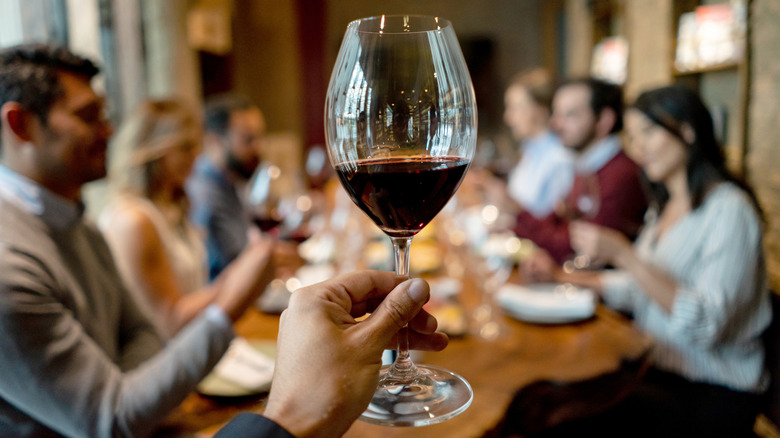
The sprawling, sensory, often-subjective lexicon of the wine world can be intimidating (what even does a sommelier mean when they mention the "minerality" of wine?). But, it nonetheless stands between epicures and their orders at a restaurant. Take it from this industry worker-turned journalist: The secret to ordering wine with confidence is — perhaps paradoxically — relinquishing control. Don't be afraid to ask questions. Consulting your server (aka the professional) is the best way to ensure you land on a glass you'll actually like.
In a restaurant, ordering wine is an undertaking with tripartite criteria: the wine should suit your taste, complement your meal, and fit your budget. Go in already having an idea of what you like. This doesn't mean you have to know that you prefer the flinty minerality of wines produced in the cool climate of France's Loire Valley. Know, at least, whether you like white or red wine, or both, or are interested in trying out an orange or rosé. To help narrow down the choices, it's also helpful to acquaint yourself with some basic wine terminology. Do you like wines with a touch of funk? Honeyed apple tones? Light florals? Smoke? A smooth mouthfeel? A fuller body? Even just one of these descriptors can help steer your server in the right direction. Expressing negatives you want to avoid (i.e. "I tried the moscato last week and didn't like it") can provide a helpful guideline, too.
Ask the professional who's already waiting on your table
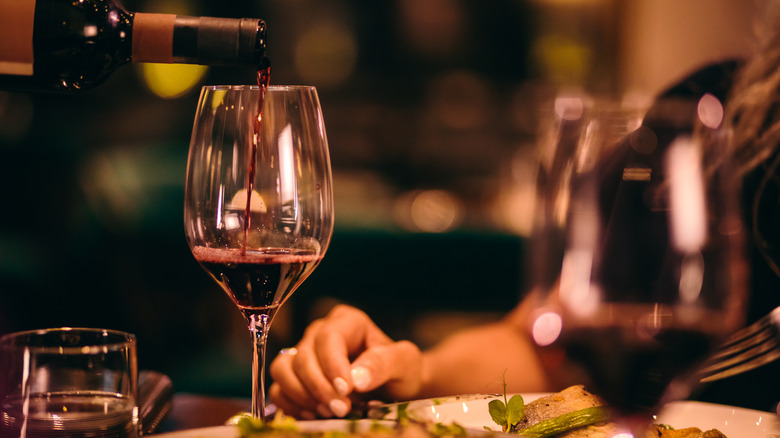
When arming yourself with a rudimentary understanding of which wine styles you like and don't like, the dry-to-sweet scale makes an excellent jumping-off point. If you tell your server, "I'm looking for a red wine that isn't too dry, but also not too sweet, to go with the lamb chop entree," they will be able to steer you toward, say, the gentle tannins of a pinot noir. Its herbal, savory tones will complement the slight gaminess of the lamb. From there, customers can select a bottle or glass that fits into their price range.
Many upscale restaurants stock a thorough (if intimidatingly long) wine list, which is commonly organized by category (i.e. red, white, sparkling, dessert wines). Within each category, the bottles are often subcategorized by type of grape, country of origin, and price. Often, a well-stocked wine cellar indicates that the restaurant has its own sommelier — just the right person to inform your order.
On the flip side, at establishments with comparatively limited wine selections, consulting the expertise of your server can become even more helpful. Perhaps there is no pinot noir to speak of to accompany those lamb chops, and you don't like the cabernet sauvignon you see listed on the menu. A good server will be able to suggest other alternatives, such as a dry rosé (which, incidentally, is your reporter's personal favorite wine to complement juicy lamb chops).
Staff recommendations can expand your palate
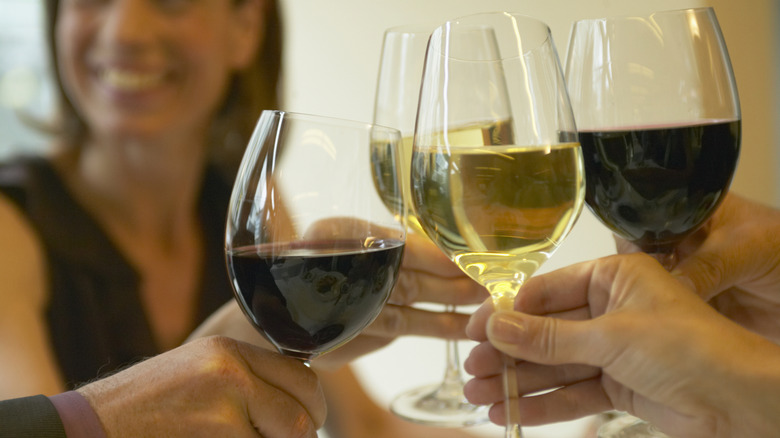
Asking for staff recommendations can also help intermediate wine aficionados broaden their horizons. Never tried chilled, sparkling Lambrusco with your charcuterie board before? It's the bomb — and that go-to glass of house white you normally order will still be there next time. With their wide-ranging palates, sommeliers can guide patrons toward offerings they might otherwise overlook, from floral, spice-driven German Gewürztraminer to lively Spanish Albariño. With luck, you might even discover your new favorite wine.
Finally, before your server arrives tableside, know how much you want to spend on the meal. Whether or not you're open to the idea of shelling out for a costlier vintage will help narrow down the potential menu candidates they suggest. If you and your dining companion share similar palates, it can sometimes be more cost-effective to venture off the by-the-glass route and order a whole bottle. "Try before you buy" totally applies to ordering wine at a restaurant, too. Your server may offer to bring out a sample before you commit to a full glass or bottle.
When in doubt, many restaurants post their wine lists on their websites. Feel free to give it a browse before you sit down to dinner. That way, you'll be able to respond to your server's "What would you like?" question with a question of your own: "How would you compare the Marlborough sauvignon blanc to the one from Stellenbosch?" From nailing fine dining etiquette as a first timer to mastering the dos and don'ts of ordering drinks at a dive bar, a little defense is often the best offense.