

5 Disadvantages Of Owning An Espresso Machine
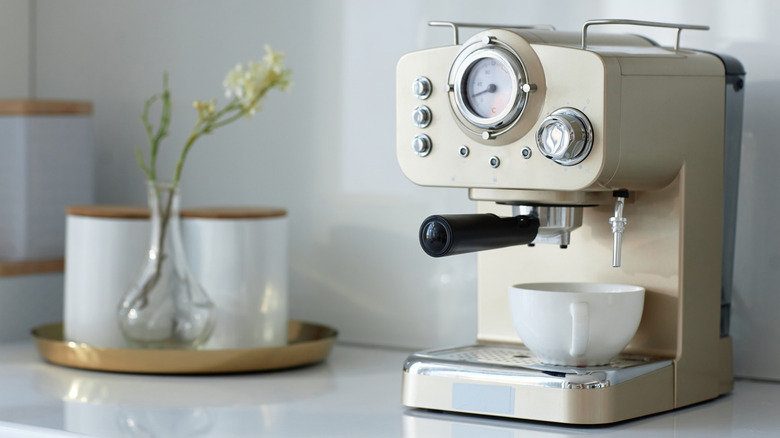
If you drink espresso with even the slightest bit of regularity, you should have your own espresso machine at home. That being said, several complications and frustrations come with owning an espresso machine and making your own espresso that cause a lot of people to swear the whole thing off entirely.
While Tasting Table doesn't subscribe to shaming people for splurging on coffee — nor does it find it to be that difficult for most people to work their budget with the tricks to save money at Starbucks — making coffee at home is objectively much more economical. That said, it comes with a few caveats.
Unlike basic coffee makers, espresso machines can be expensive, eat up a lot of precious counter space, and be tricky to learn to use properly. All those things and more are worth considering before you make the plunge into the world of espresso machine ownership and usage.
The initial investment can be costly
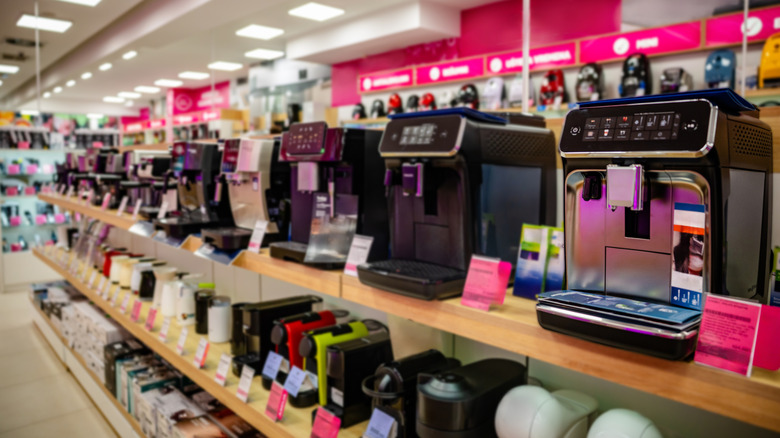
In Tasting Table's ranking of the best espresso machines, several picks came in at well over $1,000. Even the more affordable recommendations were in the $200 to $300 range, which is still a hefty price tag given the number of highly reviewed drip coffee makers under $50. With the espresso machine itself, you have to come up with a fair bit of cash before you even brew your first cup. Unfortunately, the purchases don't stop there.
When you are first getting everything you need to start your home espresso-making journey, you also need a grinder. You can get a decent manual grinder for about $50, but an electric one will set you back at least $150. Those are just the "budget" grinders — home baristas who want to pay a little more for the promise of higher quality and longer durability from their grinders can expect to pay $500 or more. In some cases, a lot more.
In researching everything you'll need to get started, you'll likely also be pointed to the purchase of a tamping mat, a knock box, a distribution tool, a scale, and a better tamper than the one your machine came with (especially if you opted for a lower-cost machine). All this before you've even bought the actual coffee.
They require a lot of maintenance
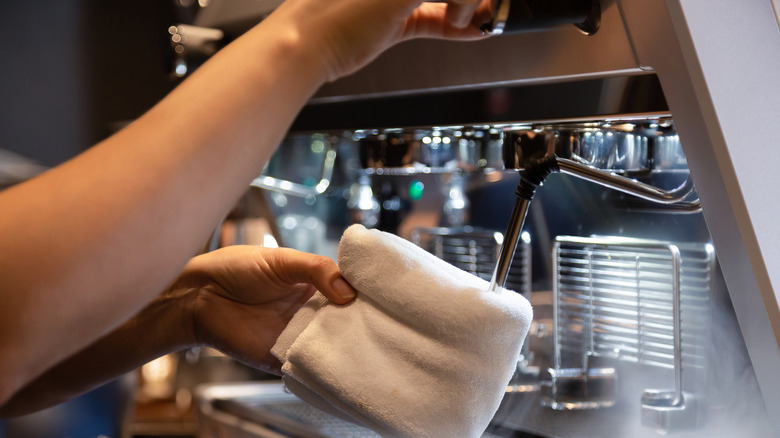
All kitchen appliances need to be cleaned regularly; the frequency of which depends on how often the appliance is used — and, unsurprisingly, you'll need to clean your espresso machine often if you use it every day. However, what you might not be aware of is all the things that need to be done, or what you'll need to buy, to do the recommended daily, weekly, and monthly maintenance on your machine.
Each day, you should wipe everything down, including all the various vessels and nozzles. You should also run a cycle of clean water through the machine at the end of the day to keep things clean inside. A couple of times a month, it's recommended you perform a backflush. On top of that, you should descale the machine a few times a year, or even monthly, if you have hard water. While vinegar is fine for cleaning regular coffee makers, you'll need to buy a liquid descaling solution or tablet.
None of this may sound unreasonable. But many new espresso owners aren't aware of all the maintenance that's required to keep their machines running efficiently. So it's good to know in advance before you commit.
They take up a lot of space
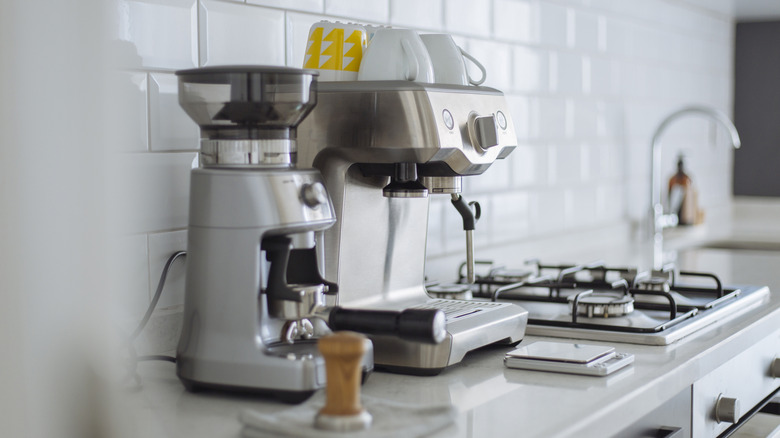
Finding ways to create more space in your kitchen is an ongoing battle for everyone. Countertops in particular require creative use of limited space, with the most common solution being to put anything small and light enough to slip in and out of a cabinet away between uses. Unfortunately, any decent espresso machine is too large, heavy, and unwieldy to pop in and out of storage like most regular coffee makers are.
In other words, an espresso machine requires a chunk of counter space permanently dedicated to it — and don't forget the necessary storage space for the grinder, tamping mat, knockbox, distribution tool, scale, tamper, and any other accessories you opted to buy along with it. It might not feel like much of a sacrifice, but depending on the size of your kitchen, it can be a lot of usable cabinet and counter space.
It takes practice to get good at using one
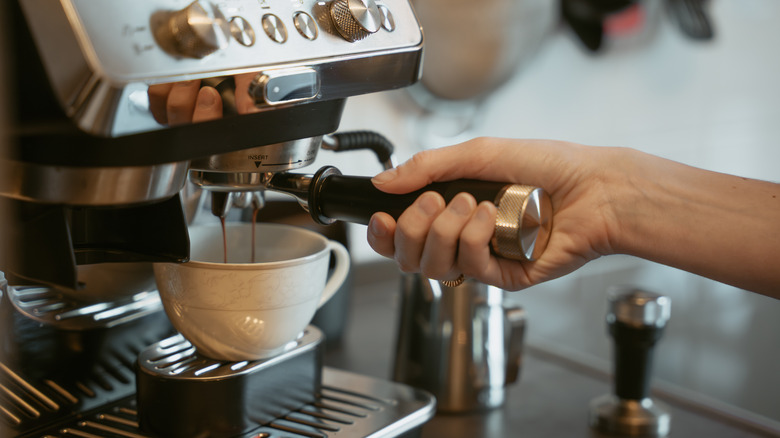
Most kitchen appliances are designed to be as easy to use as possible. Many involve doing little more than turning them on and maybe setting a timer. That's not the case for espresso machines, which require legitimate practice to learn and actual skill to use effectively. In the early goings-on of your amateur barista journey, you'll likely find that you're making some of the biggest at-home espresso mistakes without even realizing it.
You'll quickly realize your espressos aren't coming out like the ones you get at coffee shops, and it's easy to get discouraged — espespecially given how much goes into making one. To get proficient at using an espresso machine and reach a point where you're consistently making great brews, you'll have to really work at it, read tutorials, watch videos, and most importantly, practice. You will make a lot of average to bad cups of espresso as you're figuring it all out, and not everyone perseveres.
If you have the patience for a lot of trial and error, troubleshooting, and disappointment before you get it all figured out, you'll be fine. Otherwise, you might quit the whole espresso thing before you even make your first great cup.
You may be constantly tempted to upgrade
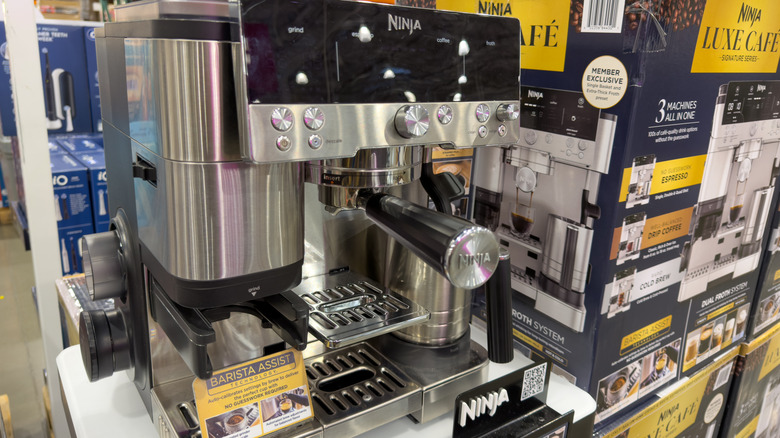
Espresso machine ownership has a reputation for being a rabbit hole, meaning many people who buy espresso machines find themselves in an endless cycle of being tempted to upgrade to better or newer machines. It's not like a regular coffee maker where most people buy one for $50 to $100 bucks and run the thing until it quits. Even with the expensive initial investment, you might still find yourself buying a new espresso machine every couple of years either out of necessity or just out of good ol' fashioned FOMO.
That being said, some believe the whole rabbit hole thing is mostly the result of people who cheap out on their initial espresso machine purchase. That is to say, they buy one that isn't very good, likely because it was the least expensive one they saw at the store, without doing proper research. As a result, that cheap espresso machine either breaks or doesn't do the job. So they buy a new one, but again don't do enough research and get the next best budget espresso machine or one that isn't known as one of the better models.
That may be the real reason why so many people get stuck on the hamster wheel of buying one espresso machine after another. Either way, it's good to know exactly what you're getting into — including the good and the bad — before you buy any espresso machine for yourself.