

The Genius Way WWII Pilots Made Ice Cream Mid-Flight
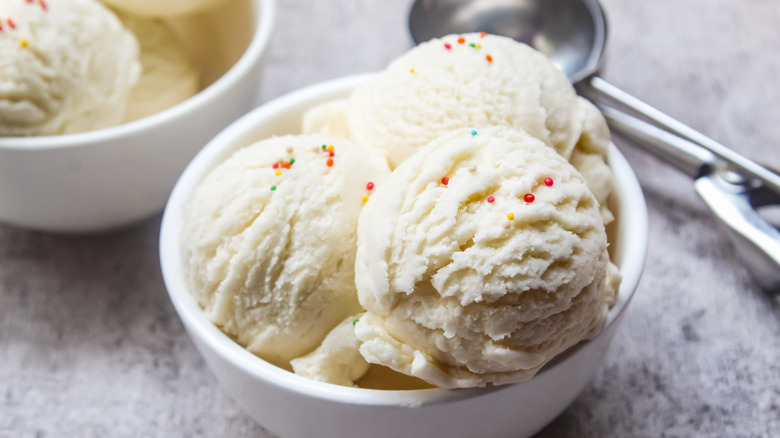
Sugar was the first food rationed during wartime back in 1942, while canned milk was rationed in 1943 (via the National Park Service). The idea of using both ingredients to make a luxury item like ice cream back then seems a little far-fetched, especially when you consider that virtually no home had a freezer during the Second World War (via Lab Manager), especially after production of home goods such as refrigerators was stopped in 1942. Nevertheless, during the war itself, pilots were making ice cream with no need for a freezer. All it took was an empty ammo can, cocoa powder, canned milk, and the freezing temperatures of high-altitude flight.
According to Smithsonian Magazine, Squadron Commander J. Hunter Reinburg had the idea to make ice cream in 1944. Stuck on Peleliu in the Japanese-occupied islands of Palau, Reinburg wrote in his autobiography that he came up with a plan to boost morale. His crew cut the ends off an external fuel tank and secured the ammo can inside. He flew up to 33,000 feet, where temperatures are below -40 degrees Fahrenheit, and returned with cold chocolate milk. Plan A had failed, but Plan B was already in motion.
On the second attempt, the cans were strapped to maintenance panels, far from the heat of the engine. Reinburg flew up with 10 gallons and returned with ice cream that was very flaky but edible. Plan C added tiny propellers to the cans that spun screws inside the cans so the mixture would churn during flight. The third time was a charm, and Reinburg returned with creamy chocolate ice cream. This must have been far tastier than the Hershey's Tropical Chocolate Bars soldiers were given.
I scream, you scream, we all scream for high-altitude ice cream
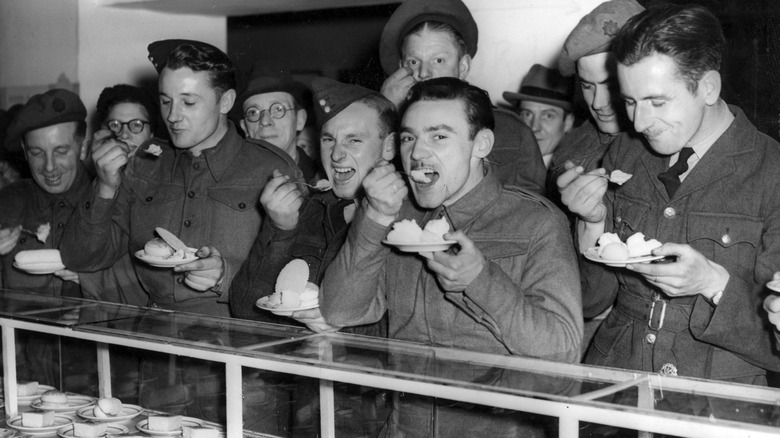
Reinburg's flight made enough ice cream for 100 men, and you have to assume this truly was a morale boost for Marines in the middle of a war, stuck on a tropical island halfway around the world with no refrigeration. Other pilots took turns running ice cream flights, which were officially logged as "test flights" to keep the missions a secret. It didn't work. The brass got wind of the ice cream, and group operations officer Colonel Caleb Bailey sent a very serious message. "I've got spies. You tell [Reinburg] I'm coming over there tomorrow and get my ration."
Other pilots had the same idea. Great minds think alike, they say. Anne Cassidy wrote in the Washington Post about her father, a B-17 gunner, mixing fresh strawberries from the English countryside with milk and freezing it into ice cream on his flights. In another story, Captain Charlie Mohrle, pilot of a P-47 Thunderbolt, was asked by the cook to do him a favor. The cook had rigged a papier-mâché fuel tank to hold powdered milk, sugar, canned fruit, and vanilla. Mohrle flew to 30,000 feet, goofed around for half an hour, then returned to base with mixed fruit and vanilla ice cream. But if you don't have access to a vintage fighter jet or bomber, don't worry. There are still easy ways to make homemade ice cream with few ingredients if you're so inclined. If you're pressed for time, this simple five-minute ice cream recipe doesn't require jet fuel, either.