

Regional Sandwiches Every Food Lover Should Try Once
There's something really neat about discovering those ultra-regional foods that locals know and love. It's like being let in on a secret that unites anyone who hails from a certain area with a specific kind of camaraderie that the world needs more of. We're here to talk about sandwiches today, and there are a ton of special sandwiches that have achieved massive popularity... in their own teeny-tiny bubble.
That's relatively speaking, of course, and we feel we need to start with a disclaimer: the Philly cheesesteak isn't going to be part of the conversation, as that's gotten a little too mainstream for what we're talking about. We're going to go more obscure — slightly more obscure in some cases, and in others, we're taking a deep dive into Sandwich Land.
The good news is many of these can be recreated no matter where in the country you are, and if there's anything we appreciate more than a neat new nugget of food trivia, it's finding easy and delicious ways to mix up our regularly scheduled meal rotation. With that in mind, let's take a look at some sandwiches — both hot and cold — you should definitely try at least once. We can guarantee there's something here that will hit just right and might become a new favorite.
Beef on weck (Buffalo)
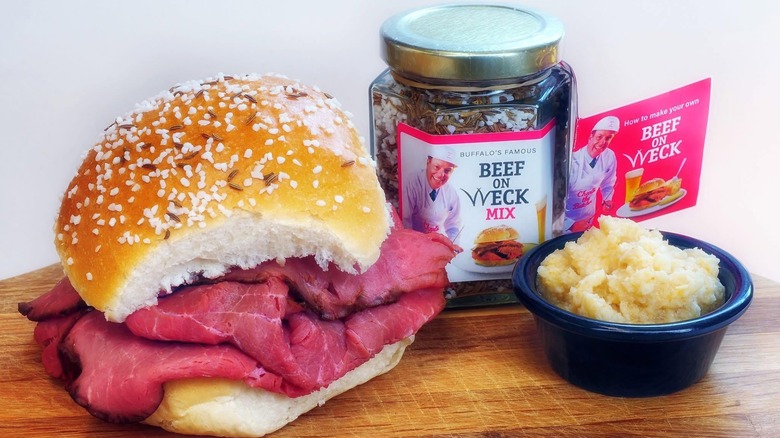
To be clear, Buffalo's beef on weck is not just your typical roast beef sandwich — and we highly recommend that you never, ever suggest that it is within earshot of a Buffalo native. There are a few very important components to this one, and it starts with roast beef that's carefully cooked to be medium-rare inside and a little crispy on the outside before it's sliced fairly thin. The roll is non-negotiable, and that's the weck roll.
It's short for kümmelweck, and it's soft on the inside and firm on the outside — perfect for holding up to a little dunk in some au jus and a slathering of horseradish. Rolls come topped with caraway seeds and an almost eye-watering amount of salt, but they come together in a truly wonderful way.
Buffalo might be most famous for its wings (and their debated origin story), but beef on weck was an area favorite long before wings came on the scene. The most oft-told tale is that it dates back to the late 1800s and a German baker who settled in the city and brought his oh-so-delicious rolls with him, and we'll toast to that.
Hot brown (Kentucky)
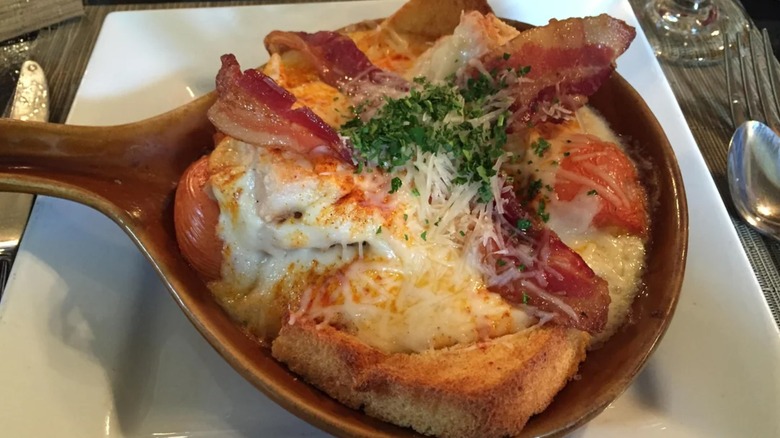
The hot brown sandwich might have a name that leaves you wondering what it is and if it tastes better than it sounds, but have no fear. This one is downright delicious, and we know exactly who created it. Fred Schmidt was a 1920s-era chef at The Brown Hotel in Kentucky. He wanted to come up with a creative, satisfying dish to feed hotel guests, hungry from the night's revelries and in need of a meal that would banish the evening chill.
We'd go as far as to suggest this might be the perfect way to use up some Thanksgiving leftovers. This open-faced sandwich starts with bread — preferably rye or Texas toast — with the crusts removed. Pile on turkey, a few slices of tomato, and a healthy drizzle of cheesy Mornay sauce. Heat the whole thing until it's at that ideal temperature and texture that's deliciously melty and a little crispy on top, then add a few slices of bacon, paprika, parsley, and a little dusting of crumbly cheese.
Pig ear sandwich (South/Mississippi)
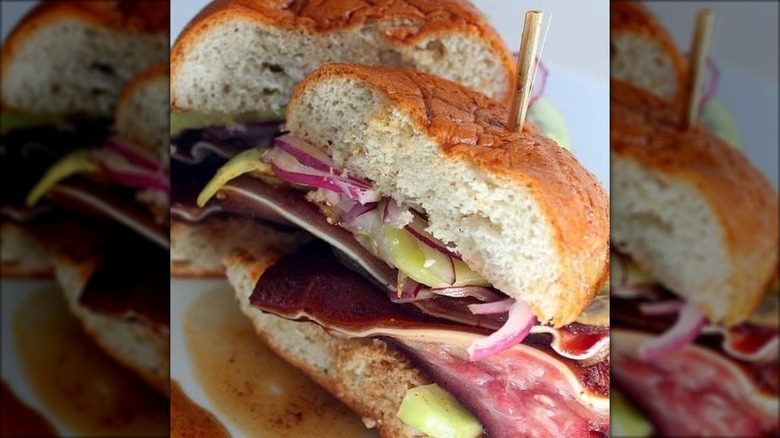
Sourcing the pig ears for this Southern specialty might be a bit of a challenge, but it's worth the legwork for a regional favorite that won the heart of Anthony Bourdain. Pig ears are boiled until they're tender and served on bread with fresh slaw and hot sauce. It's described as being something like rather uniquely textured bacon, all soft tenderness with a little bit of crispiness.
It was created by the original proprietor of Mississippi's The Big Apple Inn, at a time when scarcity and ingenuity combined to make the most of available resources. When Juan Mora was given a ton of free pig ears by a local butcher, he knew that he couldn't pass up the chance to try to turn them into something delicious — and he did. Today, the Big Apple Inn is still owned and operated by his great-grandson, and its sandwiches remain popular. They're made a little differently, as modern kitchen equipment has shortened a cooking process that previously took days.
Italian beef (Chicago)
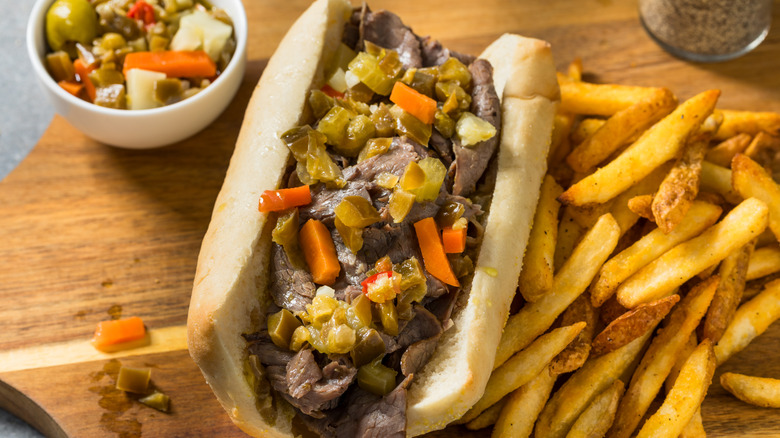
Chicago's classic Italian beef sandwich was born out of necessity, first made by the city's working-class families in the early 20th century. Chicago was overflowing with stockyards, but with many only able to afford the cheapest and toughest cuts, it took creativity to turn them into something usable. Beef was slow-cooked and braised until tender, sliced thin, piled high with peppers or giardiniera, and made even more flavorful with the addition of the cooking juices.
As the name suggests, it's Chicago's community of Italian immigrants that is credited with this, and the Italian beef sandwich has had an almost mythic rise to a place firmly nestled in the city's foodie landscape. Long a staple at Italian weddings, it gained popularity largely thanks to a sandwich shop opened by Anthony Ferreri. That's only part of the story and arguably not even the best part: the sandwich shop was initially a front for an illegal gambling operation. It's still around — the sandwich shop, that is — and it's the famous Al's #1 Italian Beef.
Po'boy (New Orleans)
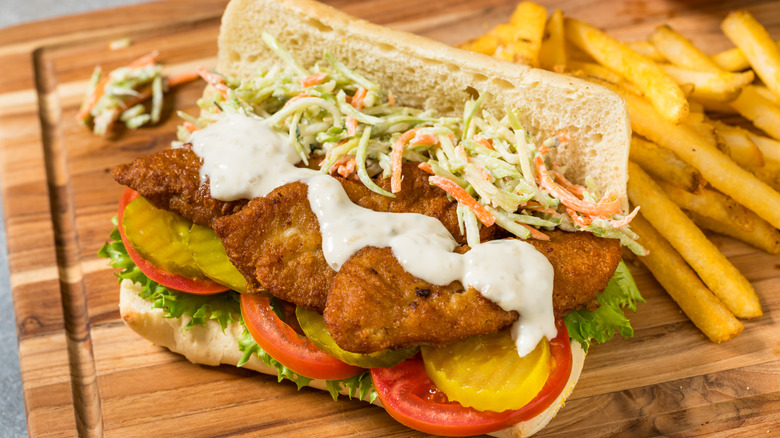
The po'boy has an interesting story. It's said Benny and Clovis Martin — owners of Martin Brothers' French Market Restaurant and Coffee — were former streetcar workers who created the sandwich in support of the striking workers. The strike happened in 1929, and the brothers helped develop a distinctively shaped loaf that can be easily cut into pieces without wasting the ends.
It's a great story, but there's a catch — maybe. It was never published until it appeared in a newspaper article in 1969, and other stories about the brothers seem to refer to their distinctive sandwiches long before the strike. That's actually supported by a memoir written by Sidney Bechet, and according to the musician, he had a ham po'boy back around 1910. The truth is often a complicated thing, but we do know that even in its infancy, po'boys were piled high with all different kinds of meat from ham to oysters.
Breaded pork tenderloin sandwich (Midwest)
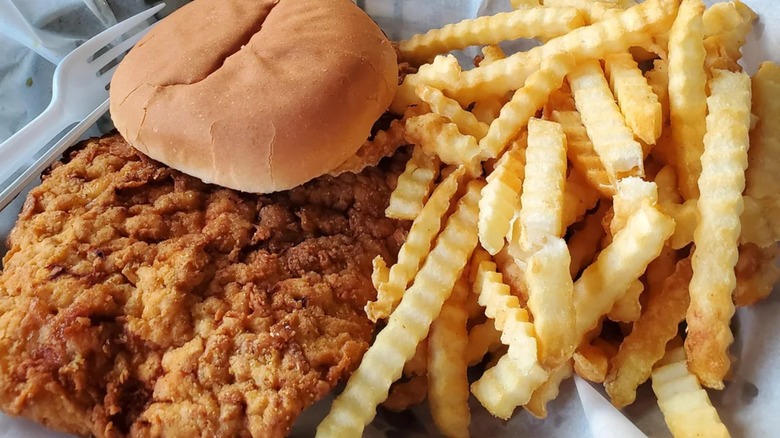
There's no mistaking the breaded pork tenderloin sandwich for anything other than what it is, an almost ridiculously giant slice of meat that's served on a bun that's hilariously small in perspective. They're popular across the Midwest, but it's Indiana that gets the credit for inventing them, and we know who to thank. Nick Freienstein was inspired by the schnitzel from his parents' German homeland, and when he started a food cart in the early 1900s, he added a pork version to the menu as a sandwich.
The sandwiches were so popular that they allowed him to open a brick-and-mortar restaurant, and it's still renowned as being the place to get the delicious OG sandwich. And if you're wondering how exactly you're supposed to eat it, that's kind of up to you. Some reach for the knife and fork, some use the cut-and-stack method, and there's occasional meat folding. However you do it, it's darn tasty in a way that only Midwestern comfort food can be.
Chopped cheese (New York City)
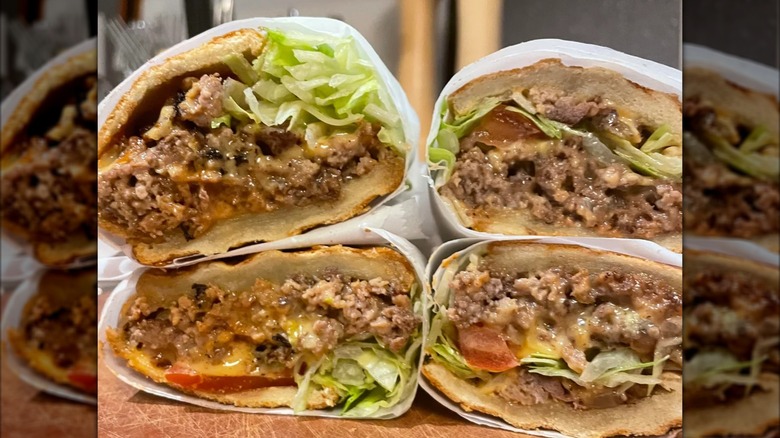
The chopped cheese sandwich originated in New York City bodegas, and it's a top-tier sandwich. It's sort of like a cheeseburger, but the ground beef, cheese, and other ingredients — like onions — are grilled, mixed into a perfectly cheesy pile reminiscent of a sloppy joe's texture, then slathered on bread or a roll.
Tracing the precise details around the birth of the chopped cheese is a little tricky, mostly because it's the kind of thing that was sort of just always in New York City — not unlike the bodega cats that have been overseeing activities from the beginning.
Attempts often lead to the kind of hole-in-the-wall spots that you can take one look at and know there are some serious sandwiches making their way out the door, and chopped cheeses have always been front and center. It's thought they were inspired by Middle Eastern cuisine and adapted by immigrants who settled in the city, with East Harlem as a likely early originator.
Pimento cheese (South)
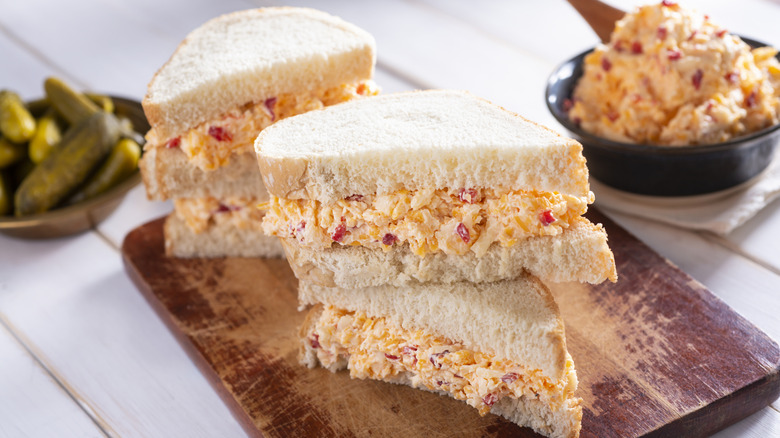
Your classic pimento cheese recipe is proof that delicious doesn't have to be complicated or time-consuming, as you can whip up this stellar spread in about 15 minutes. Head to the South, where it's the most popular, and you'll find some who take it very, very seriously, even starting with scratch-made mayo. Add grated cheese, pimentos, and some herbs and spices, and you'll have a delightfully tangy spread that's been a staple at Southern picnics for ages.
Strangely, this one might be a Southern treasure, but an early version made with cream cheese was first developed in New York City. How did it end up a Southern thing? It's weirdly murky. Georgia was once a major pimento producer, but that was well before the early days of pimento cheese's popularity — which dates back to around World War II. Today, the pimento cheese sandwich has taken an official place in the hierarchy of Southern classics: it's been a must-have at the Masters Tournament since the 1960s.
Spiedie (Binghamton, New York)
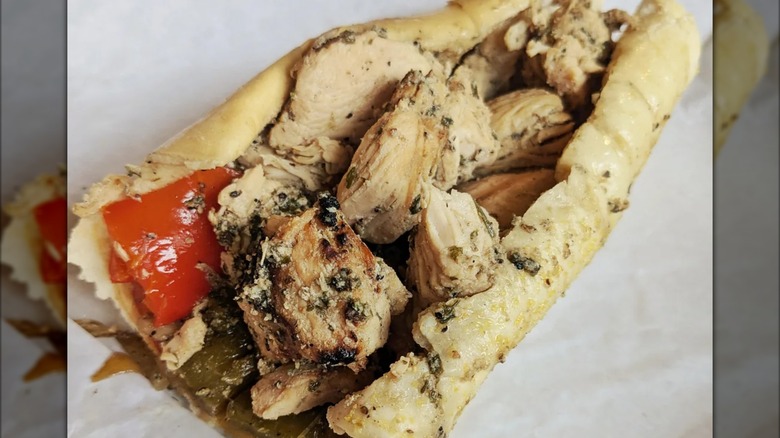
Even the most dedicated sandwich connoisseurs might not have heard of the spiedie, as it hasn't made it far beyond Binghamton, New York. There, the spiedie is so loved that it has its own festival. Cubes of marinated meat — lamb joins beef, chicken, and pork — are skewered, grilled, and then the whole thing is placed on a roll of Italian bread.
Many consider toppings verboten, and it's hard to overstate how seriously folks take their spiedies. Recipes are often kept hush-hush, and this deceptively simple-sounding sandwich is renowned as a perfectly marinated wonder. It's been that way since the 1930s, when the area was introduced to the Old World cooking of Italian immigrants named Camillo and Augustino Iacovellis. The brothers' recipe was also a secret, and it's shocking that this sandwich has remained fairly secret, too.
Cudighi (Michigan's Upper Peninsula)
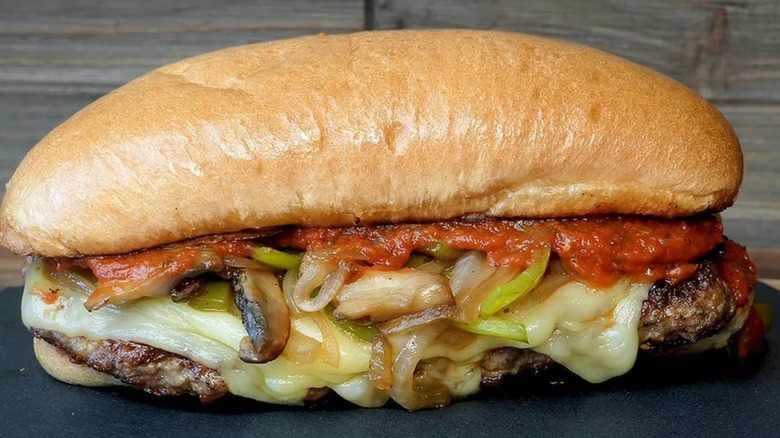
The cudighi is another sandwich that hasn't spread far. Back in the 1930s, Italian immigrants on the Upper Peninsula of Michigan started making a sandwich that combined Italian sausage and American burger toppings. The second generation of the family did things a little differently, swapping out the burger toppings for pizza sauce and mozzarella. It caught on big time, and it's still pretty popular.
This sandwich packs many ingredients, including red wine, allspice, cinnamon, nutmeg, clove, black pepper, red pepper flakes, and garlic. Jalapeños sometimes make an appearance, and you'll sometimes see sandwiches made with more OG toppings like ketchup and mustard. It's a little bit sweet, a little bit spicy, and it's a staple at pizza places and delis across the UP.
Fried bologna (Arkansas)
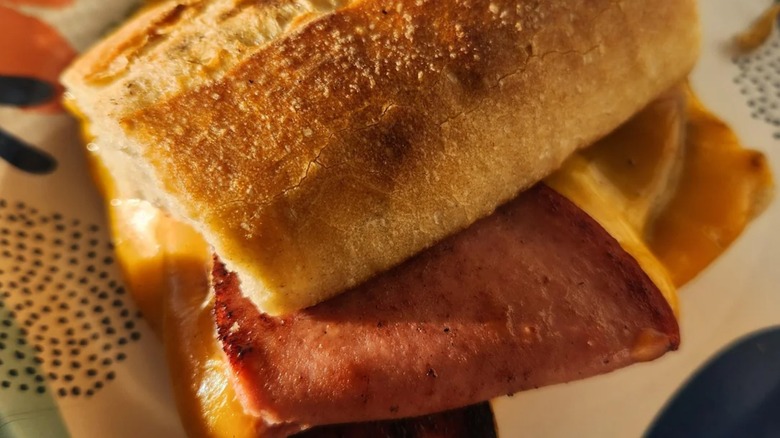
Bologna is polarizing, but in Arkansas, this childhood favorite is a huge deal. Sandwiches aren't made with straight-out-of-the-fridge bologna. Instead, thick slices are fried and served with minimal toppings, usually mayo or mustard, and, more rarely, cheese or a fried egg. Sometimes the best things are the most straightforward, and this regional favorite is the sort of hot-and-greasy bite that will take you right back to childhood.
It's so popular that you'll find it on the menu at restaurants and at fairs. It's easy to make at home, too. (The secret is cutting the edges to keep it flat as it fries.) The Hollis Country Store in Plainview is particularly celebrated for its fried bologna sandwiches, thick-sliced and made to order, served on white bread with cheese, tomato, and lettuce.
Pork roll/Taylor ham (New Jersey)
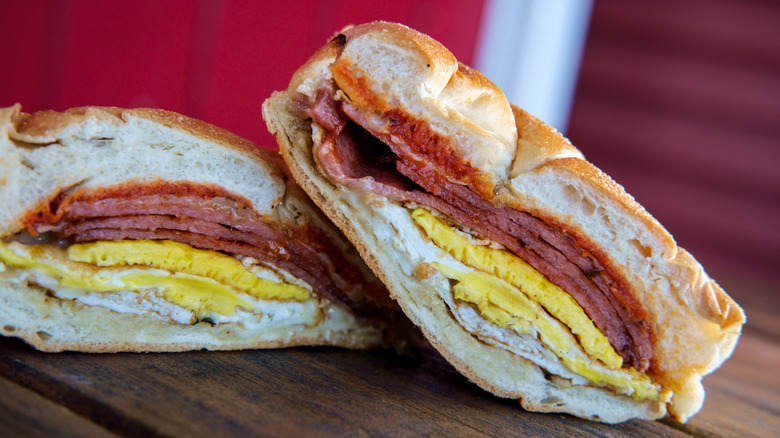
New Jersey's pork roll sandwiches are a little unique, as countless devotees will tell you that not only is there a specific way the sandwich needs to be made, but there's only one true candidate for the smoked-and-seasoned slab of processed pork: Taylor's. That particular brand dates back to 1856, and it's not unlike a fried bologna sandwich in its prep. Piping-hot slices are cooked to just the right crispiness before being layered onto breakfast sandwiches for the state's beloved regional take on a nationwide favorite.
Multiple festivals have been held in celebration of the pork roll, talented New Jerseyans have been crowned Miss Pork Roll, and if you ever want a brawl in New Jersey, ask a crowded room if the proper term is "pork roll" or "Taylor ham."
Jibarito (Chicago)
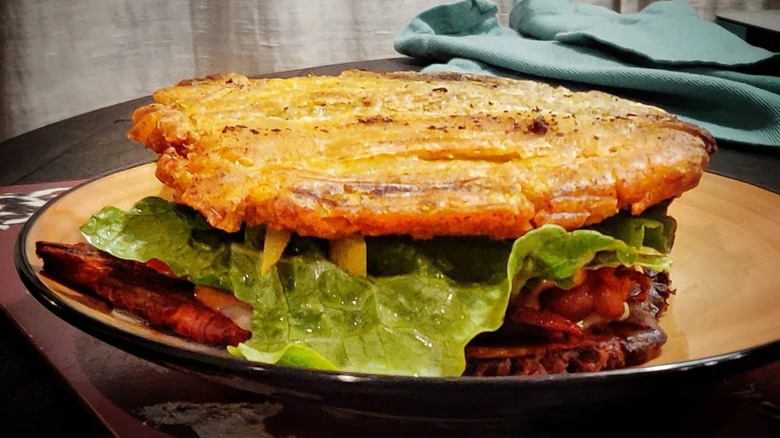
Chicago's popular jibarito sandwich doesn't have bread. Instead, plantains are peeled, flattened, and twice-fried as the delivery system for slices or chunks of meat — usually beef — along with garlic mayo, lettuce, and tomato. While most of these regional sandwiches go back generations, the jibarito appeared on Chicago's food scene in 1996.
That's when Juan Figeroa got creative with traditional Puerto Rican ingredients and flavors to create the sandwich, and it's become massively popular, spreading to spots across the city. Now, you'll find others branching out into different meats, but aficionados stress that the crunch has to remain the same for this incredibly popular and delightfully different sandwich that's uniquely Chicagoan.
Tomato sandwich (South)
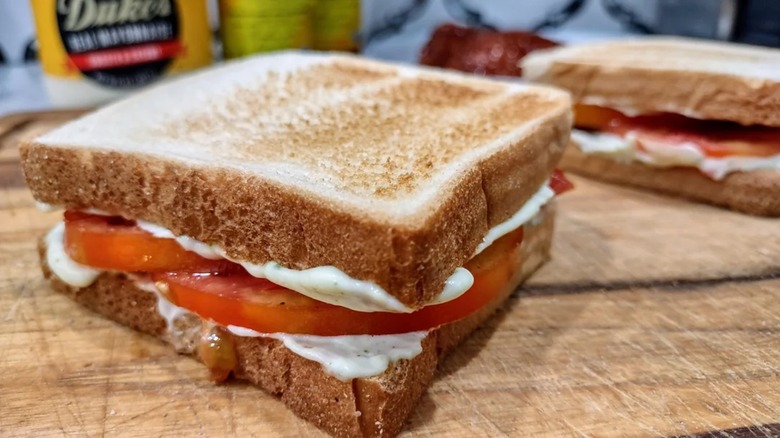
Some will say there's an art to making the perfect tomato sandwich, but fortunately, this is the kind of art that's easy — and fun — to master. The bread? White. The mayo? Duke's, preferably. The tomato? Super-fresh and at the peak of ripeness. Add a little salt, a little pepper, and you're done.
Print references to the tomato sandwich date back to 1911. It's popular across the South, and you'll also find tomato sandwiches popping up in Europe. Some World War II-era writings mention soldiers eating tomato sandwiches, and there's a story about an RAF pilot who was captured and given tomato sandwiches and champagne on his way to a POW camp.
Muffuletta (New Orleans)
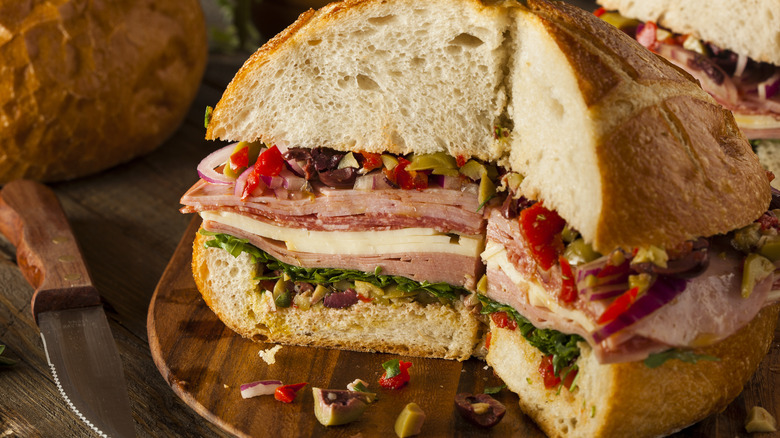
No trip to New Orleans is complete without picking up one of the city's muffuletta sandwiches, and there's a lot going on between its round, sesame-seeded slices. You'll typically find these piled high with deli meat classics, including salami, ham, and mortadella, along with cheese — the meltier, the better — and, finally, a briny dressing that makes it something completely unique. It's made with olives, giardiniera, olive oil, and capers, all of which are delicious enough on their own.
Muffuletta history goes back to the early 20th century, when — as the story goes — a Sicilian grocer was inspired by the ingredients his NOLA customers were buying and came up with the sandwich that's New Orleans with an Italian accent. If you're wondering about the name, that's an interesting thing. The distinctive bread that's traditionally used for these was called muffuletta, and the sandwich became so popular that it adopted the name.
Collard sandwich (North Carolina)
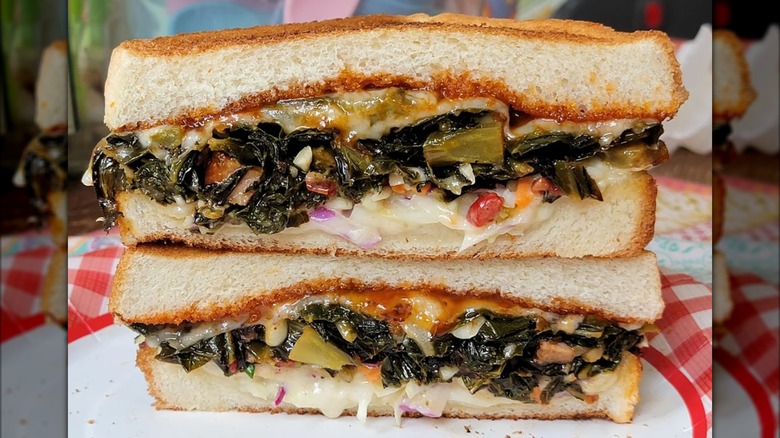
Collard greens are a staple side — especially in the South — and there are a lot of unexpected ways that you can use collard greens. That includes the collard sandwich, a specialty that's specific to Robeson County, North Carolina. That's the home of the Lumbee tribe, and they're the ones to credit for making this absolutely delightful sandwich that's been a tradition for years.
Despite the name, it's not a vegetarian thing. Sandwiched between two browned cornbread patties are collard greens, sometimes with a dollop of pork fat. Strips of dry-cured pork or bacon might be added, and sometimes, you'll get chow chow — that iconic Southern relish — to add as you eat. It sounds like a pretty straightforward thing, but it's a multi-textured experience that's sweet, salty, and savory all at once.