

Why Japanese Ramen Restaurants Have Time Rules — And What It Means For Tourists
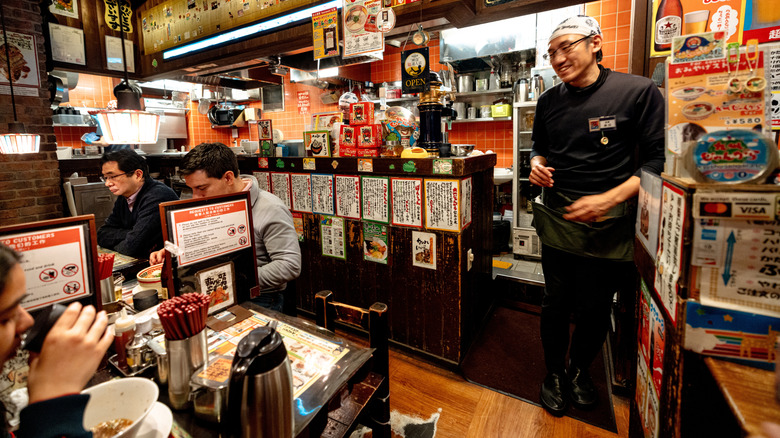
You've made it. You're finally in Japan, perhaps enjoying your long-awaited holiday and you're eager to find that off-the-beaten-path ramen counter you've seen pop up in so many videos. However, one step in and you suddenly realize it all looks slightly different than you expected. Here, no one is leisurely slurping on their noodles, no one is having long conversations or spending time scrolling on their phones, and no one is hanging out after their bowl is gone: Welcome to the fast-paced world of ramen, where every second counts.
There are dining etiquette rules around the world that travelers should be aware of. It's rude to ask for salt and pepper in Portugal, and you should avoid eating with your hands in Chile. However, the ramen restaurant etiquette falls more into a business-focused category, designed to maximize turnover in what is widely considered a high-volume business with tight profit margins.
In Japan, ramen is considered fast food, so customers are expected to eat and move on quickly. Limited seating is only a part of the story. Most broths are incredibly complex and take several hours to cook to perfection, so restaurants must recoup that time. While this expectation is generally unspoken, some restaurants have begun enforcing it more directly, usually by addressing customers directly or posting notices that ask them to put their phones away.
Ramen like a local: Be quick, be considerate
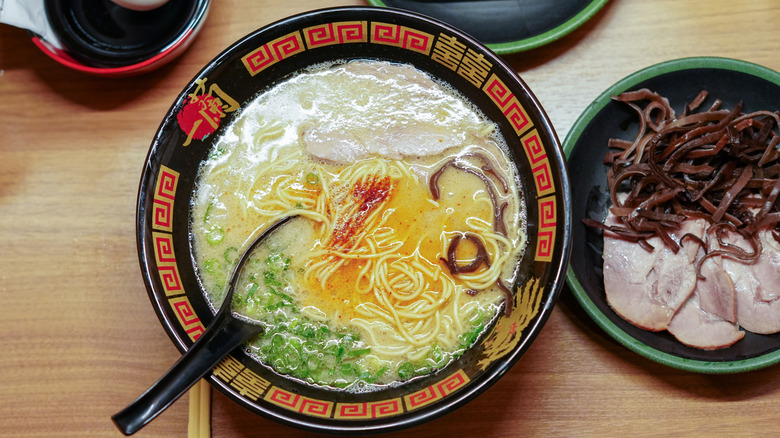
Avoid committing a gaffe by overstaying your welcome or lollygagging over your bowl. Other common mistakes to avoid when ordering ramen at a restaurant include not using ramen utensils properly or waiting too long to dig in. Ramen is meant to be eaten immediately, before the noodles and toppings sit too long in the broth and become mushy.
Ramen spots are particularly ideal for solo travelers. Some even feature one-person booths, and most customer interactions are limited to a single transaction, which is great if you're feeling slightly self-conscious about slurping noodles or using the little Japanese you managed to retain after a few Duolingo lessons before your trip. Plenty of shops also use a ticket machine for ordering, which means you can eat and be on your way without having to whisper a single word or point awkwardly at the menu.
If you're traveling as part of a large group you'll likely fare better at an izakaya, which literally translates to a place to stay and drink, often far bigger than the average ramen spot and designed for a more leisurely dining experience. And while there are many unspoken rules you should learn when dining out in Japan, such as where to place your chopsticks, the most important thing to remember is that they all stem from a core principle at the heart of the Japanese ethos: be considerate of others. That rule applies whether it's chefs trying to earn a living by serving as many customers as possible or fellow diners waiting for a spot to slurp a bowl of tonkotsu ramen.