

If You're Growing Beets, Avoid This Planting Mistake
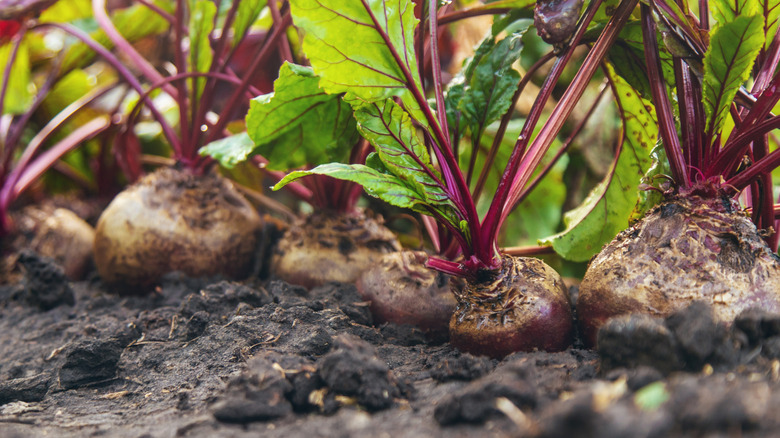
For those developing their green thumbs, growing a relatively unforgiving crop like beets under the wrong conditions can be a real blunder. Nurturing a thriving veggie garden can certainly present challenges, and environmental conditions, such as available sunlight, can be some of the hardest to navigate. If your garden simply doesn't get enough sunlight, your beets may struggle to grow if planted in area that receives too much shade. However, while some flowering plants like tomatoes or peppers might be total non-starters in very shady gardens, there is hope for beet lovers, as partial shade might be enough to grow rewarding crops. Beets are happy with four hours of direct light per day and even happier with six hours, but can survive with as little as two.
Growing beets in areas that are too shady can result in plants maturing slowly or producing very small roots. While these smaller roots can have more concentrated flavor and sweetness with a less woody taste, this is not exactly the evidence of a thriving plant, nor a successful yield. The leaves and stems are always edible, but there are other crops you can grow for those — and we're planting beets, for beets' sake! Plants grown with too little light might also weaken, become paler, and stretch, via a process called etiolation. Beets do require a minimum amount of daily light, but this does not necessarily have an upper limit; so the more direct sunlight you can give your plants, the better.
You know where to plant beets, but what about when to plant them?
Considering the light requirements of beets, you might be thinking: "Great, they sound perfect for summer!" However, beets are considered to be cool-season crops that prefer the shoulder seasons, either early spring or fall when temperatures are between 55 and 75 degrees Fahrenheit. The good news is that this potentially gives you an opportunity to harness more sunlight before shading tree leaves grow back in the spring or after they drop off in the fall. In fact, there are actually many fruits and vegetables that prefer to grow in the fall, which means that you can add beets to a fully loaded veggie garden during these cooler months.
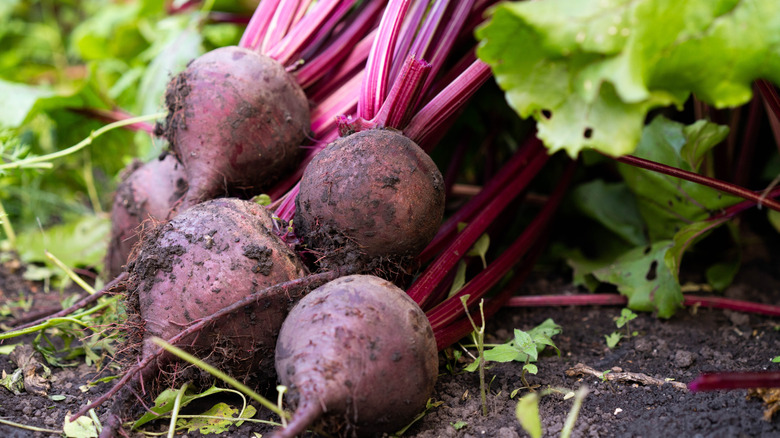
Beets are fairly fast growing, ready to harvest after around 90 days, and you'll recognize they're ready when you can see their wee shoulders poking above the soil. If you're providing your plants with the daylight they need to thrive, beets are actually one of the quickest vegetables to grow. Another positive attribute is that they can last for a few months after harvesting, if stored correctly. You can prep them for storage by removing the greens, brushing any excess dirt from the beets, and keeping them in a cold environment. When you're ready to eat your harvest, there are many delicious beet recipes you'll want to make on repeat, from desserts to salads and even vegetarian burger patties.