

Why Some Restaurants Have A 'No Sharing' Rule — And What It Means For Diners
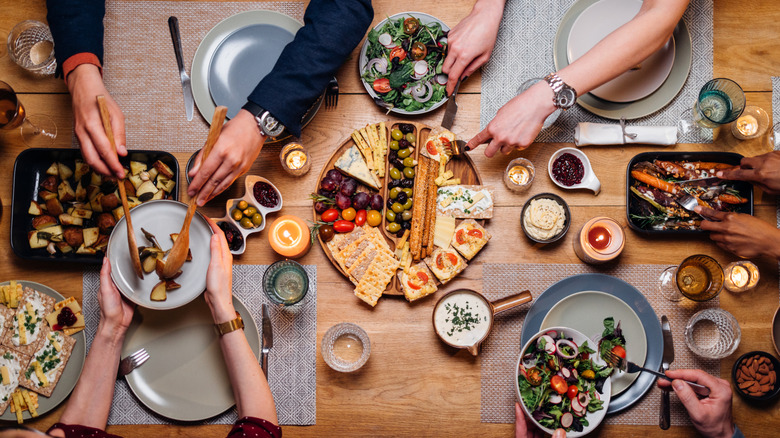
Sharing food at a restaurant with a dining partner is natural if you're not that hungry, want to sample multiple dishes, or you're just trying to save cash. So long as you know how to politely share food at a fancy restaurant, no one will object — unless the eatery has a "no sharing" rule. Here's why these controversial mandates are spreading across the industry and what it means for your dining experience.
It's no secret that restaurants use tricks to make you spend more, and these have become more prominent in recent years as food establishments continue to see diminished profits. This is at the core of these no sharing rules as well as other strategies aimed at diners who split plates. Obviously, the fewer dishes that each table orders, the less money the restaurant makes. Using tactics that make it harder to split dishes (or outright banning the practice) ensures that every customer pays their share.
This is something to be aware of when trying to dine on a budget, especially if you're tired of high restaurant prices. The more frequently customers share meals, the harder it is for restaurants to offset their costs, which means they'll eventually be forced to hike prices to keep operating. These no sharing rules aren't always literal, either. While some restaurants will state outright that sharing isn't allowed (whether it be through a message on the menu or your server telling you so), others have found ways to handle the issue without being so strict.
How restaurants enforce no sharing rules
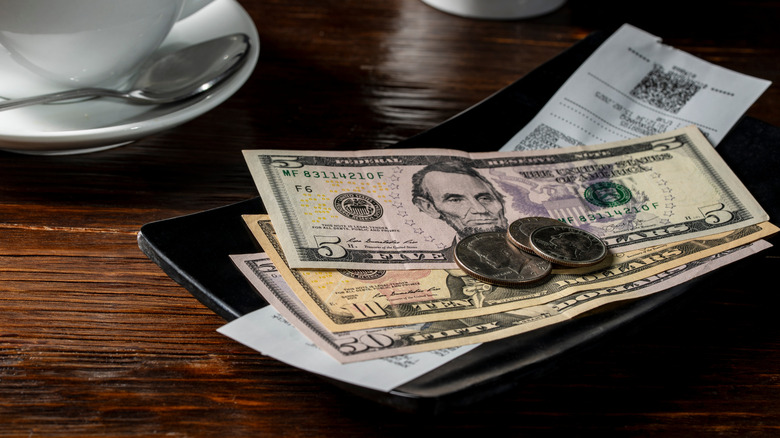
When you hear about no sharing rules, you might envision a dramatic scene where your server says you can't share with your dining partners and everyone needs to order their own plate or you'll have to leave. Some diners allege such incidents have happened to them, but it seems rare; you're more likely to encounter sharing fees.
Some restaurants add a small surcharge to your check if you tell your server you want to split a dish. This isn't necessarily done to discourage sharing — if the kitchen staff have to arrange a single dish across two plates that takes extra time and effort. The restaurant may even offer a "sharing" size of the dish that contains more food than a single serving. For instance, if an entree is split, some eateries bulk up the portion of side dishes on each plate to make them more like complete meals. All these factors help to justify sharing fees. That said, other eateries keep portions exactly the same when one dish is served on two plates, so don't assume there will be more food by default.
Diners on social media report they've mainly encountered rules about sharing at higher-end eateries. At these places, sharing may be frowned upon because it fundamentally changes the profile of dishes that are carefully flavored, plated, and portioned for a single person. If a restaurant takes that much care with its food, it may charge you for altering the careful design by sharing or simply tell you that you aren't allowed.
How diners and restaurant staff feel about no sharing rules
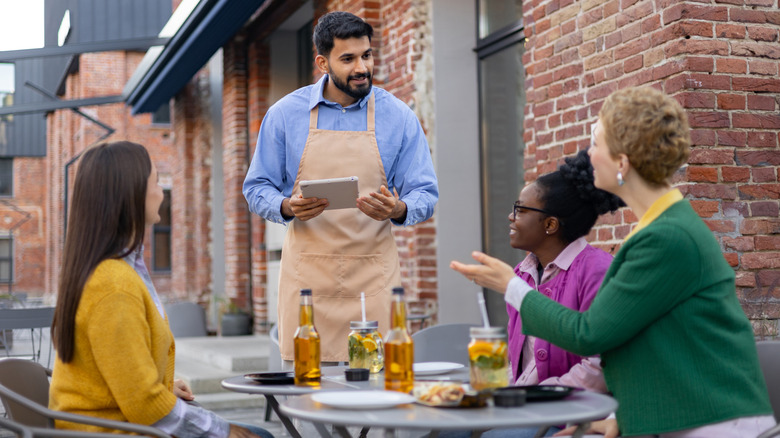
Among customers and restaurant employees, opinions about no sharing rules are mixed. Some workers say they couldn't care less if customers split their meals, but several servers mentioned they at least hope for a bigger tip since parties that buy less food are still taking up a whole table for a good amount of time. "If you're ordering one meal to share and water, up [the tip] to 25%," said one former server on Reddit. "Even if you're only ordering one meal, you're still getting service for two."
Some customers have said online that they're willing to leave a bigger tip or pay a surcharge in order to split their meals, but others said they would only accept paying a sharing fee if they received a bigger portion of food. However, if an eatery enforces a complete ban on sharing, most internet commenters said they would immediately leave the restaurant and never come back.
If you tend to share when dining out but wind up at a restaurant with these restrictions, you don't have to walk away. Restaurant workers point out that the best workaround is to simply order takeout. This way you won't be held to the rules of dining in, so you can split your dishes as many ways as you like. But if you decide to take up a table, prepare to adhere to any sharing rules. With so many restaurants going bankrupt, many businesses are just trying to stay afloat and make decent profits right now.