

Instant Rice Vs Regular Rice: What's The Real Difference?
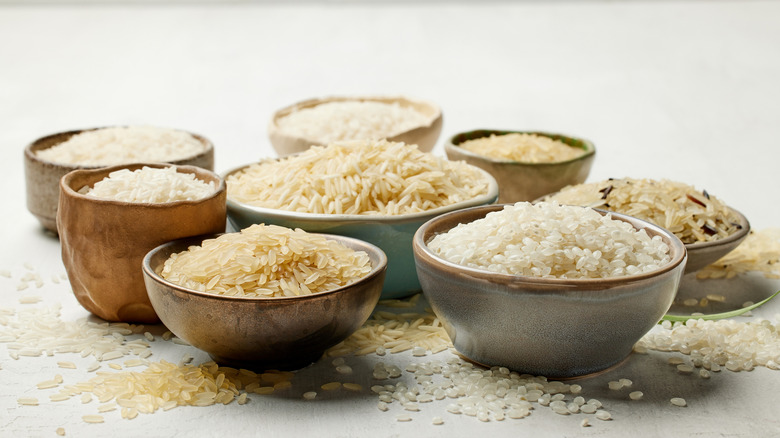
Carving out the time to cook rice can feel like a high-effort, low-reward chore. Thankfully, that's where instant rice has been making lives easier since the 1940s. The biggest difference between instant and regular rice is in the prep time. White rice can take around 20 minutes to cook from start to finish, while brown rice can take as long as 45 minutes. Instant rice brands, such as the poster child, Minute Rice, claim to give you a serving of white rice in five minutes and a serving of brown rice in 10 minutes. But what's the structural difference that allows instant rice to cook that much faster?
Instant rice is pre-gelatinized, meaning pre-cooked, through processes of soaking and steaming before being air-dried. This causes the grains to puff up and, in the process, form porous cracks and fissures that hot water can quickly re-enter once the grain is rehydrated. Regular rice is far simpler, harvested from rice fields and processed without pre-cooking. Brown rice retains the fiber-loaded bran layers, germ, and endosperm as a whole grain, while white rice is milled down to just the starchy endosperm — that's the reason brown rice cooks slower than white rice.
While the pre-gelatinization process makes instant rice quicker to prepare than regular rice, it comes with some drawbacks. You'll find that instant rice's nutritional qualities and overall flavor and texture pay the price.
How instant rice differs in our bodies and on the plate
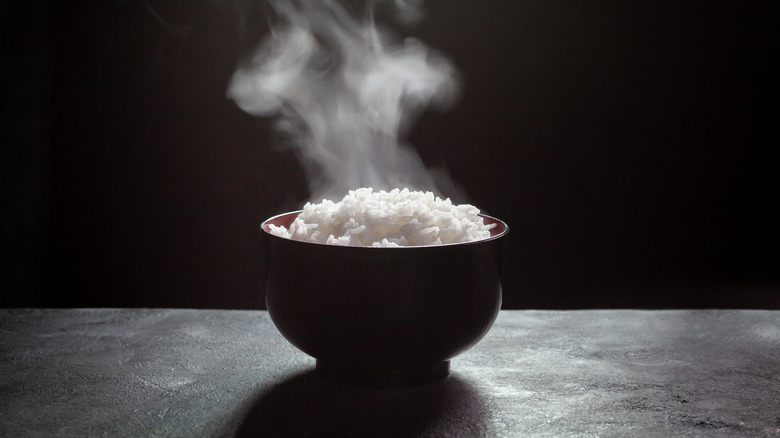
Pre-gelatinizing processes impact instant rice's nutritional qualities. While both instant and regular renditions contain comparable amounts of carbohydrates, instant rice has the potential to contain a much higher glycemic index (GI) than regular rice. This means the grain's carbohydrates are more easily converted into glucose and raise blood sugar levels faster, with real implications for those managing type 2 diabetes. A 2019 study published by the Journal of Food Science showed that lower pre-gelatinizing temperature and a difference in water-to-rice ratio can improve the often higher GI of instant white rice. Instant brown rice seems to also have potentially significant variation in GI levels. So if low-GI rice is necessary for your health, always check the type and brand for exact details. Brown instant rice does, however, remain higher in fiber, retaining the bran, germ, and endosperm, making it a quicker and healthier pantry staple. Other nutrients may be lost in instant rice varieties, but often at insignificant levels.
Anecdotally, instant rice is thought to be more starchy yet tasteless, and lack the typical texture of well-cooked regular rice. This can mean that there's a real downside for those who require convenience, but are discerning fans of rice. That said, there are many brands of instant rice available, each with varying levels of quality. Aside from regular and instant rice, there's also another type of quick-fix rice called ready-to-heat rice, which comes in microwaveable pouches. These are made by cooking dry grains with water and, in some cases, other ingredients or flavorings inside individual pouches, which cooks and thermally sterilizes everything at the same time to produce a shelf-stable product that just needs reheating.