

Merlot Vs Pinot Noir: The Differences Between 2 Popular Red Wines Everyone Should Know
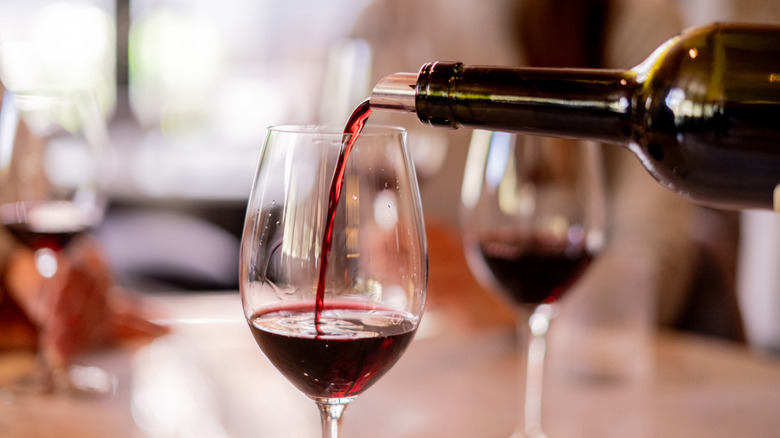
A trip down the red wine aisle can be as exhilarating as it is overwhelming. Not sure where to begin? Two of the most beloved types of red wine are merlot and pinot noir. Merlot is the second-most popular red wine in the U.S. (following cabernet sauvignon), and pinot noir is one of the most ancient reds in the world, cultivated by French monks since the 14th century. Both are known for their fruit-forward flavors, relative dryness, and French origins. However, from here, these unique wines diverge down complex and delicate paths — and, today, we're taking a stroll along both purple-stained esplanades.
The most immediately obvious difference between these bottles lies within the color of the fruits that define their unique flavor profiles. Merlot's bouquet features dark blackberry, plum, and black cherry, while pinot noir showcases red cherry, raspberry, and cranberry. Pinot noir also has comparatively higher acidity than merlot, making the wine seem markedly dryer on the palate. Regarding mouthfeel, pinot noir arrives with a light-to-medium body. Heavier, rounded merlot has a medium-to-full body.
Visually, a glass of dark-fruited merlot has a deeper hue than red-fruited pinot noir. In fact, the name "merlot" comes from "merlau," a species of blackbird local to the French region of Bordeaux from where the grapes originally hail, and is likely also a nod to the wine's dark color. Heading northeast, pinot noir's flavor is near-synonymous with the trademark cool terroir of Burgundy. More adaptable, merlot grapes are commonly included in red wine blends, whereas pinot noir grapes are almost exclusively bottled as a single varietal.
Juicy, deep merlot showcases dark fruits
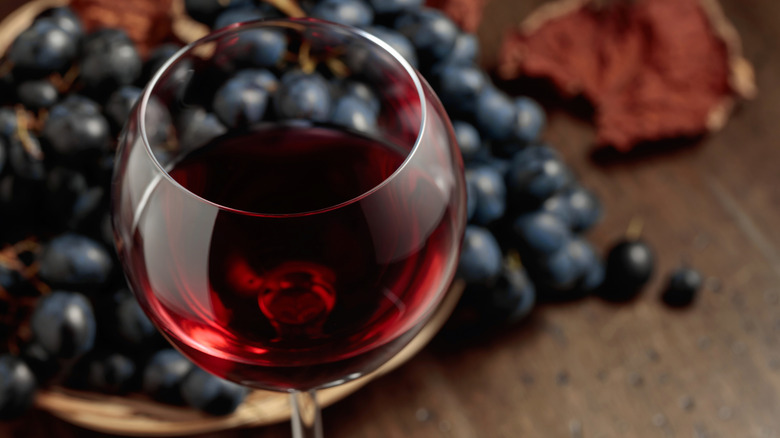
Soft tannins, moderate acidity, and a smooth finish are what makes merlot an approachable wine for novices of the red wine category. Without a strong tannic profile, merlot is velvety on the palate despite its medium-to-full-bodied mouthfeel. Merlot grapes are cultivated around the globe, but commercial crops are primarily grown in France, the U.S., and Italy. The dark blue-tinged grape thrives in cool climates with clay and limestone-rich soils. Bordeaux is perhaps its best-known and most highly regarded winemaking region, where merlot is both bottled on its own or blended with cabernet franc, cabernet sauvignon, and malbec grapes from France's Right Bank.
Despite its ripe fruit flavors, merlot is generally categorized as a dry wine, artfully toeing the line between approachable and complex. Dominant tasting notes of black fruit and chocolate are followed by secondary notes of spice. Cool-climate merlots from France and Northern Italy show earthier nuances of fig, herbs, and boysenberry. Warm-climate merlots produced in California and Australia offer more pronounced raspberry and cherry flavors, buttressed by cocoa and nutmeg.
Happily, the wide range of cultivation makes this wine budget-friendly. By our count, some of the best bottles of merlot cost less than $15. Here at Tasting Table, we're loving Trader Joe's Coastal Merlot for its impressive dimensionality and price point. While excellent to sip on its own, merlot also pairs well with dark meats like lamb, veal, duck, pork, and even game meats like venison. Its juicy berry notes can stand up against (and provide balance) to hearty stews and bean dishes, roasted mushrooms, and even oily fish or pasta dressed in heavy cream sauce.
Pinot noir keeps it cooler, complex, and earthy
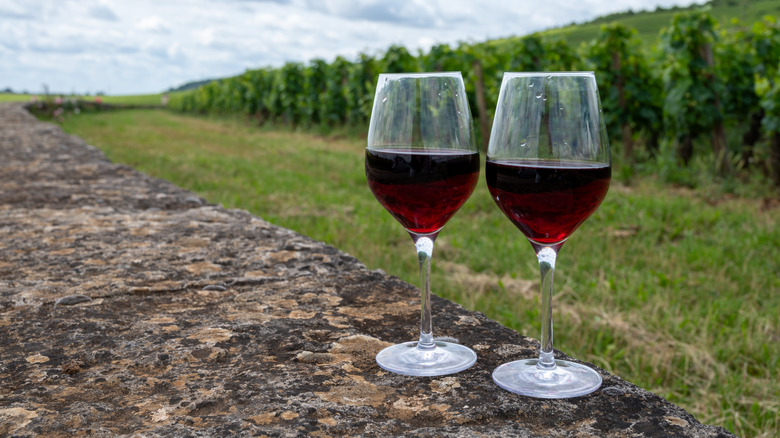
Like merlot, pinot noir features lower tannins, but it is marked by a comparatively livelier acidity. Due to this acidity, along with earthy tasting notes, pinot noir's arrival on the palate creates the impression of greater dryness than merlot. French oak-aging further develops notes of baking spice and vanilla, but pinot noir isn't always aged.
Far finickier than merlot grapes, the thin purple skin encasing pinot grapes limits possible growing regions. Climate, pests, moisture, sun damage, and fungal diseases can make quick work of this delicate grape, blights further escalated by the fact that the grapes grow in ultra-tight clusters. Pinot noir is the ubiquitous grape of Burgundy, ideally suited for the region's cool, dry terroir and chalky soils. This agriculturally challenging cultivar is also grown in other cool-climate areas like parts of Germany, Oregon's Willamette Valley, California's Sonoma County, and even coastal Chile.
Elegant pinot noir shares merlot's fruity profile, but as its fruits are red, the resulting flavors are entirely different. Cherry, raspberry, and cranberry characterize pinot noir, supported by cool tones of forest floor soil, mushroom, licorice, leather, and tobacco. Beyond enjoying it by the glass, some of the best food pairings for pinot noir include smoked red meats, eggplant parmesan, grilled salmon and asparagus, or bold-tasing fish like trout and mackerel. Pinot noir also makes a darling wine pairing for charcuterie boards, especially alongside funky sheep's milk cheeses and rich duck rillettes.