

The High Cost Restaurants Pay To Appear On Diners, Drive-Ins, And Dives
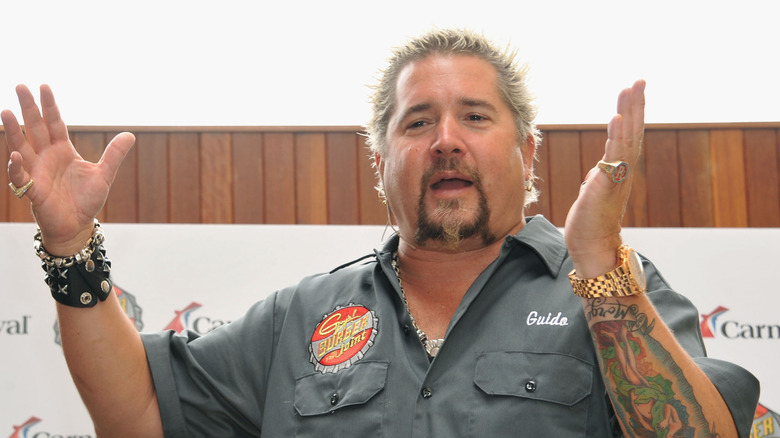
The red Camaro, the tattooed arms, the sunglasses on the back of the head, the blond hair, the loud, enthusiastic voice: "Diners, Drive-Ins, and Dives" host Guy Fieri's Guy-isms are as much a key ingredient to the Food Network show as the restaurants featured in the series that's been delighting viewers since 2006. What's less well known about the hit show, commonly referred to as Triple D by Fieri and fans, are the rules restaurants must follow to appear on "Diners, Drive-Ins, and Dives." And many of them are costly.
For starters, no customers are allowed to come into the restaurant during filming. Depending on the venue, that can be thousands of dollars in lost revenue. According to Sauce, small to medium sized restaurants usually earn between $20,000 and $125,000 in monthly revenue. If you consider that "DDD" usually films over two to four days and many of these places aren't open seven days per week, that can be a reasonable chunk of their monthly earnings.
Another aspect of being on the show is that the staff has to prepare all of the menu offerings, and not just once, but multiple times. And Fieri isn't eating all that food — it's been reported that he brings it out to share with the film crew, or it gets thrown out. Some restaurateurs have said there was thousands of dollars in food waste during filming. But surely Food Network is footing the bill? Nope. The restaurant has to pay for everything, whether the film crew eats it, Fieri devours it, or it's dumped.
Is the high cost to appear on Diners, Drive-Ins, and Dives worth it?
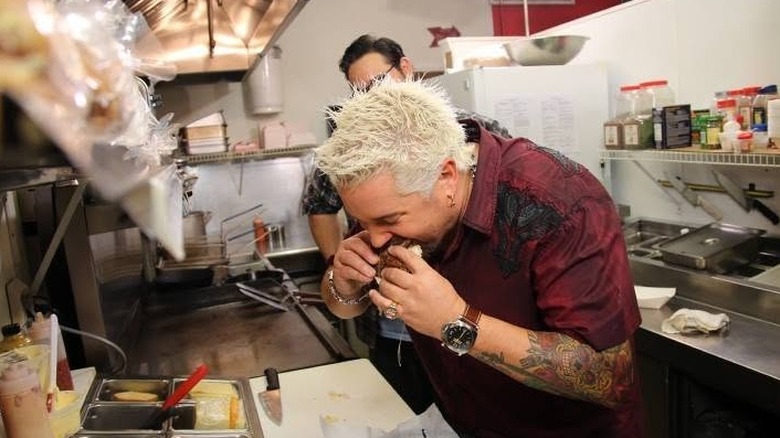
If you've watched Triple D, you've undoubtedly wanted to add more than a few hole-in-the-wall spots from "Diners, Drive-Ins, and Dives" to your bucket list. You aren't alone. And that is why these venues are willing to front the costs associated with appearing on the show — because they're confident the exposure will bring enough business in to cover the costs and then some.
After appearing on the show, restaurant owners have frequently gushed about the exposure and its positive effect on their bottom lines. Locals flock to the venues, as do tourists looking to find the perfect restaurant on vacation. Some featured owners have had to open second locations to accommodate demand, which has included tour busses full of customers. And it's not just after the first airing. Restaurateurs can tell when their episode has re-run because business will spike seemingly out of the blue.
While the initial output for filming may seem burdensome to some diners, drive-ins, and dives, it undoubtedly feels minimal when their revenue jumps a reported 20%, 60%, or 500% after the first airing, and continues to do so for years afterward.