

5 Meats Packed With More Protein Than Steak
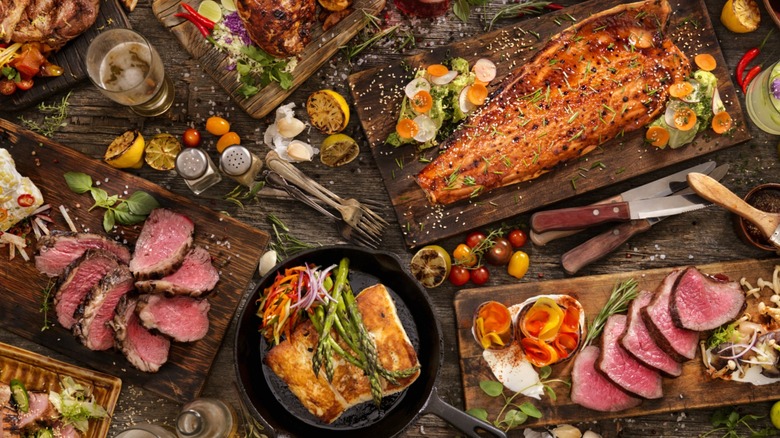
For many, the concept of animal-based protein and the image of a big, juicy beef steak share the same thought bubble. This is for good reason — beef is certainly protein-rich, and a beautifully grilled steak can be one of life's great joys for those who eat meat. But is steak really the highest-protein meat out there? Actually, no. In fact, at least five meats outdo the average steak in ounce-for-ounce protein content. Sockeye salmon, chicken breast, pork chops, turkey breast, and ahi or yellowfin tuna all have consistently high protein, and more than most beef steaks when you average out the protein content of most cuts.
The Food and Drug Administration (FDA) lists a range of steak cuts and their protein content, the lowest being choice ribeye with 5.30 grams per ounce, and the highest being steaks cut from the eye of round with 6.63 grams. To reflect the typical steak you might put in your shopping cart, the average value between these two is 5.97 grams per ounce, which provides a baseline against which to compare other meats. Usefully, this is almost exactly the protein content of beef tenderloin steaks.
If you're thinking — "hold up, I thought steak had more protein than that" — note that we're keeping an even playing field by comparing protein levels in raw meats, before water or fat are released. This is to reflect the protein content when you're making decisions in the aisle, not once the food has already shrunk on your grill. Once cooked, and depending on how each meat is prepared, the rankings can shift slightly, since, for example, cooked chicken generally loses more moisture than steak.
Sockeye salmon
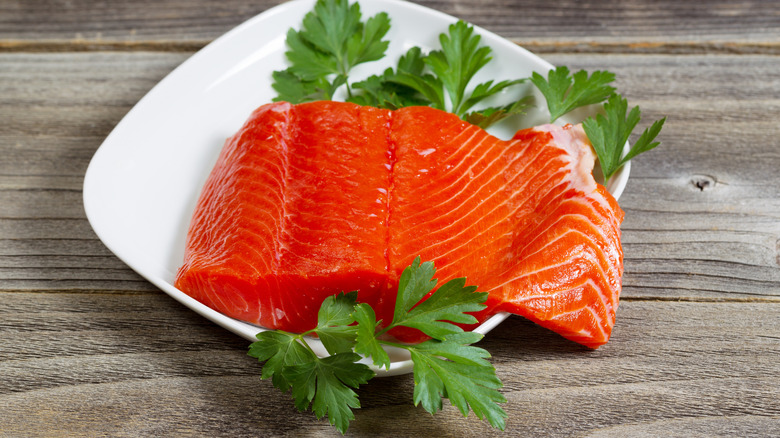
It's no secret that salmon, like many fatty fish types, comes loaded with an array of nutritional benefits — but it also slightly outdoes most steak types in the protein department, with around 6.32 grams of protein per ounce. That's great news for the pescatarians among us, who can enjoy salmon steaks that deliver around as much (actually, nearly 0.35 grams more) protein as the same portion of the average cattle-derived counterpart.
Sockeye salmon's omega-3 fatty acids, such as EPA and DHA are considered great for your health, thanks to their anti-inflammatory effects, heart health benefits, and even potentially supporting healthy insulin sensitivity. What beef does have over salmon is that it's a richer source of iron, specifically heme iron, meaning it may still be the better choice for those with anemia. Higher-protein steaks that are close to the level of salmon, such as top sirloin, also have a comparable calorie count, providing similar levels of energy.
Chicken breast
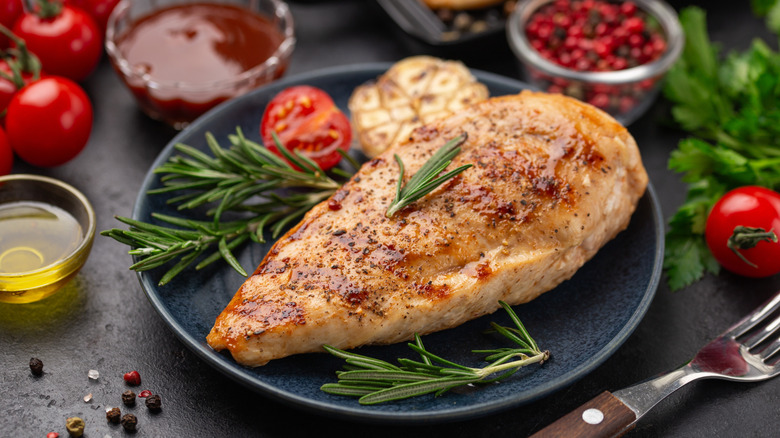
If healthy animal-based protein had a mascot, it would be plain chicken breast, and for good reason. Boneless, skinless chicken breast is famously lean, giving it a high protein content of 6.38 grams per ounce of meat. That beats the average steak by 0.41 grams per ounce. In a single ounce portion, that doesn't look like too much, but across an eight-ounce breast or steak, that's an extra 3.27 grams of protein you can get from the chicken.
Perhaps more importantly, chicken breast's leanness means it has lower fat content than steak, but the type of fat also makes a difference. Steak contains more saturated fats, which can up cholesterol levels and increase risks of cardiovascular issues and heart disease. Conversely, chicken contains more unsaturated fats, with a lesser contribution to these health issues. As with salmon, steak offers three to four times more iron than chicken breast. Beef steaks like top sirloin are also roughly 30% higher in calories than chicken breast, which could be a pro for those who want some extra energy to burn, or a con for those watching their calorie intake.
Pork chops
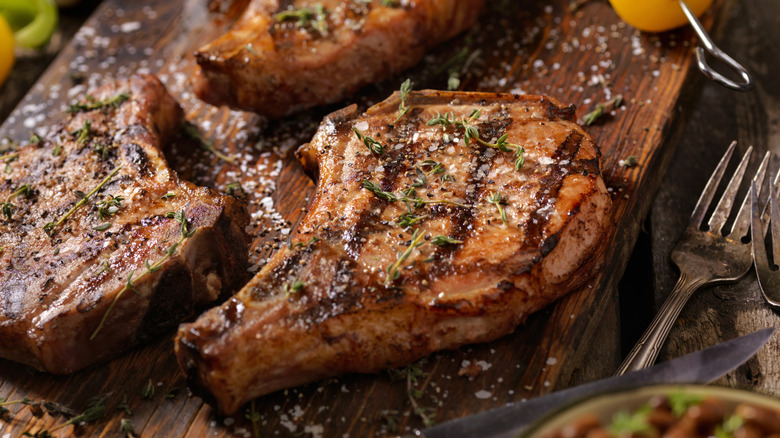
Fat content is one of the key factors that makes some steak cuts less protein-dense per ounce than various other types of meat. You'd think that meats like pork, which are often fatty, would have a similar problem. Lean, uncooked pork actually has a higher protein density than the average steak, chicken breast, or salmon. Center-cut pork chops, for instance, deliver around 6.46 grams of protein per ounce of meat, or around 8% more than the average steak.
These chops include lean muscle from the center of the loin, but all chops contain at least some of the loin. This effectively makes a center-cut chop the pork equivalent of a T-bone or porterhouse steak, which is one of the higher protein beef steaks you can get. In general, pork has significantly higher vitamin D than comparable beef, around seven times as much. Calorie levels are almost identical between popular higher protein steak cuts like top sirloin and pork chops.
Turkey breast
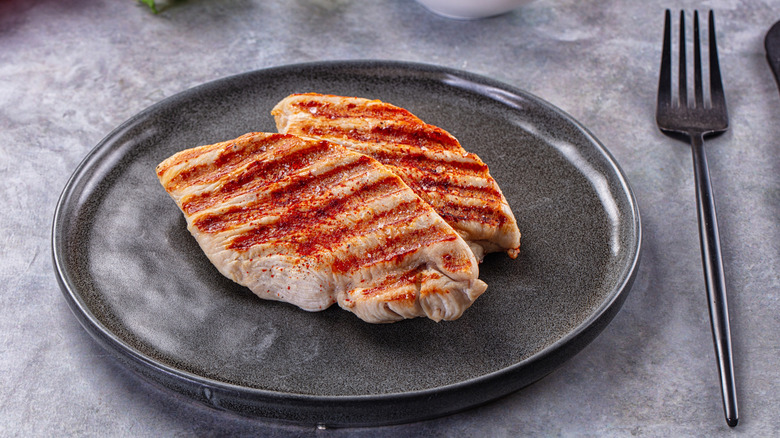
Turkey breast is actually slightly more dense in protein than chicken breast, packing in roughly 6.8 grams per ounce. This means that turkey has the average steak beat on the protein front by nearly a gram per ounce. Being the leanest part of the bird, breast has 1.13 grams of protein per ounce more than turkey leg, for instance.
Turkey breast has many of the same advantages as chicken breast, being lean muscle meat with relatively low calories. Turkey also provides selenium, zinc, and B vitamins, and is ever so slightly leaner than chicken. That means that in comparison with common steaks like top sirloin, turkey breast has considerably less total fat. Whereas an ounce of top sirloin contains around 1.62 grams of total fat, the same portion of turkey breast contains only around 0.28 grams. This can relieve some stress when trying to work out how much turkey breast to provide per person when you have guests, as it seems this meat can be pretty forgiving.
Ahi or yellowfin tuna
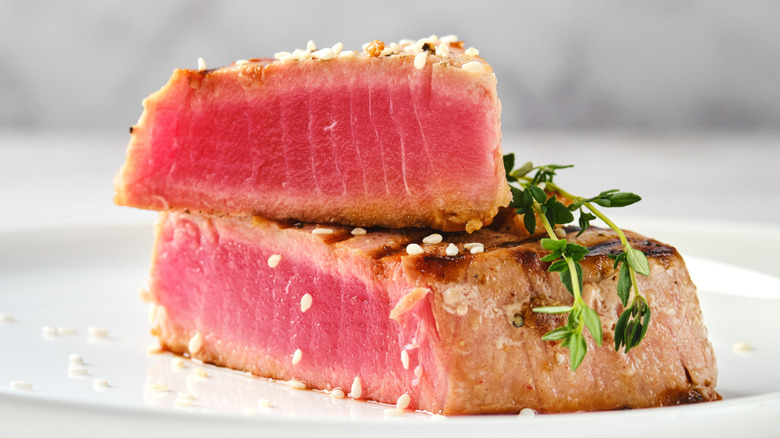
Salmon isn't the only protein-rich fish that can beat out steaks, as tuna like ahi (also known as yellowfin) surge ahead with a massive seven grams per ounce. That's over a gram more than average beef steaks. Comparing an uncooked eight-ounce beef steak to a tuna steak of the same weight, you're looking at an eight-gram protein advantage in the fish.
Ahi tuna is on the leaner side, once again meaning a higher protein density with less fat composition. Some of the fats that tuna does have, however, are beneficial to health, including those heart-healthy omega-3 fatty acids. Selenium, vitamins B6 and B12, magnesium, zinc, and manganese are also present in ahi tuna. The one downside to tuna is its potentially elevated levels of mercury, meaning that eating too much tuna could be harmful. The FDA recommends one four-ounce serving per week to keep mercury levels low.
Rather than being a one-for-one replacement for beef steaks, think of ahi or yellowfin tuna as a rotational, high-protein alternative. One of the best (and possibly tastiest) ways to capture the protein, healthy fats, and other vitamins and minerals is to do a simple sear on a lovely tuna steak.