

Why Bagged Salads May Carry More Food Safety Risks Than Whole Heads Of Lettuce
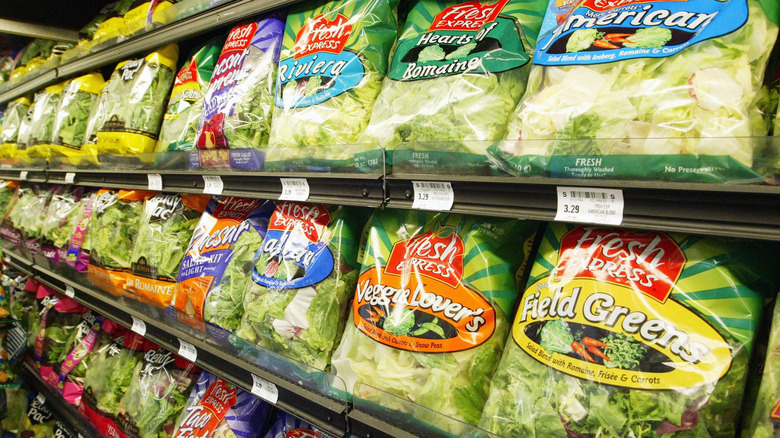
The Cyclospora outbreak of summer 2026 caused millions of consumers to change how they buy salad. Data from Numerator shows that 6.5 million households stopped buying salad mixes and kits, per Supermarket News. It was expected that shopping habits would return to normal after the outbreak ended. However, the lettuce outbreak was soon followed by others for blueberries, jalapeños, and alfalfa sprouts in relatively short order.
When it comes to leafy greens and salads, although a washed bag of pre-mixed salad may seem safer, a whole head of lettuce could actually carry less risk. Tasting Table wanted to know more about the risks of bagged salad versus a whole head of lettuce. We talked to Kantha Shelke, PhD, a certified food scientist who is the founder of food science and research firm Corvus Blue LLC, and a senior lecturer on food safety regulations for Johns Hopkins University.
"Bagged salad is made by pooling leaves from many heads, fields, and often multiple farms, so a single contaminated plant can seed the entire lot," Shelke told us. "While pre-cutting makes it convenient, it also ruptures cells, releasing nutrient-rich fluid that fosters pathogen multiplication during storage. A whole head, by contrast, is one intact plant with a protected interior, and contamination, if any, usually stays confined to it."
Keeping bagged salad safe
One thing you may be tempted to do is wash your bagged salad when you get home. That seems like a reasonable way to eliminate any potential threats. However, Kantha Shelke warned against this. "Resist re-washing," she told us. "Any organisms surviving commercial washing will tend to resist further removal, and rinsing only adds to cross-contamination risk (from hands and sinks can spread any organisms that escaped the commercial precautions in your kitchen)."
Some shoppers are switching to lettuce suppliers like Little Leaf Farms. But what can you do to minimize risk if you still want to enjoy bagged salad? "Use clean hands and a clean bowl, eat it soon after opening, and reserve washing for anything not labeled 'washed,' 'triple washed,' or 'ready-to-eat,'" she told us.
You can't see parasites like Cyclospora with the naked eye, but there are still some warning signs of poor quality when you're shopping for bagged salad. Make sure the bags are refrigerated and properly sealed. Watch out for puffy bags, too. "Avoid bags with pooled liquid, slimy or translucent leaves, or browning at the cut edges, or dark crushed leaves," Shelke said.
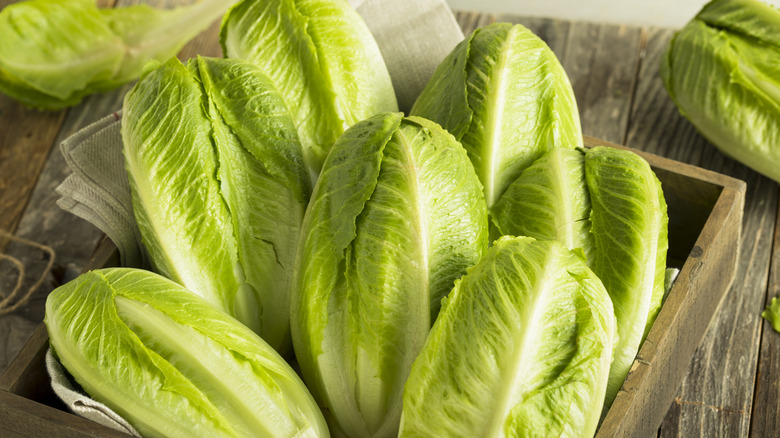
Bagged salads are more convenient but you do lose something for that convenience. A head of romaine weighs around 22 ounces. That costs about $2 at Walmart. A 10-ounce bag of chopped romaine hearts is about $3.20. Buying the same 22 ounces as bagged lettuce would cost more than $7, or about 3.5 times the price of a whole head. Another reason to think twice about bagged salad, which Shelke already touched on, is taste. Cutting lettuce causes it to wilt faster and lose nutrients. If you want bagged salad, get it cold, as fresh as possible, and use it fast.