

Shoppers Are Flocking To Little Leaf Farms Amid The Cyclospora Outbreak — What Makes Its Lettuce Different
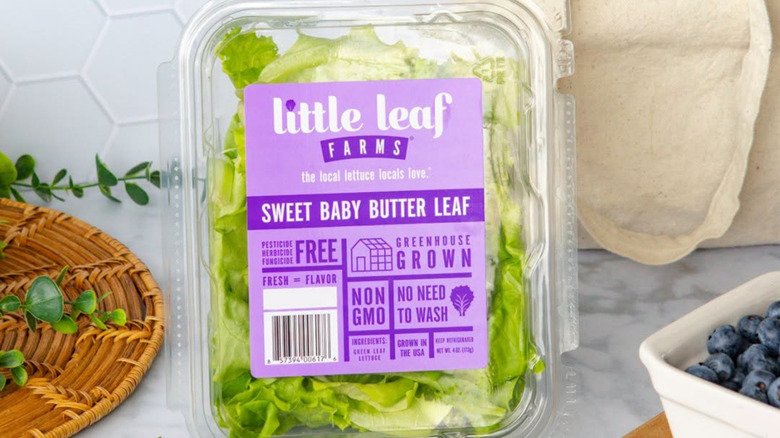
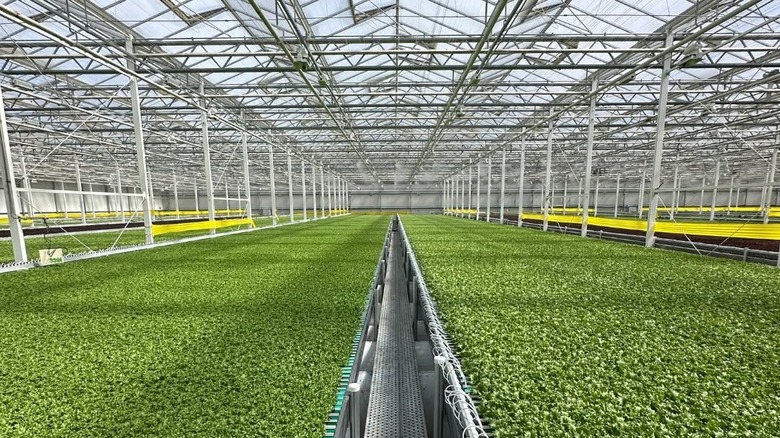
The middle of 2026 has been a tough time to be a salad. Those who enjoy leafy greens like lettuce in their diet have been reconsidering their lunch amid a major outbreak of the foodborne parasite Cyclospora cayetanensis. Catching a case of Cyclosporiasis brings gastrointestinal symptoms, most notably intense diarrhea. It's spread to fresh produce by farmers using feces-contaminated water for irrigation or through a person infected with the parasite's oocysts (eggs) interacting with produce that's then consumed by the next host. One lettuce producer, Little Leaf Farms, takes a futuristic approach to agriculture that effectively manages both of these aspects. Little Leaf Farms uses Controlled Environment Agriculture (CEA), meaning the whole farm is effectively protected inside a sealed greenhouse. The result is zero Cyclospora contamination in any of its packaged produce, leading to an understandable boom in popularity.
Little Leaf's irrigation water comes primarily from clean rainwater that's UV-sterilized, or otherwise is drinking-grade municipal water further purified through reverse osmosis. Human contamination is reduced as much as possible by extensive automation, and staff that do come into contact with produce wear personal protective equipment (PPE). "We would like to assure our customers that Little Leaf Farms packaged salads and kits are not impacted by this outbreak ... we have never in our company's history had an outbreak of any human pathogen such as E. Coli 0157 or Cyclospora," stated Little Leaf Farms on its website in July. It's a bold claim, backed up by the farm's approach to agriculture.
The internet has helped bring attention to Little Leaf Farms
With fewer places for lettuce-lovers to turn, Little Leaf Farms has seen a boom in interest. Paul Sellew, Little Leaf Farms' co-founder and CEO, reported to Inc in July that the store locator page saw a 600% rise and its Google search traffic rose a whopping 1,900% from the previous week. Google search traffic shows interest peaked around July 25th, but has since waned as customers presumably adjust to new sources for lettuce and cut back on panic-searching. Despite the new interest, it remains to be seen if the uptick in focus on Little Leaf Farms' Cyclospora-free lettuce will be enough to battle the industry-wide plummet in retail sales of fresh produce.
As of August 10, 2026, the CDC reports 13,895 lab-confirmed cases of Cyclosporiasis across 47 states, with a further 10,455 cases still awaiting confirmation or under further investigation. Understandably, this has led to no shortage of hysteria and circulation of misleading myths about Cyclosporiasis. Taylor Farms, which is already no stranger to recall controversy, is the major supplier that has caught most of the blame for putting pathogen-loaded lettuce into the market. This also includes seven grocery store brand lettuces that take supply from it. Little Leaf Farms is well positioned to keep supplying safe-to-eat lettuce around the country, if it can keep educating customers about how it keeps its leaves pathogen-free.